
Fencing contractors in Kingston, Surbiton and Surrey
Fence installation and repair, 40 years’ experience. Closeboard from £165 a metre fitted, VAT included.
We install and repair garden fencing across Kingston, Surbiton, Richmond and north Surrey. Our fencing team has 40 years’ experience on the local clay, so posts go in on concrete with gravel boards as standard. Every job gets a fixed written quote before we start.
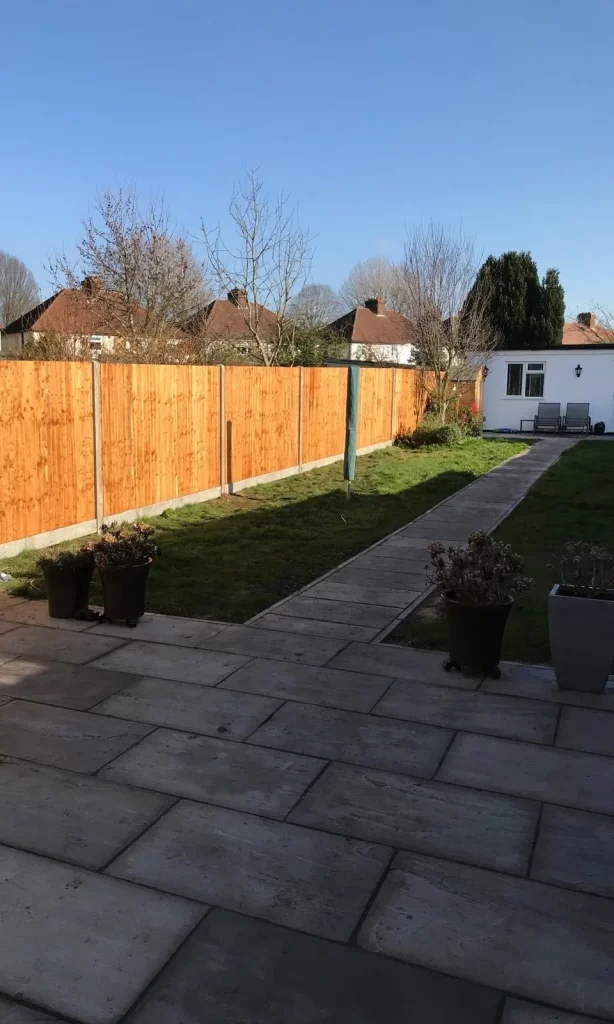
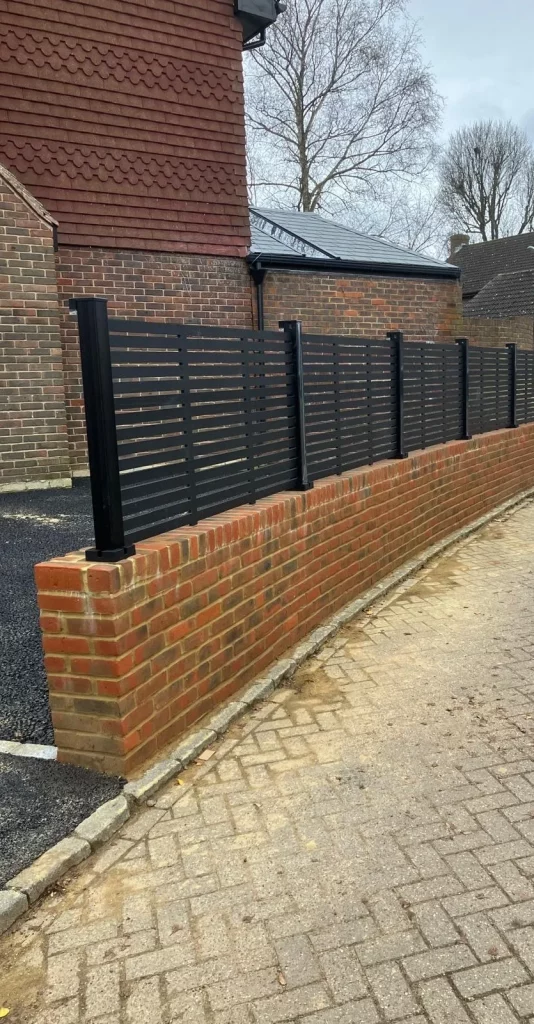
Fencing prices per metre
| Fence type | Per metre fitted, VAT included |
|---|---|
| Overlap panel | £140 to £175 |
| Closeboard | £165 to £225 |
| Hit and miss | £195 to £230 |
| Slatted (horizontal) | £190 to £225 |
| Composite | £320 to £380 |
| Metal railings | £215 to £250 |
| Aluminium slatted | £350 to £400 |
Prices are for a standard replacement on clear ground. Taking the old fence away is priced separately. Repairs usually cost £150 to £800, VAT included.
Fencing by area
Done properly, fencing becomes something else entirely. It creates structure, privacy and a calm backdrop that supports everything else in the garden, from full garden design and build projects to standalone boundary work.
In this guide
- Our fencing services
- Types of fencing we install
- Garden screening solutions
- Clay soils and Surrey conditions
- What does fencing cost?
- Common questions
- Why choose Flourish
A dedicated fencing team, not a side service
Fencing isn’t something we “also do”. It’s a dedicated part of the business, led by a specialist with 40 years in fencing across South West London and Surrey.
Our fencing team works on fencing, not pulled across to patio work, planting or general landscaping mid-job. That focus is what keeps our fences straight, solid and reliable long after installation.
Whether it’s a single panel replacement or a full boundary rebuild as part of a wider landscaping project, the approach is the same: do it once, do it properly.
Fence installation
New fencing installed from scratch, accurately set out and built to last. We assess the ground, specify the right post type for your soil, and make sure the fence works within the garden, not just on the boundary line. Often combined with garden features and structures or new paving and patio work.
Fence replacement
Full removal, disposal and replacement of failed fencing. We rebuild the structure properly: correct post depth, concrete posts where ground conditions demand them, gravel boards fitted as standard. Common across older properties in Kingston, Esher and Cobham where original fencing is long overdue.
Storm damage and repairs
Panels down, posts leaning, damage after high winds. Unsafe or insecure fences go to the front of the queue: we make them safe first, then do the full repair once posts and materials are in. Call 07738 178091 and we will give you an honest timescale. More on our fence repair and storm damage page.
Bespoke and integrated fencing
Privacy screens, garden zoning, contemporary or traditional styles: fencing considered as part of the wider space. Because we are also a garden design practice, fencing is always thought about alongside planting, levels and lighting. See examples in our project portfolio.
Get a free written quote for your fencing project
Types of fencing we install
There isn’t one “best” type of fencing, only the right choice for your garden, your soil and how you want the space to feel. It often needs to sit alongside paving, structures and lighting to work properly.
Closeboard and featherboard fencing
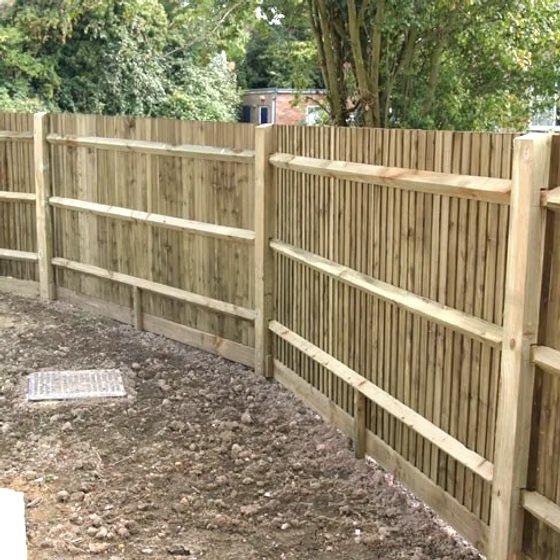
The professional standard for boundary fencing. Built in situ, with boards fixed to rails between posts, rather than pre-made panels slotted in. Stronger, more durable, and follows ground levels properly. Our most recommended option for long-term performance on Surrey clay soils. We install it with concrete slotted posts and gravel boards as standard across Surbiton, Thames Ditton and surrounding areas.
Picket fencing
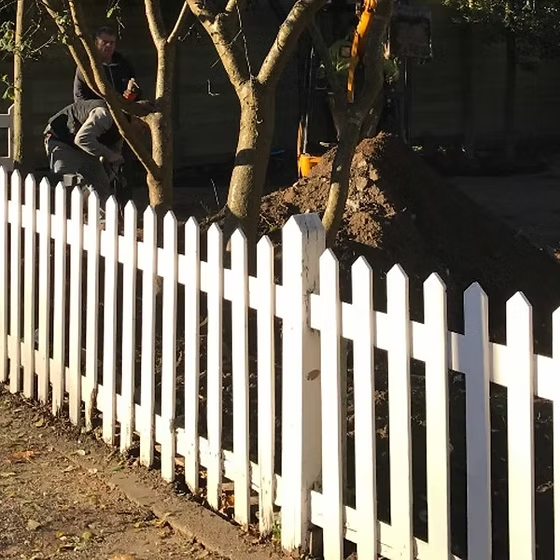
A softer, traditional option well suited to front gardens and pathways, particularly in period properties across Richmond, Strawberry Hill and Kew. Available in flat-top, round-top and pointed profiles. Often painted white, or left natural to complement cottage-style planting.
Trellis fencing
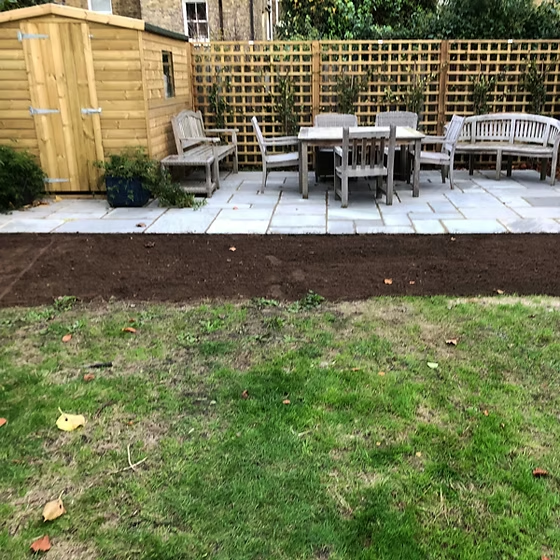
Adds height and interest without blocking light. Available in diamond, square and lattice patterns, and well suited to climbing plants including Clematis spp., Rosa spp. and Lonicera spp. Often combined with planting design and installation as part of a complete garden scheme.
Panel fencing
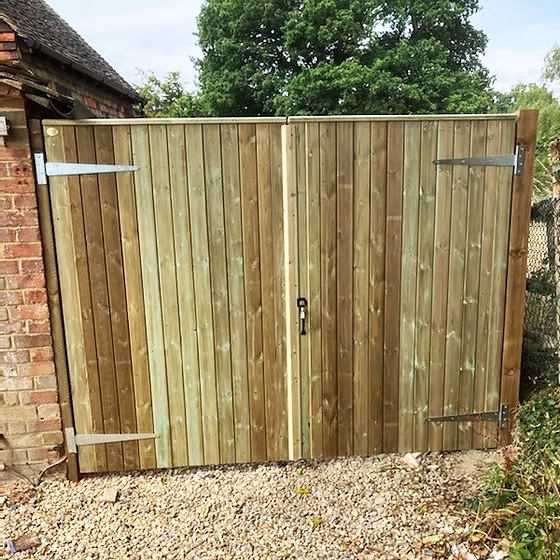
A practical option for straightforward replacements and standard boundaries, from overlap panels through to closeboard panels and tongue and groove. We recommend concrete slotted posts on the clay-heavy ground across this area, and can fit timber fascias over concrete posts to improve the finished look. Suits low-maintenance gardens where simplicity is the priority.
Slatted and Venetian fencing
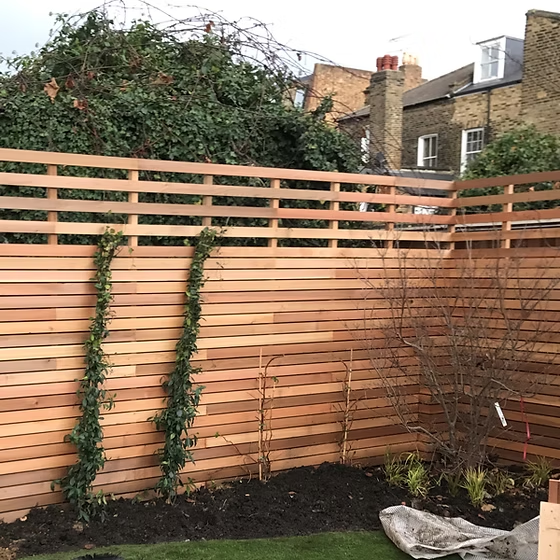
Clean lines with filtered light: horizontal slats with gaps of 5mm to 20mm depending on how much screening or light you want. Typically western red cedar or Siberian larch. Popular in modern garden builds and around seating areas. See it in our contemporary Surbiton garden project.
Hit and miss fencing
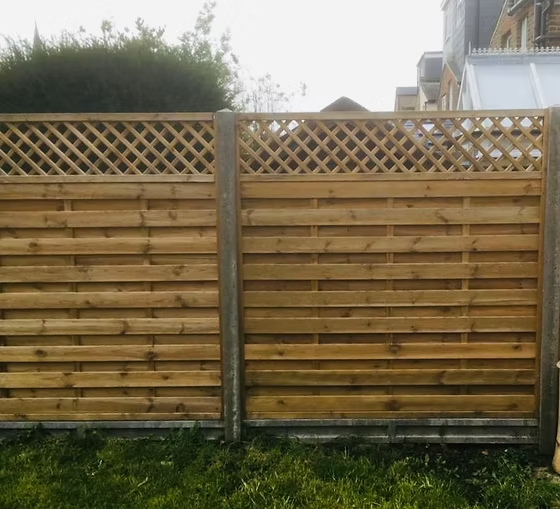
Privacy that still lets some light and air through: alternating vertical boards on each side of the rails. A good choice for exposed gardens where a solid fence would take heavy wind load; see our windy gardens guide. Available flat-topped or arched, in treated softwood, western red cedar or oak.
Post and rail fencing
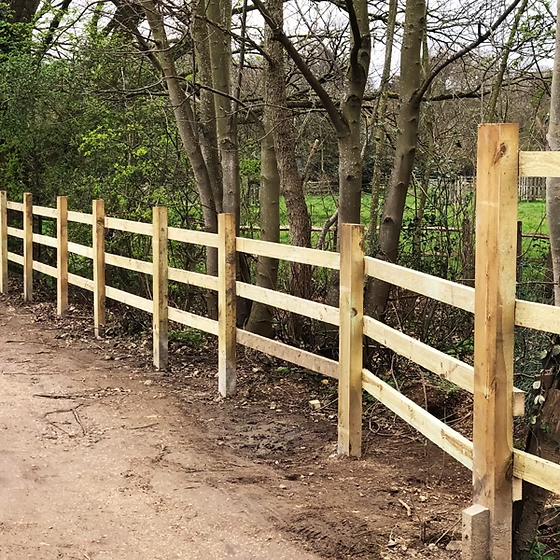
For larger gardens, paddocks and rural settings across Esher, Cobham, Weybridge and the wider Surrey countryside, where a boundary is needed without enclosure. Half-round or square rail in treated softwood, western red cedar or oak.
Composite fencing
The lowest-maintenance option. Composite fencing resists rot, warping and insects without staining, painting or sealing; an occasional wash is all it needs. A longer-lasting investment than timber where minimal upkeep is the priority.
Not sure which type is right? We’ll help you choose
Garden screening solutions
Some of the most effective work we do is within the garden rather than around its edge. Internal screening creates privacy, divides space and adds structure, particularly in smaller gardens across Kingston and Surbiton, alongside low-maintenance layouts and patio areas.
Bespoke slatted screens
Lightweight privacy around seating areas, terraces and hot tubs. Freestanding or wall-mounted, these work well with decking and garden lighting.
Pleached tree screens
Living structure using Carpinus betulus (hornbeam) or Tilia spp. (lime) for privacy above a clear stem. A naturalistic alternative to solid fencing with seasonal interest and wildlife value, common in larger Richmond and Cobham gardens. Installed as part of our planting design service.
Bamboo and evergreen hedging
Fast-growing Phyllostachys spp. in containment systems, or clipped evergreen hedging using Taxus baccata, Ilex aquifolium or Prunus laurocerasus for year-round screening. Useful where gardens are exposed to wind; see our windy gardens guide for species guidance.
Pergolas with screening plants
Structure and planting together for dappled shade and side privacy. Wisteria sinensis, Vitis spp. and Humulus lupulus all work well. Often part of a garden features and structures project, like our Kingston entertaining garden.
Decorative metal screens
Powder-coated steel or aluminium panels, essentially maintenance-free. Effective as internal dividers or wall-mounted privacy screens in smaller gardens across Kingston, Berrylands and New Malden.
Book a visit to explore screening ideas for your garden
Clay soils, conservation areas and Surrey conditions
This is where most fencing fails, and where experience matters most.
Kingston, Surbiton and the surrounding area sit on heavy London Clay. Posts that are not set correctly for this soil move as it swells and shrinks, leading to lean and early failure. After 40 years installing fencing on these soils, we specify depth, materials and fixings before a single post goes in the ground. More on the ground itself in our guide to improving clay soil.
If your garden also has drainage or waterlogging problems, see our flooded gardens solutions. The two often go hand in hand on clay.
We also know the planning context: conservation areas in Richmond and Kingston, listed buildings across the patch, and the rules around shared boundary fencing covered in our garden law guide.
Our approach on clay soils
- Concrete posts wherever ground conditions demand it
- Timber fascias available over concrete posts to improve the finished look
- Gravel boards fitted as standard to prevent base rot
- Correct footing depth, not cut short to save time
- Full site assessment before every installation
- Boundary ownership guidance before work starts; see our garden law page
Areas we cover
- Kingston upon Thames
- Surbiton and Berrylands
- Richmond and Kew
- Thames Ditton and East Molesey
- Esher and Claygate
- Cobham and Weybridge
- Teddington and Walton-on-Thames
- New Malden and Worcester Park
- Hinchley Wood, Ham and Petersham
- Coombe and East Sheen
Not listed? Get in touch, we cover many surrounding areas.
What does fencing cost in Kingston, Surbiton and Surrey?
Per-metre prices are in the price table at the top of this page. Actual costs depend on ground conditions, access, fence type and length of run. All quotes are written and itemised.
Fence repairs
£150 to £800, VAT included: storm damage, broken panels, post replacement, gate rehangs. Most repairs are done in a day.
Partial replacement
£800 to £2,500, VAT included: the most common job across Kingston and Surbiton. New posts, rails and boards, concrete posts where needed, gravel boards as standard.
Full boundary replacement
£2,500 to £8,000 and above, VAT included: a complete boundary across several sides. Often combined with paving, structures or a full garden design and build.
Common questions about fencing
Do I need planning permission for a new fence?
In most cases, no. Fences up to 2 metres high are generally permitted development in England. If your fence is next to a highway, the limit is 1 metre. Exceptions apply if your property is listed, within a conservation area (several cover parts of Richmond and Kingston) or if the fence affects a public right of way. We advise on this at the site visit. See our garden law page for full guidance.
Who is responsible for a boundary fence, me or my neighbour?
Ownership is set by your title deeds, not by convention. Look for a ‘T’ mark on the boundary lines, which shows which side owns and maintains that boundary. Where ownership is unclear, boundaries are often treated as shared. Our garden law page covers this in detail.
How long does a fence last?
Closeboard fencing on concrete posts with gravel boards and pressure-treated timber should last 20 to 30 years with basic maintenance. Panel fencing typically lasts 10 to 15 years. On clay the biggest factor is the posts: timber posts without enough depth and drainage fail years earlier than properly set concrete posts, which is why we use concrete as standard on most clay sites.
What is the difference between closeboard and panel fencing?
Closeboard is built in situ, with boards nailed to rails between posts: stronger, more durable, and it follows sloping ground. Panel fencing uses pre-made panels slotted between posts: quicker and cheaper, but less durable and harder to fit to uneven ground. For most boundaries on clay we recommend closeboard. See our full FAQ page for more.
What wood is best for garden fencing in the UK?
Pressure-treated softwood is the most common and cost-effective choice. Western red cedar and Siberian larch are naturally durable and weather well without treatment. Oak gives a premium traditional finish. For no ongoing treatment at all, composite fencing is the option.
Can you price from photos?
Often, yes. Send three photos, the rough length in metres and your postcode to hello@flourishlandscaping.co.uk. Anything less clear gets a site visit.
Can you repair rather than replace?
Often, yes. Where the posts are sound, replacing boards or panels is cost-effective. Where posts have rotted at the base, replacement is usually the better long-term decision, and we will tell you which it is.
Do you guarantee your fencing work?
Yes. We provide a 10-year workmanship guarantee on all fencing installations, covering post movement, fixings failure and gate-hanging issues. This is in addition to manufacturers’ guarantees on materials.
How quickly can you attend for storm damage?
Unsafe or insecure fences go to the front of the queue. We make them safe first, then do the full repair once posts and materials are in. Call 07738 178091 and we will give you an honest timescale.
Why choose Flourish Landscaping for fencing?
40 years of specialist fencing experience
Our fencing is led by a specialist with four decades in fencing across South West London and Surrey. That local knowledge of soils, ground conditions, planning rules and materials goes into every job, large or small.
A dedicated fencing team
Our fencing team works on fencing, not pulled across to other trades mid-job. Focused, consistent, reliable.
Design-led thinking behind every installation
Because Flourish is also a garden design practice, fencing is considered as part of the whole garden: how it sits against planting, how it handles light, and how it will look as the garden matures.
10-year workmanship guarantee
Every installation is backed by a 10-year workmanship guarantee. See our FAQs for what it covers.
Multi-generational Surrey heritage
Flourish Landscaping is a three-generation family business based in Surbiton. Our reputation across Kingston, Surbiton, Richmond and the wider area depends on quality and honesty. Read what our clients say on our customer reviews page.
Fixed, written quotes
No verbal estimates and no surprises on the day. Itemised written quotes, so you know what is included, what it costs and when we will do it before anything is agreed.
View recent garden projects | Read customer reviews
Related services
- Hard and soft landscaping
- Garden design and build
- Patios, paths and driveways
- Garden features and structures
- Decking
- Flooded gardens
- Low maintenance gardens
- Garden law, boundaries and planning
Ready to discuss your fencing project?
Send a few photographs and a description of what you need. We’ll come back with honest advice and a fixed written quote.
Good to know
Frequently asked questions
In most cases, no. Fences up to 2 metres high are generally permitted development in England. If your fence is next to a highway, the limit is 1 metre. Exceptions apply if your property is listed, within a conservation area, or if the fence affects a public right of way. We advise on this during a site visit.
Ownership is set by your title deeds, not by general convention. Look for a 'T' mark on the boundary lines, which indicates which side owns and maintains that boundary. Where ownership is unclear, boundaries are often treated as shared. We always recommend clarifying ownership before any work is commissioned.
Correctly installed closeboard fencing with concrete posts, gravel boards and pressure-treated timber should last 20 to 30 years with basic maintenance. Panel fencing typically lasts 10 to 15 years. The biggest factor on Surrey clay soils is post installation: wooden posts without adequate depth and drainage fail years earlier than properly set concrete posts.
Closeboard fencing is built in situ, with boards nailed to rails between posts. Stronger, more durable, and follows sloping ground properly. Panel fencing uses pre-made panels slotted between posts, quicker and less expensive, but less durable and harder to adapt to uneven ground. For most boundary fencing on Surrey clay soils, we recommend closeboard construction.
Pressure-treated softwood is the most common and cost-effective choice, treated to resist rot and insect damage. Western red cedar and Siberian larch are naturally durable alternatives that weather attractively without treatment. Oak is available for a premium traditional finish. For zero-maintenance longevity, composite fencing removes the need for any ongoing treatment entirely.
Often, yes. Where posts are sound and the structure is fundamentally solid, panel or board replacement is cost-effective. Where posts are rotten at the base or the overall structure has failed, replacement is usually the better long-term decision. We will always give you an honest assessment, not a default recommendation to replace if repair is the right answer.
Yes. We provide a 10-year workmanship guarantee on all fencing installations, covering post movement, fixings failure and gate-hanging issues. This is in addition to manufacturers' guarantees on materials.
With a dedicated fencing team, we can often attend within 48 to 72 hours for urgent storm damage. For collapses or security issues, call 07738 178091 directly and we will prioritise where possible.