
Rear garden transformation – Hersham, Walton-on-Thames
A family rear garden in Hersham reset around a York stone terrace, a bespoke timber pergola, productive vegetable beds and naturalistic, pollinator-friendly planting — designed, built and planted in-house by Flourish Landscaping.
Stuck in the 1970s
This Hersham garden had held on to much of its 1970s character — and not in a good way. Large conifers dominated the boundaries, casting heavy shade, draining the soil and squeezing the usable space down to a tired, overshadowed remnant of what the plot could be.
Client brief
The new owners wanted a complete reset: open lawn for the children, productive vegetable beds, a proper dining terrace and planting that would do something for wildlife as well as the family. In short, a working, living garden rather than a neglected backdrop.
Key features
- Selective removal of the boundary conifer hedge to restore light and reveal the garden’s proportions
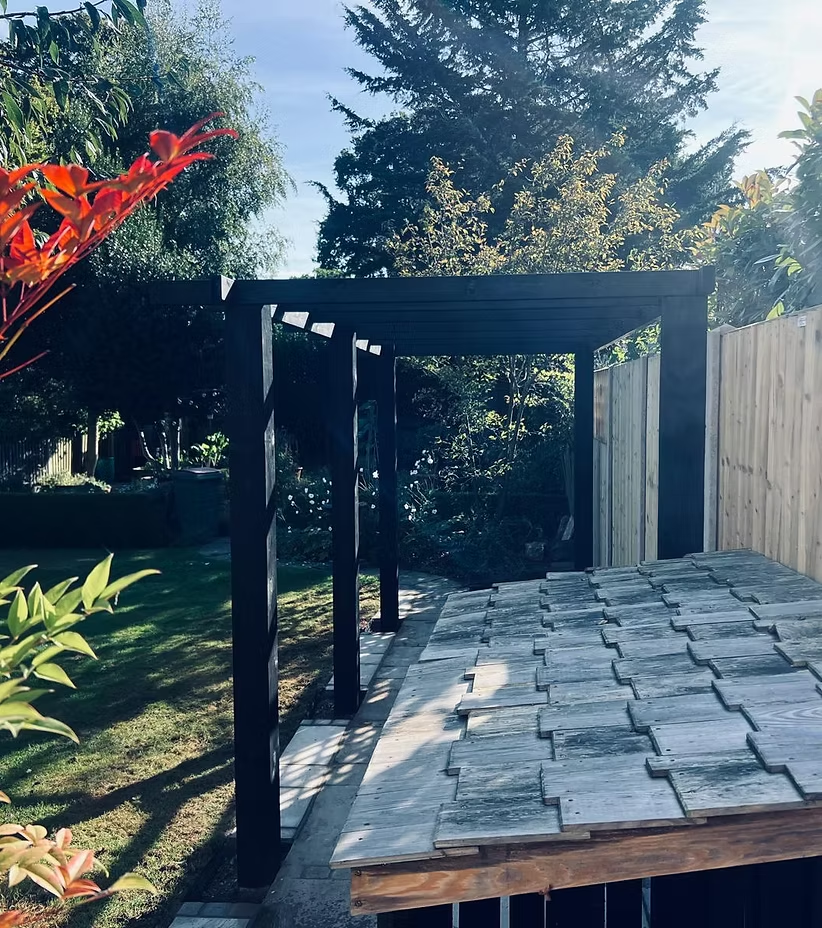
- A bespoke black-treated pine pergola over the dining terrace
- A York stone terrace beside the house, laid on a properly compacted sub-base
- Raised vegetable beds in the sunniest position, built from timber sleepers
- Mixed native hedging replacing failed fencing along the boundaries
- Pollinator-friendly naturalistic planting with native structural shrubs and seasonal perennials
- A wildflower strip to cut mowing and boost biodiversity
Design approach
Led by Craig Davis BSc (Hons) Horticulture, the first move was the selective removal of the boundary conifers, which restored light and revealed the garden’s true proportions. The layout was then zoned for family life — terrace by the house, lawn for play, and the sunniest corner reserved for growing — siting each element where aspect and common sense said it belonged.
Construction details
Following clearance and stump grinding, the lawn area was rotavated and levelled with imported topsoil where required before new turf was laid. The York stone terrace was built on a properly compacted sub-base for a stable, lasting finish, raised vegetable beds were constructed from timber sleepers in the sunniest position, and failed fencing was replaced with mixed native hedging. As APL- and TrustMark-accredited landscapers, the groundwork matched the finish.
Results
The garden now works as everyday family space rather than a neglected backdrop. Light levels improved, the grass established reliably and the vegetable beds became genuinely productive, while the naturalistic, pollinator-friendly planting brings the borders alive with insects and seasonal colour. It is the kind of result that sits behind our 5.0 rating across 57 Google reviews.
Good to know
Frequently asked questions
It had held on to much of its 1970s character, with large boundary conifers casting heavy shade, draining the soil and squeezing the usable space down to a tired remnant. Our first move was selective removal of the conifer hedge, which restored light and revealed the garden's true proportions for a fresh, family-friendly layout.
We zoned it for family life with a York stone terrace by the house, open lawn for play, and raised vegetable beds built from timber sleepers in the sunniest corner. A bespoke black-treated pine pergola sits over the dining terrace, while pollinator-friendly naturalistic planting and a wildflower strip boost biodiversity and cut mowing.
Gladly. Led by Craig Davis BSc (Hons) Horticulture, we replaced failed fencing with mixed native hedging, laid the terrace on a properly compacted sub-base and added native structural shrubs and seasonal perennials. As APL- and TrustMark-accredited landscapers we would bring the same blend of play, productivity and pollinator planting to your plot.