
Garden transformation – Clapham
A designer-led Clapham garden — layered planting, yew structure, integrated water features and a circular paved terrace, designed by Henrietta Murray-Wicket and built and planted in-house by Flourish Landscaping.
Objective
A full garden transformation built alongside a rear house extension — taking in a new garden pavilion seating structure, refined hard landscaping, integrated water features and layered, structural planting.
Good bones, no cohesion
This Clapham garden already held several attractive elements, but the layout lacked cohesion. Earlier additions had accumulated piecemeal, so paving, seating and planting never quite spoke to one another, and the garden read as a collection of parts rather than a single, considered space.
Client brief
The clients wanted a vibrant yet secluded entertaining garden that felt curated and comfortable rather than crowded — somewhere lively with colour and texture, but calm, private and easy to be in.
Design approach
Delivered for garden designer Henrietta Murray-Wicket, the emphasis was on integration rather than wholesale change. Led on the ground by Craig Davis BSc (Hons) Horticulture, our build team refined the hard-landscaping lines so paving edges, seating and planting beds worked together visually, translating the design intent cleanly into built reality to professional standards.
Construction details
A circular paved terrace anchors the central space, with bespoke seating constructed to exact dimensions so it became part of the architecture of the garden rather than an afterthought. The water features were installed with concealed pump systems and discreet access points — so they look effortless yet stay easy to service — and clipped yew (Taxus baccata) gives the evergreen structural backbone that holds the whole scheme together year-round. As APL- and TrustMark-accredited landscapers, the detailing was finished to match the design’s ambition.
Key features
- Designer collaboration. The project was a team effort, with garden design by Henrietta Murray-Wicket and the landscaping delivered by Flourish. The collaboration ensured the design intent translated cleanly into built reality, with detailing and planting executed to professional design standards alongside the rear house extension.
- Vibrant yet secluded garden. Lively planting and bright colour, framed by structure and screening for a private, immersive feel.
- Layered planting with year-round structure. Bold perennials and ornamental grasses combined with clipped yew for structure that performs in every season.
- Innovative design features. Custom-built seating, contemporary water features with concealed pumps, and a circular paved terrace at the garden’s heart.
Results
The completed garden now feels purposeful, immersive and well balanced. Colour and texture remain central to the experience, but they are framed by stronger structure and clearer circulation, and the integrated seating makes the space genuinely sociable. It is the kind of result that sits behind our 5.0 rating across 57 Google reviews.
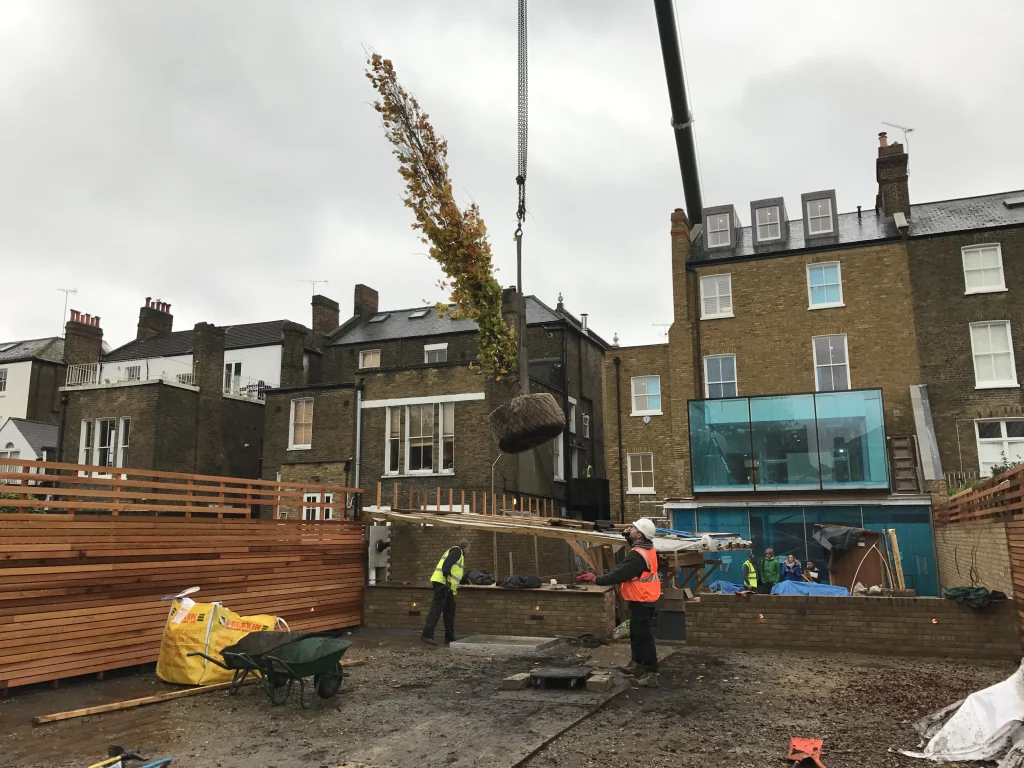 1. Installing semi-mature trees
 2. Coordinating planting alongside the building works
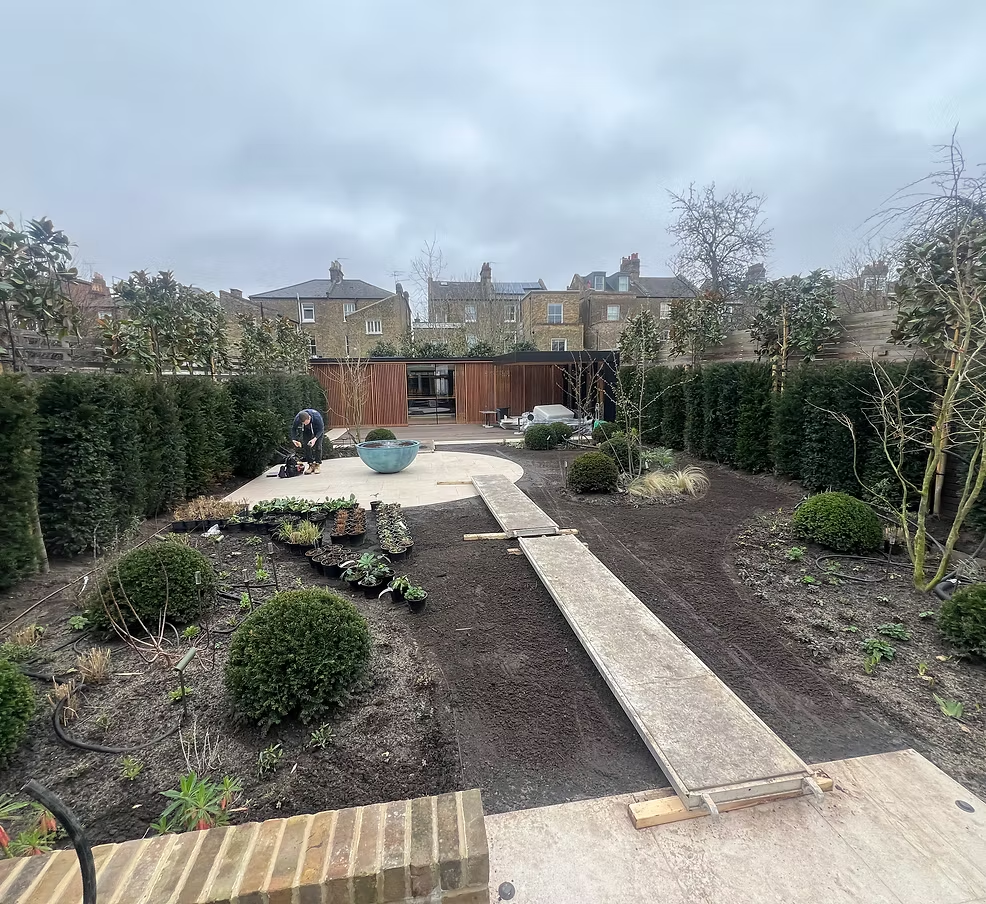 3. Planting yew hedging and topiary balls
 4. Installing the irrigation system
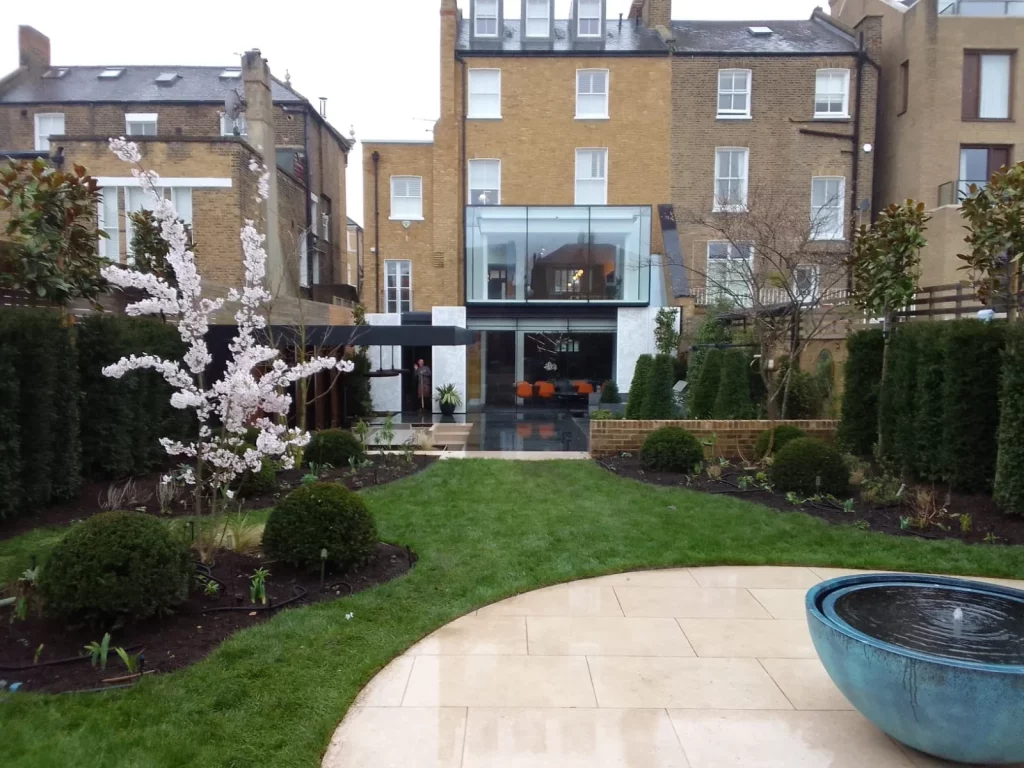 5. Garden transformation complete
Good to know
Frequently asked questions
The garden was designed by Henrietta Murray-Wicket, and we delivered the build and planting in-house. Led on the ground by Craig Davis BSc (Hons) Horticulture, our team refined the hard-landscaping lines so paving edges, seating and beds worked together, translating the design intent cleanly into built reality alongside a rear house extension.
Clipped yew (Taxus baccata) provides the evergreen structural backbone that holds the whole scheme together through every season, framing bold perennials and ornamental grasses. A circular paved terrace anchors the central space, with bespoke seating built to exact dimensions so it became part of the garden's architecture rather than an afterthought.
The water features were installed with concealed pump systems and discreet access points, so they look effortless yet stay easy to service. If you are planning a designer-led garden, we deliver other designers' visions as well as our own, with detailing and integrated features finished to professional design standards throughout.