
Large garden maintenance
Structured programmes for substantial private gardens, period properties and architect-designed landscapes across Kingston, Surbiton and Surrey.
Large gardens are living systems that need to mature, not simply be held in check. Our maintenance programmes are built around how plants actually behave through the seasons: when to prune for next year’s flowering rather than this year’s tidiness, when to feed and aerate the lawn rather than just cut it, when to leave a plant alone. Flourish is led by Craig Davis, who holds a BSc (Hons) in Horticulture and brings over 40 years of practical experience, and that knowledge shapes the work on every site we look after.
Maintaining a large garden requires more than occasional visits. Substantial gardens need a written programme, genuine plant knowledge and consistent attention to detail across every season.
We support private estates, period properties and architect-designed gardens across Kingston upon Thames, Surbiton and Surrey that demand long-term, horticulturally informed care.
In this guide
What makes large gardens different
Larger gardens present a level of complexity that a standard maintenance round cannot address. They typically include:
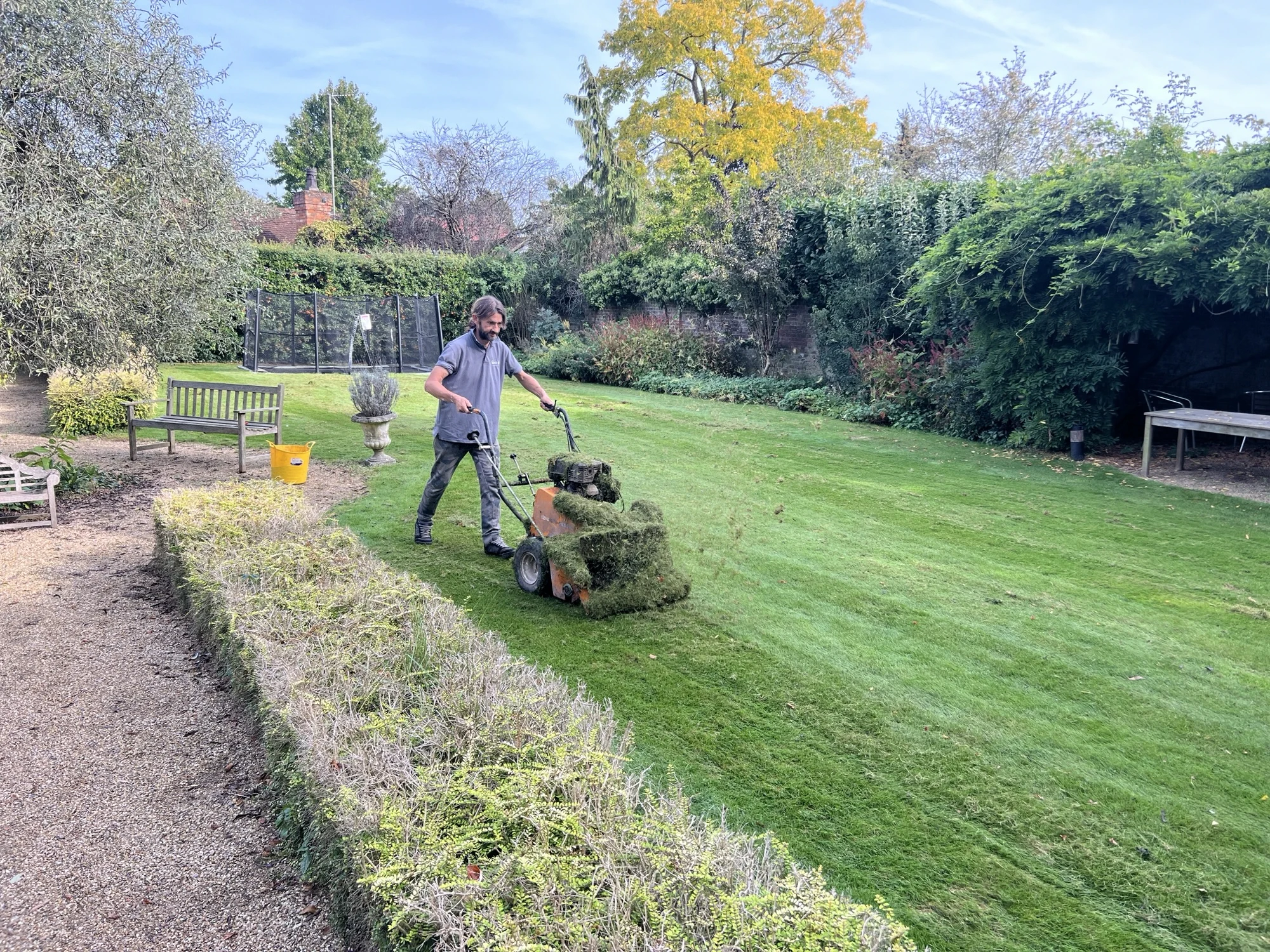
- Extensive lawns requiring seasonal treatment programmes: scarification, aeration, overseeding, feeding schedules and drainage management rather than mowing alone.
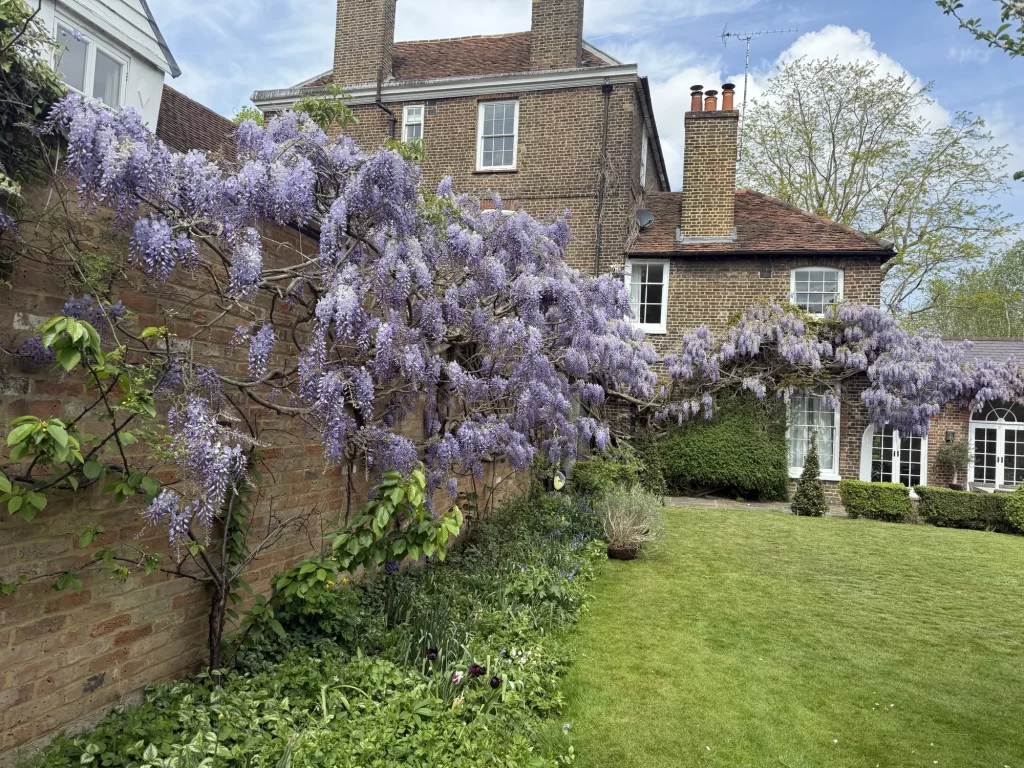
- Mature trees and layered planting with complex pruning requirements that must respect the natural habit of each species. Wisteria sinensis requires two distinct pruning cuts per year; Hydrangea paniculata behaves entirely differently from H. anomala subsp. petiolaris. These distinctions matter.
- Formal hedging including species such as Taxus baccata, Carpinus betulus, Ligustrum varieties and Fagus sylvatica, each requiring timed cutting to agreed profiles to maintain structure without damaging the plants.
- Structured shrub borders needing seasonal pruning, soil conditioning and plant health management to prevent overcrowding, maintain form and support long-term vigour.
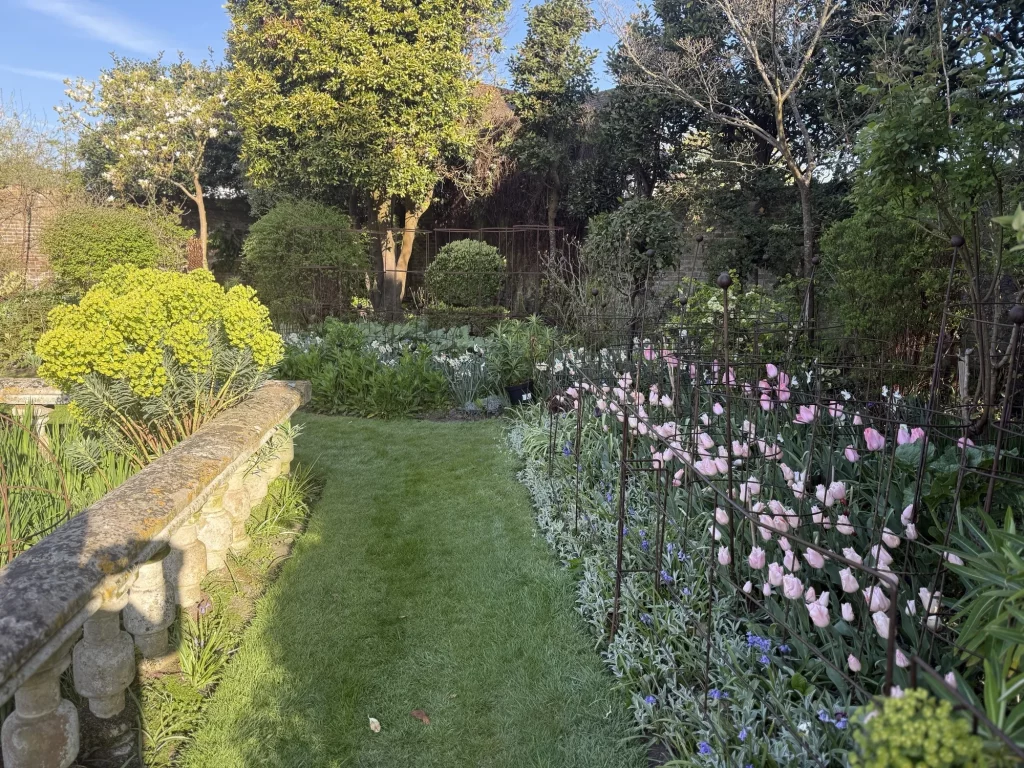
- Seasonal colour and perennial schemes that require planned management through the year. Not just deadheading but understanding how the planting structure should develop and where gaps need addressing.
- Hard landscaping including paving, paths, steps and water features that require ongoing care alongside the planting.
Without a clear maintenance plan, even well-designed gardens can lose definition and plant quality over time.
Our large garden maintenance programmes
The table below shows the horticultural tasks we plan across a typical large garden year. Every programme is tailored to the specific planting at your property; this is a framework, not a fixed checklist.
Typical horticultural tasks through the year
This gives a general indication of how a structured maintenance programme changes through the seasons. Exact timing depends on weather conditions, plant maturity and the needs of the site.
Working with estate owners and property managers
We regularly support owners of substantial private homes, estate managers, family offices managing residential properties, and managing agents overseeing large landscaped grounds.
We understand the requirements of managing a significant property and the importance of discretion, consistency and clear communication.
Where required, we provide:
- Written annual programmes of work agreed before the season begins
- Clear scopes of work and itemised proposals
- Risk assessments and method statements
- Public liability and employer’s liability insurance documentation
- Coordinated scheduling with other contractors on site
- Named point of contact throughout
Our aim is quiet efficiency and consistent presentation throughout the year. For communal and managed estate grounds, see our dedicated communal garden maintenance page.
Call us on 07738 178091 or request a visit to discuss your needs.
Long-term garden stewardship
Large gardens benefit from strategic thinking. Our focus is on protecting the original design intent of your garden, managing phased improvements as the planting matures, monitoring lawn health and soil condition over time, and supporting biodiversity where appropriate.
If your garden was professionally designed, by an in-house designer or an independent garden designer, we maintain it in a way that honours that intent. We understand how gardens are meant to develop and we manage them accordingly rather than imposing a generic maintenance approach.
Where structural improvements are needed alongside ongoing care, our garden design and build service can work within an existing maintenance framework. For planting redesign within an established garden, see our planting design and installation page.
You may also find these useful: low-maintenance garden design if you are considering reducing the maintenance burden of a section of the garden, and our flooded garden solutions page if drainage is a recurring challenge on your site.
Relevant completed projects
Our large garden drainage in Cobham project demonstrates the kind of structural thinking we bring to larger sites. The garden redesign in Cobham case study shows how we approach a substantial garden requiring both design improvement and ongoing care. See the full portfolio for further examples of completed work across Kingston, Surbiton and Surrey.
Common questions about large garden maintenance
How often do you visit a large garden?
Visit frequency depends on the size, complexity and planting of the garden. Most large gardens benefit from fortnightly visits during the active growing season (March to October) and reduced visits through autumn and winter for structural work, leaf clearance and dormant pruning. Some larger or particularly intensive sites are visited weekly. Frequency is agreed at survey stage as part of the written programme.
How is large garden maintenance priced?
We price by visit, based on agreed scope, labour hours per visit and number of visits per year. Specialist seasonal work (lawn renovation, hedge cutting, major pruning) is itemised separately. Materials, plants and waste removal are itemised. You receive a clear annual figure with the option of monthly invoicing to spread costs evenly across the year.
Will I have the same team each visit?
Yes. Continuity of staff matters on larger sites: the team learns the garden, recognises seasonal changes and notices issues early. You have a named point of contact and the same supervisor on every visit, with one or two skilled gardeners working alongside depending on the workload.
Do you provide written annual programmes?
Yes, as standard for any large garden maintenance contract. The annual programme is agreed in writing before the season begins, with month-by-month tasks, frequency of visits and seasonal focus areas all set out clearly. The programme is reviewed annually to reflect the maturing garden, weather patterns and any changes in your priorities.
Are you insured for high-value properties?
Yes. We carry full public liability and employer’s liability insurance, with cover levels appropriate for substantial private properties. Documentation is provided to managing agents, estate offices or homeowners on request, and can be reviewed annually as part of the contract renewal.
Can you coordinate with other contractors on site?
Yes. We regularly work alongside cleaners, pool teams, security contractors, tree surgeons and other specialists. Schedules are agreed in advance and we keep a clear point of contact for the estate manager or homeowner so coordination is smooth and access requirements are managed properly.
We already have a gardener. Can you work alongside them?
Where a homeowner has an existing gardener handling routine tasks, we can provide specialist input on a periodic basis, for example formal hedge cutting, lawn renovation programmes, structural pruning, or seasonal border management. This is a common arrangement for larger properties and works well when the scope is clearly defined.
Areas we serve
We provide large garden maintenance across Kingston upon Thames, Surbiton, Thames Ditton, New Malden, Richmond, Twickenham, Cobham, Esher and surrounding KT2, KT5 and KT6 areas. Our gardeners are in Surbiton and Kingston every week on our regular maintenance round.
If you own or manage a substantial garden or property and want dependable, horticulturally informed maintenance, we would be pleased to visit and discuss your requirements.
Request a site visit
We begin with a site visit to understand the scale, planting structure and maintenance priorities of your garden. Following this we provide a clear written proposal outlining visit frequency, scope of work and recommended seasonal focus. There is no obligation to proceed.
Good to know
Frequently asked questions
Visit frequency depends on the size, complexity and planting of the garden. Most large gardens benefit from fortnightly visits during the active growing season (March to October) and reduced visits through autumn and winter for structural work, leaf clearance and dormant pruning. Some larger or particularly intensive sites are visited weekly. Frequency is agreed at survey stage as part of the written programme.
We price by visit, based on agreed scope, labour hours per visit and number of visits per year. Specialist seasonal work (lawn renovation, hedge cutting, major pruning) is itemised separately. Materials, plants and waste removal are itemised. You receive a clear annual figure with the option of monthly invoicing to spread costs evenly across the year.
Yes. Continuity of staff matters on larger sites: the team learns the garden, recognises seasonal changes and notices issues early. You have a named point of contact and the same supervisor on every visit, with one or two skilled gardeners working alongside depending on the workload.
Yes, as standard for any large garden maintenance contract. The annual programme is agreed in writing before the season begins, with month-by-month tasks, frequency of visits and seasonal focus areas all set out clearly. The programme is reviewed annually to reflect the maturing garden, weather patterns and any changes in your priorities.
Yes. We carry full public liability and employer's liability insurance, with cover levels appropriate for substantial private properties. Documentation is provided to managing agents, estate offices or homeowners on request, and can be reviewed annually as part of the contract renewal.
Yes. We regularly work alongside cleaners, pool teams, security contractors, tree surgeons and other specialists. Schedules are agreed in advance and we keep a clear point of contact for the estate manager or homeowner so coordination is smooth and access requirements are managed properly.
Where a homeowner has an existing gardener handling routine tasks, we can provide specialist input on a periodic basis, for example formal hedge cutting, lawn renovation programmes, structural pruning, or seasonal border management. This is a common arrangement for larger properties and works well when the scope is clearly defined.