
Small and low-maintenance garden care
Regular, knowledgeable upkeep for compact gardens across Kingston, Surbiton and Surrey.
Small gardens deserve the same level of care as larger ones, often more, because in a compact space every plant earns its place and poor timing shows immediately. Our maintenance visits are carried out by trained horticulturists who understand how plants behave through the seasons. We do not apply a standard package to every garden; each programme is built around the specific planting, aspect, soil conditions and how much involvement you want from us. Flourish is led by Craig Davis, who holds a BSc (Hons) in Horticulture and brings over 40 years of practical experience, and that knowledge shapes how every programme is set up.
For a broader overview of all our maintenance services, see our garden maintenance overview.
In this guide
- Why small gardens need specialist care
- What we do on each visit
- Seasonal planting for small gardens
- Low-maintenance garden solutions
- Lawn care for small gardens
- Why choose Flourish
- Relevant completed projects
- Common questions
- Areas we cover
Why small gardens need specialist care
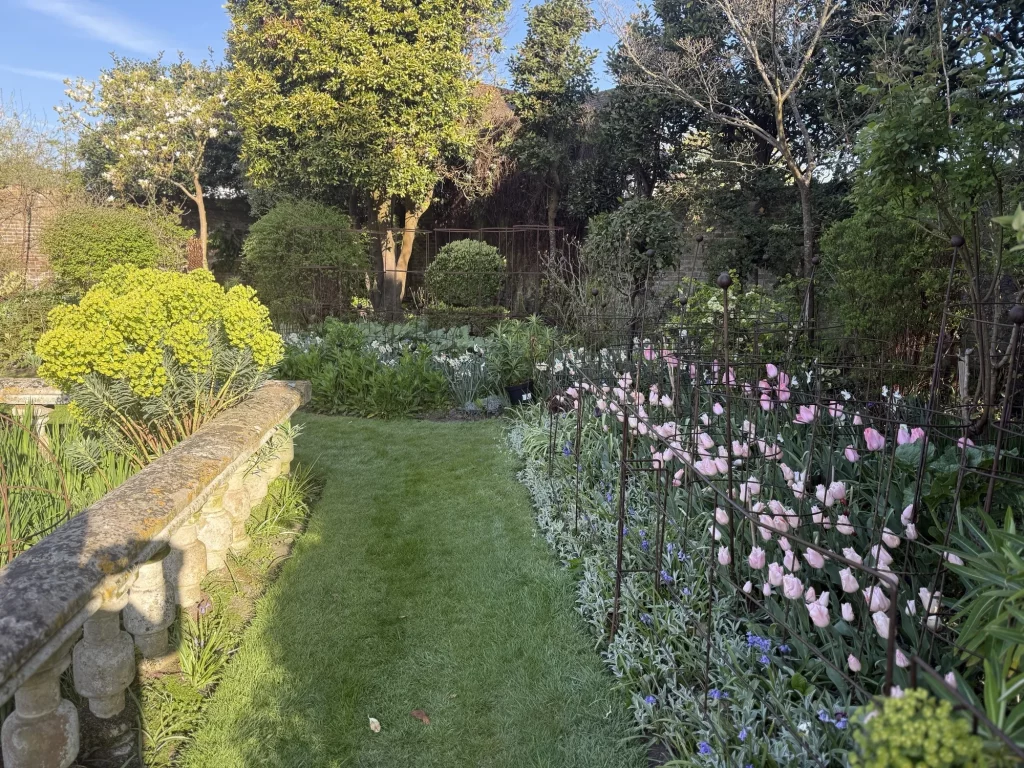
Compact urban gardens in Kingston, Surbiton and the surrounding Surrey areas present specific challenges that a general gardening round does not address well.
London clay soil drains poorly and compacts easily, particularly in small beds under pressure from foot traffic and established root systems. Shaded aspects, common in terraced and semi-detached properties, require a different planting and pruning approach to open gardens.
Limited bed space means that overcrowded or poorly timed pruning is visible immediately and recovery takes a full season.
We understand these conditions because we work in them every week. For gardens with particular aspect challenges, see our advice on north-facing gardens, east-facing gardens and west-facing gardens.
What we do on each visit
Depending on your garden and the time of year, a typical maintenance visit includes:
- Border management: weeding, deadheading and tidying to keep beds presentable. We work to the correct pruning timing for each plant rather than cutting everything back at once.
- Pruning and shaping: carried out to the natural habit and seasonal requirements of each shrub and climber. Rosa varieties, Hydrangea species, Clematis groups and wall-trained plants are each treated differently.
- Lawn care: mowing, edging, feeding and seasonal treatments. For small lawns with persistent problems (moss, compaction, shade) we diagnose and treat the cause rather than mow over it.
- Patio and hard surface care: removal of moss, algae and weed growth from paving, paths and steps. Drainage channels kept clear.
- Container and pot plant care: watering, feeding, deadheading and seasonal replanting of containers where included in the programme.
- Pest and disease monitoring: early identification of problems before they spread. Eco-friendly, responsible treatments used throughout.
- Seasonal preparation: cutbacks, mulching, bulb planting and winter or spring preparation timed to the horticultural calendar.
Call us on 07738 178091 or request a consultation.
Seasonal planting for small gardens
A small garden can have strong seasonal interest throughout the year. The cards below show the planting tasks and opportunities we work through across the four seasons.
Season
Spring
March to May
What we plant
Key maintenance tasks
- First lawn treatments, feed and pre-emergent weed control
- Cut back ornamental grasses before new growth begins
- Spring border tidy, remove winter debris and mulch beds
- Rosa pruning and first feed
- Irrigation system check before the growing season
Season
Summer
June to August
What we plant
- Lavandula, drought-tolerant once established, pollinator magnet
- Nepeta × faassenii, long-flowering, low-maintenance edging
- Dahlia, single-flowered varieties support pollinators into autumn
- Echinacea, tolerates Surrey clay, excellent wildlife value
- Verbena bonariensis, airy height in compact borders
Key maintenance tasks
- Regular deadheading to extend flowering period
- Wisteria sinensis summer cut, reduce to five or six leaves
- Lawn feeding programme and irrigation monitoring
- Second hedge cut for fast-growing species
- Pest and disease monitoring, especially Rosa and Taxus
Season
Autumn
September to November
What we plant
- Tulipa bulbs, planted October to November for spring colour
- Narcissus bulbs, naturalise in grass or borders
- Allium bulbs, best planted fresh each autumn
- Cyclamen hederifolium, excellent ground cover in dry shade
- Helleborus, winter and early spring interest in shaded spots
Key maintenance tasks
- Lawn renovation, scarification, aeration and overseeding
- Main border cutback, timed to preserve wildlife habitat
- Thorough leaf clearance to protect lawns and drainage
- Soil improvement, organic matter incorporated into borders
- Tender plants lifted or given winter protection
Season
Winter
December to February
What we plant
- Cornus alba, vivid stem colour through the coldest months
- Sarcococca, winter-scented, shade-tolerant evergreen
- Galanthus, snowdrops planted in the green for best results
- Hamamelis, witch hazel provides scent and structure in January
- Erica carnea, ground-covering winter heather for containers
For planting inspiration suited to your garden’s specific conditions, see our garden advice section covering orientation, soil types and garden styles.
Low-maintenance garden solutions
If your garden is designed to be easy-care, we maintain it accordingly. This includes:
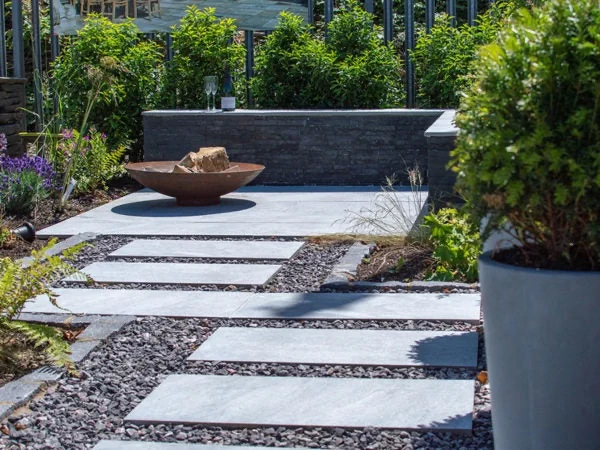
- Gravel and rock garden upkeep: raking, weed control, edge definition
- Evergreen structural planting care providing year-round form with minimal intervention
- Mulching and ground cover management to suppress weeds and retain moisture
- Alternative lawn maintenance for spaces where traditional grass is impractical
If you are considering a redesign to reduce ongoing maintenance, see our low-maintenance garden design service page. Our in-house designer Eli Jacobacci creates planting schemes specifically suited to busy homeowners who want a well-structured garden without significant ongoing input.
Lawn care for small gardens
Compact lawns experience specific problems that larger lawns handle more easily, including poor drainage, shade, seasonal wear, moss and compaction. We provide:
- Feeding, scarifying and overseeding programmes timed to the season
- Weed and moss identification and treatment
- Aeration to relieve compaction in clay-dominant soils
- Overseeding with shade-tolerant cultivars where appropriate
- Drainage assessment and advice for lawns that puddle or waterlog
For gardens with persistent waterlogging or drainage failure, see our flooded garden solutions page. Our large garden drainage in Cobham portfolio project shows how we approach drainage challenges.
Why choose Flourish
- Plant knowledge that shapes the work: Craig Davis, who leads the business, holds a BSc (Hons) in Horticulture and brings over 40 years of practical experience to every site
- Multi-generational horticultural heritage: three generations of professional horticulture underpinning every programme
- Tailored, not packaged: every garden assessed individually, no standard rounds
- APL, TrustMark and Gardeners Guild accredited; Chartered Institute of Horticulture member: independently verified professional standards. See our partners and accreditations page
- Rated 5.0 from 57 Google reviews. See our customer reviews
- No subcontracting: the same team delivers consistently
Relevant completed projects
Our garden maintenance in Richmond case study shows how we approach an established residential garden on a regular programme. The small garden in Thames Ditton and small garden makeover in Richmond projects demonstrate our approach to compact spaces. See the full portfolio for further examples.
Common questions about small garden maintenance
How often will you visit?
Most small gardens are well served by fortnightly visits during the active growing season (March to October) and reduced visits through autumn and winter. For smaller, structured gardens with mostly evergreen planting, monthly visits may be enough. Frequency is agreed at the survey stage based on what your garden actually needs rather than a fixed schedule.
How much does small garden maintenance cost?
Cost depends on size, planting complexity, lawn area, container count and visit frequency. We price by visit with a written annual figure provided up front, and the option of monthly invoicing to spread costs evenly. There are no hidden charges and any specialist seasonal work (lawn renovation, hedge cutting) is itemised separately so you can see what you are paying for.
My garden is mostly shaded. Can you still help?
Yes. Shaded gardens, particularly common in Kingston, Surbiton and Richmond terraces, need a different approach to planting and care. We work with shade-tolerant species (Sarcococca, Helleborus, Hakonechloa macra, ferns and selected hostas), specify shade-tolerant lawn cultivars where appropriate, and manage pruning of overhanging trees and shrubs to let usable light through.
Do you use chemicals?
We use chemicals sparingly and only where appropriate. Targeted treatments are used for specific problems (moss in lawns, persistent weeds in paving). Border management relies on hand weeding, mulching and good plant spacing rather than herbicides. Pest control is based on identification and integrated management rather than routine spraying.
Will I have the same gardener each visit?
Yes, continuity matters. The same trained gardener or small team handles your garden each visit, building knowledge of the planting, conditions and your preferences over time. You also have a named point of contact for any questions or scheduling changes.
Can you handle my containers and pots?
Yes. Container care is included in most small garden programmes: watering, feeding, deadheading and seasonal replanting. For clients with substantial container collections, we can plan twice-yearly replanting (spring and autumn) to keep the garden looking refreshed without significant overhaul.
Areas we cover
We provide small garden maintenance across Kingston upon Thames, Surbiton, Berrylands, Richmond, Twickenham, Teddington, Thames Ditton, Esher, Cobham, Ham, New Malden, East Sheen and surrounding areas.
Book a free site visit
We visit your garden, assess the planting and conditions, and provide a written proposal covering visit frequency, scope of work and cost. There is no obligation to proceed.
Good to know
Frequently asked questions
Most small gardens are well served by fortnightly visits during the active growing season (March to October) and reduced visits through autumn and winter. For smaller, structured gardens with mostly evergreen planting, monthly visits may be enough. Frequency is agreed at the survey stage based on what your garden actually needs rather than a fixed schedule.
Cost depends on size, planting complexity, lawn area, container count and visit frequency. We price by visit with a written annual figure provided up front, and the option of monthly invoicing to spread costs evenly. There are no hidden charges and any specialist seasonal work (lawn renovation, hedge cutting) is itemised separately so you can see what you are paying for.
Yes. Shaded gardens, particularly common in Kingston, Surbiton and Richmond terraces, need a different approach to planting and care. We work with shade-tolerant species (Sarcococca, Helleborus, Hakonechloa macra, ferns and selected hostas), specify shade-tolerant lawn cultivars where appropriate, and manage pruning of overhanging trees and shrubs to let usable light through.
We use chemicals sparingly and only where appropriate. Targeted treatments are used for specific problems (moss in lawns, persistent weeds in paving). Border management relies on hand weeding, mulching and good plant spacing rather than herbicides. Pest control is based on identification and integrated management rather than routine spraying.
Yes, continuity matters. The same trained gardener or small team handles your garden each visit, building knowledge of the planting, conditions and your preferences over time. You also have a named point of contact for any questions or scheduling changes.
Yes. Container care is included in most small garden programmes: watering, feeding, deadheading and seasonal replanting. For clients with substantial container collections, we can plan twice-yearly replanting (spring and autumn) to keep the garden looking refreshed without significant overhaul.