Garden pests and diseases
A practical UK guide to the pests and diseases that actually affect gardens in our area, and the plants that resist them.
Almost every garden in Kingston, Surbiton, Esher and Coombe will see some pest or disease pressure across the year. The aim is not to eliminate it, which is neither realistic nor desirable in a healthy garden, but to manage it sensibly: knowing what to expect, when to expect it, which plants resist it, and when intervention is actually needed.
This guide focuses on the pests and diseases that genuinely matter in South West London and Surrey gardens, and on the cultivars (mostly UK-bred or RHS Award of Garden Merit holders) that we plant in volume because they shrug off the problems that defeat lesser plants.
A garden’s first line of defence is healthy soil and good design
Most pest and disease problems in domestic gardens are downstream of three things: poor soil, plants positioned in the wrong conditions, and overcrowding. Get those right and the rest is manageable.
- Soil structure. Improve London Clay with annual mulches of well-rotted compost or composted bark. Healthy soil hosts the beneficial microorganisms that keep root diseases in check.
- Right plant, right place. Sun-lovers in shade and shade-lovers in sun both end up stressed and susceptible. The Flourish Sun Planner is a useful starting point for matching plants to aspect.
- Spacing and airflow. Crowded plants trap moisture and stagnant air, which is what powdery mildew, rust and grey mould need to thrive. Plant with eventual size in mind, not the size in the pot.
- Garden hygiene. Clear fallen leaves from beneath roses (black spot overwinters in leaf litter), remove diseased material rather than composting it, and clean secateurs between plants when pruning.
- Encourage natural predators. A garden with ladybirds, lacewings, hoverflies, blue tits and a healthy beetle population manages most aphid and caterpillar pressure on its own. Pollinator-friendly planting and the absence of broad-spectrum pesticides are what brings them in.
The pests that actually matter in our area
Box tree moth (Cydalima perspectalis)
Now widespread across south-west London including every KT postcode. The caterpillars can strip a mature Buxus sempervirens hedge in days, and the moth produces two or three generations a year. The RHS now actively recommends planting alternatives to box for new schemes rather than fighting the moth indefinitely. Reliable replacements include Ilex crenata ‘Dark Green’, Euonymus japonicus ‘Green Spire’ and Taxus baccata for clipped structure.
Vine weevil (Otiorhynchus sulcatus)
Adult weevils notch the leaf margins of Heuchera, Rhododendron and many container plants. The real damage is done underground by the larvae, which eat roots and can kill container-grown plants without warning. Biological control with nematodes (Steinernema kraussei) applied to soil in autumn and again in spring is the most effective route. Repotting containers annually with fresh compost helps catch infestations early.
Slugs and snails
The most universal garden problem in our area, made worse by the moisture-retentive London Clay. Hosta, Delphinium and young Dahlia are the classic targets. Ferric phosphate pellets (sold as Sluggo or Growing Success Advanced Slug Killer) are wildlife-safe and approved for organic gardens, unlike the older metaldehyde products which were banned for outdoor use in 2022. Encourage thrushes, hedgehogs and ground beetles, which are all serious slug predators.
Aphids
Universal across most plants, but rarely a serious problem in a healthy garden. Ladybirds, lacewings, hoverfly larvae and blue tits feed on them in large numbers. A heavy infestation can be hosed off with water or treated with insecticidal soap; broad-spectrum pesticides do more harm than good by removing the beneficial insects that would otherwise keep populations in check.
Lily beetle (Lilioceris lilii)
Bright red adult beetles defoliate Lilium and Fritillaria. Hand-picking remains the most reliable control. Easy to spot, easy to remove, but requires vigilance from April onwards.
The diseases that actually matter in our area
Box blight (Calonectria pseudonaviculata)
A fungal disease that causes brown patches and defoliation on Buxus. Combined with box tree moth, it has effectively ended box’s reign as the default for clipped low hedging in our area. The same alternatives apply: Ilex crenata, Euonymus japonicus ‘Green Spire’ or Taxus baccata.
Rose black spot (Diplocarpon rosae)
The most common rose disease in the UK. Spores overwinter on fallen leaves, so autumn clean-up matters more than spring spraying. Modern UK-bred shrub roses are vastly more resistant than older Hybrid Tea cultivars. See the cultivar shortlist below.
Powdery mildew
White powdery coating on leaves of Phlox, Aster, Rosa, Quercus and many others. Most common in late summer when plants are drought-stressed. Better spacing, mulching and watering at the base (never overhead in the evening) prevents most cases. Resistant cultivars are the most reliable long-term route.
Honey fungus (Armillaria)
The most destructive garden disease in the UK and well established across our area. It kills woody plants by attacking the roots and can persist in soil for decades. No chemical control exists. Species with useful resistance include Taxus baccata, Carpinus betulus and Sarcococca, and ornamental grasses are very rarely affected. Susceptible plants best avoided where the disease is present include Prunus, Malus, Rhododendron, Cedrus, Hydrangea and beech (Fagus).
Clematis wilt
Sudden collapse of Clematis stems, particularly large-flowered hybrids. Less common with small-flowered species and viticella-group Clematis, which is what we specify for most planting schemes.
Plants we trust for disease resistance in UK gardens
This shortlist is built around UK-bred or UK-proven cultivars, most of which hold an RHS Award of Garden Merit. These are the plants we specify in volume across Kingston, Surbiton, Esher and Coombe gardens because they perform reliably on London Clay with the disease pressure typical of our climate.
Roses (Rosa)
Modern UK-bred shrub roses, led by David Austin’s English roses, have outstanding disease resistance compared with older Hybrid Teas. Reliable, disease-resistant choices include:
- Rosa ‘Munstead Wood’ (David Austin, deep crimson, exceptional black spot resistance)
- Rosa ‘Olivia Rose Austin’ (David Austin, soft pink, widely regarded as one of the most disease-resistant David Austin roses)
- Rosa ‘Gertrude Jekyll’ (David Austin, rich pink, strong fragrance, AGM)
- Rosa ‘Roald Dahl’ (David Austin, apricot, healthy foliage, reliable repeat flowering)
- Rosa ‘Bonica’ (Meilland shrub rose, AGM, near-immune to black spot)
Hardy geraniums (Geranium)
Among the toughest plants in the British border. Almost trouble-free.
- Geranium ‘Rozanne’ (RHS Plant of the Centenary, flowers May to first frost)
- Geranium macrorrhizum (excellent dry-shade groundcover)
- Geranium phaeum ‘Samobor’ (handsome marked foliage)
Note: hardy Geranium (cranesbills) are distinct from Pelargonium, the tender bedding plants commonly sold as “geraniums” at garden centres. The two are not interchangeable in design or hardiness.
Phlox (Phlox paniculata)
Older Phlox cultivars are notorious for powdery mildew. These newer cultivars have proven resistance:
- Phlox paniculata ‘David’ (pure white, AGM, the benchmark for mildew resistance)
- Phlox paniculata ‘Blue Paradise’ (rich blue-violet, strong resistance)
- Phlox paniculata ‘Jeana’ (lavender-pink, exceptional pollinator value)
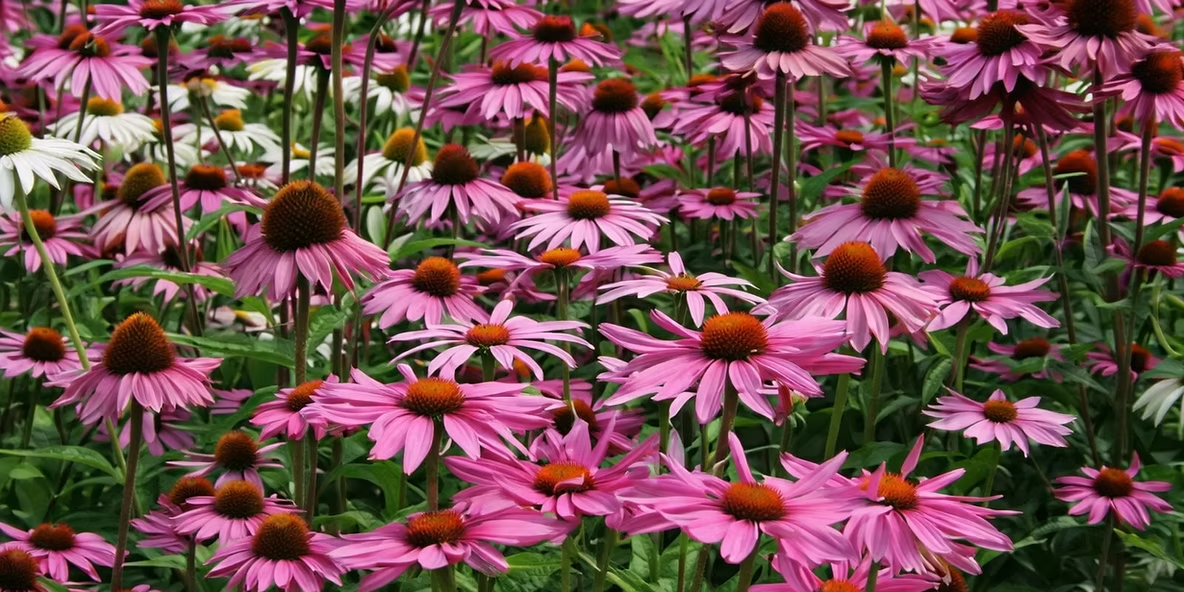
Coneflowers (Echinacea)
The species and species-type cultivars consistently outperform fancy modern hybrids on UK clay. See our full Echinacea guide for detail.
- Echinacea purpurea ‘Magnus’ (AGM, the benchmark)
- Echinacea purpurea ‘White Swan’ (soft white, AGM)
- Echinacea pallida (slender drooping petals, naturalistic schemes)
Daylilies (Hemerocallis)
- Hemerocallis ‘Corky’ (yellow, AGM)
- Hemerocallis ‘Marion Vaughn’ (lemon-yellow, AGM, exceptional disease resistance)
- Hemerocallis ‘Pink Damask’ (clear pink, AGM)
Lavender (Lavandula)
Lavender’s main weakness is root rot on heavy wet soil. Plant on a slight mound, amend the planting hole heavily with horticultural grit, and the listed cultivars perform reliably for ten years or more.
- Lavandula angustifolia ‘Hidcote’ (deep purple, AGM, the most reliable English lavender)
- Lavandula angustifolia ‘Munstead’ (softer blue-purple, AGM)
- Lavandula × intermedia ‘Grosso’ (taller, more vigorous, AGM)
Salvia (Salvia nemorosa)
- Salvia nemorosa ‘Caradonna’ (dark stems, deep purple flowers, AGM)
- Salvia nemorosa ‘Ostfriesland’ (compact, prolific flowering, AGM)
- Salvia × sylvestris ‘Mainacht’ (May Night, deep violet, AGM)
Box alternatives for clipped structure
Given the combined pressure of box blight and box tree moth across our area, these are the species we now specify in place of Buxus for new schemes:
- Ilex crenata ‘Dark Green’ and ‘Convexa’ (the closest visual match to box)
- Euonymus japonicus ‘Green Spire’ (slim columnar habit, increasingly RHS-recommended)
- Taxus baccata (yew, the long-term answer for substantial clipped hedging)
When to call in help
Most everyday pest and disease pressure is manageable with good cultural practice and the right plant choices. Some situations warrant professional input:
- Suspected honey fungus, particularly where mature trees are involved
- Established box hedging showing signs of blight or moth damage, where replacement is being considered
- Recurring problems across multiple plants, which usually points to a wider soil, drainage or design issue
- Mature specimen trees showing decline, where an arboriculturist may be needed before a landscape designer
For wider context on the cultivars we plant in volume across our area, see our companion guides on Echinacea, on refreshing a garden with new planting and on multi-stem trees.
Let’s create your perfect garden
Flourish Landscaping designs and maintains gardens across Kingston, Surbiton, Esher, Coombe and the surrounding KT postcodes. We specify disease-resistant plants as standard, prepare ground properly to prevent the soil-borne issues that defeat lesser planting, and maintain gardens to keep the pressure manageable year after year.
Contact us today to arrange a consultation and start transforming your garden into the perfect outdoor space for you and your family.