Drought-tolerant gardens
Plants and design principles for a garden that thrives through dry UK summers without standing over it with a hose.
UK summers are getting hotter and drier. The 2022 and 2025 seasons both delivered extended drought across the south-east, and Met Office projections point firmly in the same direction. For 2026 the Royal Horticultural Society has named the changing climate as the principal driver of how we now garden. A garden designed for drought tolerance is no longer a niche style choice. It is a sensible response to the climate we now live with, and on a well-prepared site it can look every bit as beautiful as any traditional border.
A drought-tolerant garden is one designed and planted to need little or no supplementary watering once established. It is not a cactus garden, not a desert, and not a compromise. Beth Chatto’s celebrated gravel garden at Elmstead Market, established on a former car park in 1992, has by her own published rule never been watered. It remains one of the most quietly beautiful gardens in Britain. The principles that make it work are not exotic. They are about soil, plant choice and a few key design decisions made early.
We design and build drought-tolerant gardens across Kingston, Surbiton, Richmond and the wider Surrey area. Most of our patch sits on heavy London clay, which presents a real but very solvable challenge. The plants of the dry Mediterranean garden palette evolved for thin, stony, sharply drained soils. To grow them well on clay, you have to give them what they expect.
What ‘drought-tolerant’ actually means
A drought-tolerant plant is one that, once its roots are established, can survive and look good through prolonged dry weather without supplementary water. ‘Once established’ is the critical phrase: in the first season, even the toughest Mediterranean shrub needs deep, occasional watering to push its roots down. After that, it should be on its own. A drought-tolerant garden, by extension, is a planting and design scheme built around plants of that kind, on a soil prepared to support them, with mulching and layout choices that minimise water loss.
Six principles that make it work
1. Get the drainage right
Mediterranean plants almost never die of thirst in a UK garden. They die of cold, wet feet in winter. On Surrey clay, that means raising planting areas, adding grit, and accepting that drainage is the single most important investment. We typically build dry-garden beds 150–300 mm proud of the surrounding ground, incorporate generous quantities of horticultural grit (10–20 mm), and finish with a gravel mulch. Done properly, the bed sheds winter rain and holds summer warmth.
2. Right plant, right place
Sun is non-negotiable for most of the plants below. The hot, south- or west-facing border is the natural home for a drought-tolerant scheme. Shade demands a different palette: dry shade can still be a low-water garden, but it is built around Geranium macrorrhizum, Epimedium, Helleborus and ferns, not lavender. Plan the scheme to the conditions you actually have, not the ones you wish you had. The orientation of your garden dictates what is genuinely possible.
3. Plant in autumn
Autumn planting (September to early November in Surrey) gives roots six months of cool, moist soil to establish before the first hot, dry spell. Spring planting works for most species too, but commits you to careful watering through the first summer. Avoid planting in mid-summer unless you can guarantee daily attention.
4. Water deeply, infrequently, only at establishment
A light daily sprinkle trains roots to stay near the surface, which is the opposite of what a drought-tolerant garden needs. In the first growing season, water thoroughly once a week or so, soaking the root zone, then let the surface dry between waterings. By the second year, almost nothing should need watering at all, even in a hot summer. For larger or higher-value plantings, a properly designed drip irrigation system takes the guesswork out of the first season.
5. Mulch with gravel, not bark
A 50–75 mm layer of washed gravel or stone chippings (we tend to use 10–20 mm in pale buff or grey) does three things at once. It keeps roots cool, locks moisture into the soil, and crucially keeps the crowns of Mediterranean plants dry through the winter. Bark and composted mulches hold moisture against the stem and encourage rot, which is why they belong on perennial borders and not on a dry garden.
6. Group plants by water need
Designers call it hydrozoning: putting plants with similar water needs together so you can manage them as one. Mediterranean shrubs and steppe perennials in the sunniest, best-drained spot. Shade plants in the cooler, damper area. Thirstier specimens, if you have them, in their own zone where they can be watered without drowning the rest. A garden zoned this way is far easier to maintain and far more resilient through a heatwave.
A drought-tolerant plant palette for UK gardens
Every plant below is hardy in southern England on a properly prepared, sunny site. Each has earned its place by being genuinely drought-tolerant once established, not merely ‘dry-tolerant’ on a good year. Links go to the RHS Plant Finder for full cultural detail.
Mediterranean and sub-shrubs
- Lavandula angustifolia ‘Hidcote’ – deep violet, compact, the most reliable English lavender. Lavandula ‘Munstead’ is the lighter alternative. Both demand sharp drainage.
- Cistus × purpureus – sun rose. Crinkled magenta flowers with dark blotches; short-lived but generous and resilient.
- Salvia rosmarinus (rosemary, formerly Rosmarinus officinalis) – aromatic, evergreen, useful in the kitchen, structural in the garden.
- Phlomis fruticosa – Jerusalem sage. Soft grey-green leaves and tiered whorls of butter-yellow flowers in early summer; striking seed heads that last into winter.
- Santolina chamaecyparissus – cotton lavender. A neat silver dome that responds well to clipping. Good as low edging.
- Salvia ‘Blue Spire’ (formerly Perovskia ‘Blue Spire’) – Russian sage. Tall, ghostly, late-summer haze of blue flower over silver stems.
- Teucrium fruticans – tree germander. Silvered evergreen with pale blue flowers; takes clipping well.
- Euphorbia characias subsp. wulfenii – substantial evergreen mounds and lime-green flower heads from late winter onwards. Architecturally one of the best.
Steppe and prairie perennials
- Achillea ‘Moonshine’ – yarrow. Flat plates of pale yellow over ferny silver foliage; indifferent to drought.
- Verbena bonariensis – tall, wiry, transparent. Self-seeds gently into gravel and rewards every season.
- Eryngium giganteum – Miss Willmott’s Ghost. Silver-blue bracts and architectural form; a biennial that seeds itself reliably.
- Echinops ritro – globe thistle. Steel-blue spheres adored by bees, structural through autumn.
- Hylotelephium ‘Herbstfreude’ (formerly Sedum ‘Autumn Joy’) – succulent foliage from spring, deepening rose flower heads in autumn, statuesque silhouettes in winter.
- Salvia nemorosa ‘Caradonna’ – dark stems, deep violet flower spikes; a Piet Oudolf staple for good reason.
- Nepeta racemosa ‘Walker’s Low’ – catmint. Months of mauve flower and aromatic grey leaves at the border front.
- Centranthus ruber – red valerian. Self-seeds into walls and gravel; tough, long-flowering, almost weed-like in the best sense.
- Knautia macedonica – deep crimson scabious-like flowers on wiry stems through summer.
- Crambe maritima – sea kale. Glaucous, sculptural leaves and clouds of honey-scented white flower in early summer. A wild architectural plant.
Drought-proof grasses
Most grasses earn their place in a drought-tolerant scheme because they tolerate dry soil, give movement and form, and ask for one chop a year. For a wider treatment of the topic, see our guide to ornamental grasses for gardens.
- Stipa tenuissima (syn. Nassella tenuissima) – Mexican feather grass. Fine, blonde, ceaselessly moving in the lightest breeze.
- Stipa gigantea – golden oats. Tall (1.8–2.4 m), transparent flower stems that catch low sun beautifully.
- Festuca glauca – blue fescue. Tight blue-grey tussocks; effective in repetition.
- Helictotrichon sempervirens – blue oat grass. Larger, evergreen, more structural than fescue.
Spring bulbs that vanish before the drought
Most spring bulbs are naturally drought-adapted: they grow, flower and retreat underground before summer arrives. They are the perfect partners for a gravel garden. For seasonal planting suggestions across the wider garden, see our planting guides.
- Allium hollandicum ‘Purple Sensation’ – the classic purple drumstick. Effective in repetition or scattered through grass.
- Allium cristophii – vast (200 mm) silvery-lilac spheres, brilliant seed heads through summer.
- Species tulips such as Tulipa turkestanica and Tulipa clusiana – persistent year after year unlike most hybrids, and naturally suited to dry, sunny conditions.
Hardy succulents for the driest spots
- Sempervivum (houseleeks) – the original green-roof and rockery plant; wants only sun and grit.
- Phedimus spurius (formerly Sedum spurium) – mat-forming stonecrop, spreads gently, smothers weeds.
The Beth Chatto gravel garden: a UK reference worth visiting
If you are serious about this style, the Beth Chatto Gardens at Elmstead Market in Essex are well worth a day out. The gravel garden there has not been watered since it was created on a former car park in 1992, on one of the driest sites in Britain. Every plant in it has earned its place. It is the most useful place in the country to test what works, and the principles travel directly to a sunny, well-drained border in Surrey. Olivier and Clara Filippi at Pépinière Filippi in southern France have produced the most thorough academic work on the subject, published in English as The Dry Gardening Handbook.
What about lawns?
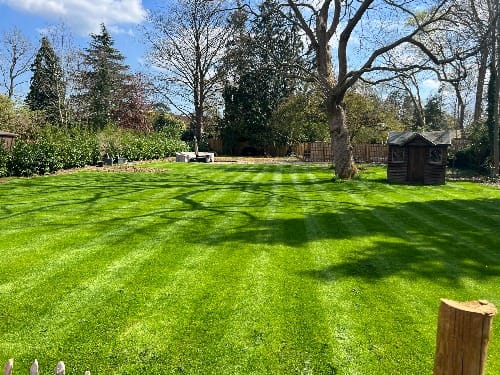
A traditional perennial ryegrass lawn will go brown in a hot, dry summer. The good news is that it almost always recovers when the rains return in September: brown is dormant, not dead. The realistic options for a drier future are to accept the seasonal browning, to switch to a more resilient mixed-species lawn (incorporating clover, yarrow and self-heal), or to reduce the lawn area in favour of planted ground and gravel. We do not recommend artificial turf as an answer: it offers nothing to soil or pollinators, becomes unpleasantly hot in summer, and creates its own disposal problem at end of life.
Plants to avoid in a drought-tolerant scheme
- Hydrangea macrophylla – the mophead hydrangea wants steady moisture and shows its discomfort fast in dry summers. Hydrangea paniculata is more tolerant if you are set on the genus.
- Most ferns – cool, damp, shaded conditions are their habit. There is a separate dry-shade palette that suits much of Surrey better.
- Annual bedding – petunias, begonias, busy lizzies. Constant water demand and a single-season life.
- Hybrid tea and floribunda roses – thirsty, hungry, prone to disease in heat-stressed conditions. If you want roses on clay, see our guide to the best roses for clay soil.
- Rhododendrons and azaleas – need acid soil and reliable moisture. The wrong genus for most Surrey clay and for any drier future.
- Tree ferns (Dicksonia antarctica) – spectacular but truly thirsty, and not happy through a UK heatwave.
“The clients who ask us for a drought-tolerant garden are usually thinking about the hot summers they have just lived through. The garden we build for them is shaped just as much by what happens in February. Get the drainage right, get the planting in at the right time, and the dry summer largely takes care of itself.”
Craig Davis, director, Flourish Landscaping. Craig holds a BSc (Hons) in Horticulture and brings more than 30 years of practical experience to every garden the team designs and plants.
Frequently asked questions
Can I have a drought-tolerant garden on clay soil?
Yes, but the preparation matters more than on a free-draining site. Raise the planting beds 150–300 mm above surrounding ground, incorporate generous quantities of horticultural grit, and finish with a 50–75 mm gravel mulch. The aim is to keep crowns dry through winter wet, which is what kills Mediterranean plants on clay far more often than summer drought does.
Do drought-tolerant plants need any watering at all?
Yes, in the first season. Until roots are established (usually six to twelve months from planting), even the toughest Mediterranean plant needs deep, occasional watering to push roots down. After that, almost nothing should need supplementary water, even in a hot UK summer. The aim of the design is a garden that is self-sufficient from year two onwards.
When is the best time to plant a drought-tolerant garden?
September to early November is ideal in Surrey. The soil is still warm, the cool months ahead give roots a long establishment period, and the plants are ready for their first dry summer with a strong root system. Spring planting (March to early May) is workable but commits you to watering through the first summer. Mid-summer planting should be avoided unless you can water daily.
What is the best mulch for a drought-tolerant garden?
Washed gravel or stone chippings, 10–20 mm grade, laid 50–75 mm deep. Gravel keeps roots cool, locks moisture into the soil, and crucially keeps the crowns of Mediterranean plants dry through winter. Bark and composted mulches are the right answer for traditional perennial borders, not for a dry garden, because they hold moisture against the stem and encourage rot.
Will my lawn survive a hot, dry summer?
A traditional perennial ryegrass lawn will go brown in extended drought, but it almost always recovers when the rains return. Brown is dormant, not dead. If the seasonal browning is a problem, the best options are a mixed-species lawn (clover, yarrow, self-heal), a longer cut height (35–50 mm), or reducing the lawn area in favour of drought-tolerant planting. Our garden maintenance guides cover the practical steps. We do not recommend artificial turf as a replacement.
Does a drought-tolerant garden have to look Mediterranean?
No. The Mediterranean palette is the obvious one, but steppe and prairie planting (drawing on plants from the Russian, central European and North American grasslands) gives a softer, more meadow-like look while being just as drought-tolerant. Designers like Tom Stuart-Smith and Piet Oudolf have shown that drought tolerance and a naturalistic British style can coexist beautifully. We tailor the look to the architecture of your house and the way you want the garden to feel.
A garden built for the summers ahead
If you would like a garden designed and planted to thrive through the summers we now have to plan for, we’d be glad to talk it through. Flourish Landscaping designs, builds and maintains drought-tolerant gardens across Kingston, Surbiton, Richmond and the wider Surrey area, with planting schemes built around your soil, aspect and the way you actually live in the space.
Contact us to arrange a consultation and start the conversation.
Good to know
Frequently asked questions
Yes, but the preparation matters more than on a free-draining site. Raise the planting beds 150 to 300 mm above surrounding ground, incorporate generous quantities of horticultural grit, and finish with a 50 to 75 mm gravel mulch. The aim is to keep crowns dry through winter wet, which is what kills Mediterranean plants on clay far more often than summer drought does.
Yes, in the first season. Until roots are established (usually six to twelve months from planting), even the toughest Mediterranean plant needs deep, occasional watering to push roots down. After that, almost nothing should need supplementary water, even in a hot UK summer. The aim of the design is a garden that is self-sufficient from year two onwards.
September to early November is ideal in Surrey. The soil is still warm, the cool months ahead give roots a long establishment period, and the plants are ready for their first dry summer with a strong root system. Spring planting (March to early May) is workable but commits you to watering through the first summer. Mid-summer planting should be avoided unless you can water daily.
Washed gravel or stone chippings, 10 to 20 mm grade, laid 50 to 75 mm deep. Gravel keeps roots cool, locks moisture into the soil, and keeps the crowns of Mediterranean plants dry through winter. Bark and composted mulches are the right answer for traditional perennial borders, not for a dry garden, because they hold moisture against the stem and encourage rot.
A traditional perennial ryegrass lawn will go brown in extended drought, but it almost always recovers when the rains return. Brown is dormant, not dead. If the seasonal browning is a problem, the best options are a mixed-species lawn (clover, yarrow, self-heal), a longer cut height of 35 to 50 mm, or reducing the lawn area in favour of drought-tolerant planting. Artificial turf is not a good replacement.
No. The Mediterranean palette is the obvious one, but steppe and prairie planting (drawing on plants from the Russian, central European and North American grasslands) gives a softer, more meadow-like look while being just as drought-tolerant. Designers like Tom Stuart-Smith and Piet Oudolf have shown that drought tolerance and a naturalistic British style can coexist beautifully.