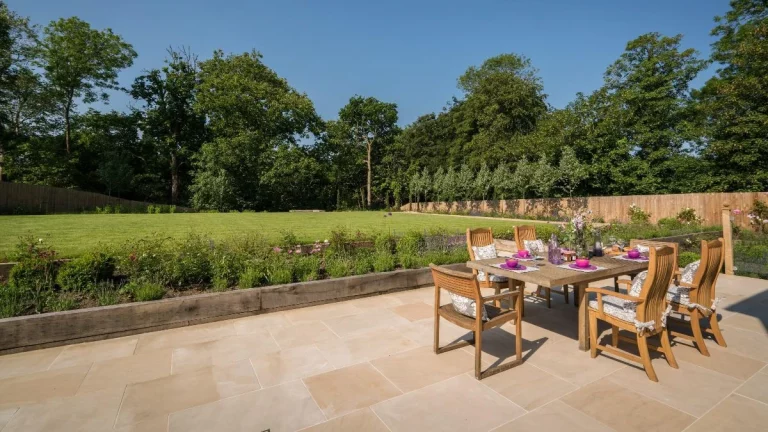
Plant a bare-root hedge while the plants are dormant, from leaf fall in November to the end of winter, on any day the soil is workable. The one thing to get right on our clay is water: too much of it round the roots in winter, and not enough in the first summer. This guide is written for gardens in Kingston, Surbiton, Esher and New Malden, most of them on heavy London Clay.
We plant hedges for gardens in Kingston, Surbiton and Esher. Garden design in Surbiton · Garden design in Kingston · Book a consultation
When to plant a bare-root hedge
Bare-root plants are only lifted and sold while they are dormant. The RHS guide to planting hedges puts deciduous hedging such as beech, hornbeam and hawthorn in from leaf fall to late winter, and says to avoid days when the ground is frozen or waterlogged. On London Clay that second rule matters more than the calendar: after a wet week the soil smears like plasticine, and roots planted into it sit in a sealed, airless pocket.
- November: on clay, often the easiest month, before winter rain has filled the soil.
- December to February: fine on any dry, unfrozen day. Wait out the wet spells.
- March: the last chance before the plants break bud, and the first summer will need more watering.
If the hedge arrives on a wet week, do not force it in. Heel the plants in: lay them close together in a spare trench with at least 20 cm of soil over the roots, or keep them in a frost-free shed with the roots wrapped in damp straw or compost, until the ground dries.
How we do it
- Mark the line well back from the boundary. The RHS suggests about 90 cm in from a pavement or a neighbour’s side, so the grown hedge can be cut from your garden without trespassing.
- Dig a strip, not holes. A trench 60 to 90 cm wide and one spade blade deep, cleared of every weed root.
- Improve the backfill, not the bottom. On clay we fork organic matter into the top 25 cm and the soil going back in. Compost tipped into the base of the trench rots down and the hedge sinks.
- Raise it on very wet ground. Where water stands in winter, plant on a low ridge about 15 to 20 cm high and 50 to 70 cm wide, or sort the drainage first.
- Soak the roots in a bucket for about half an hour, trim off any broken roots, and keep them covered until each plant goes in. Bare roots dry out quickly, especially on a windy day.
- Space and set them. A single row with plants 30 to 60 cm apart, or for a hedge wider than 90 cm, two staggered rows 45 cm apart. The point where the roots flare from the stem sits level with the soil, no deeper.
- Firm, water, mulch. Firm the soil round the roots with your heel, water it in, then mulch about 7.5 cm deep, kept just clear of the stems.
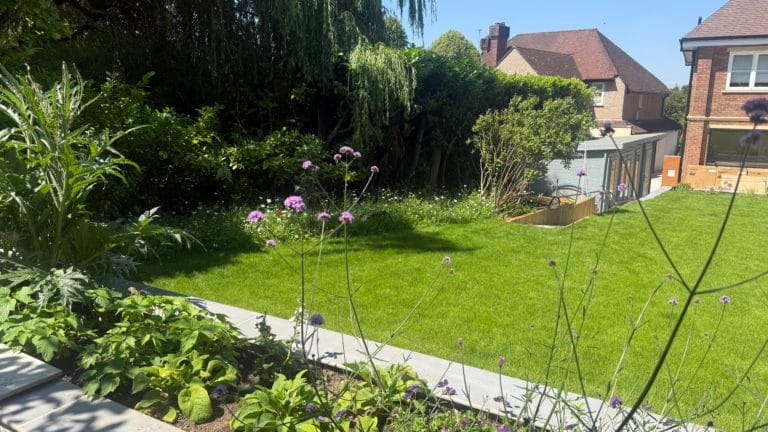
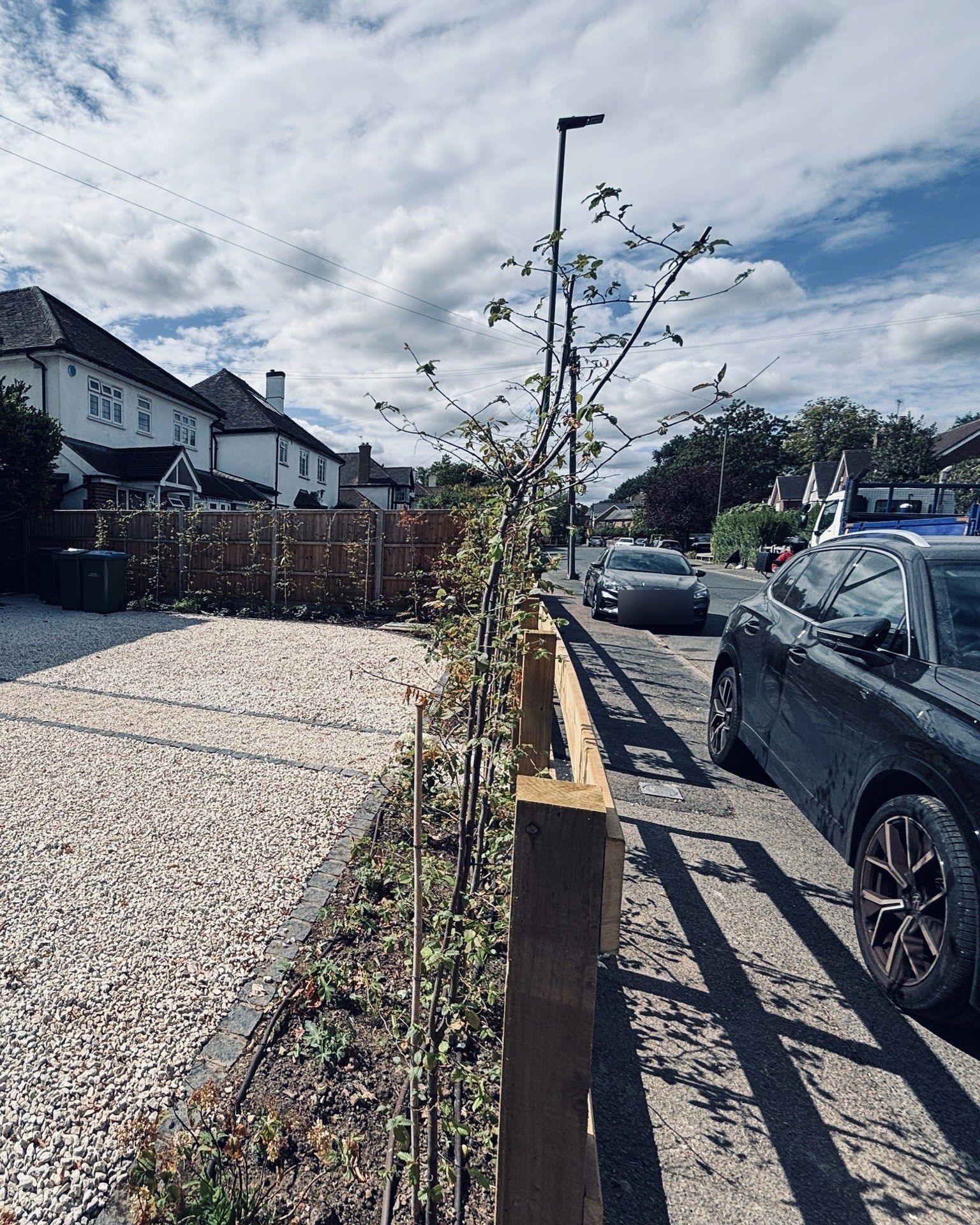
- Plan the water now. On the Claygate hedge in the photo, drip irrigation runs along the hedge line. New hedges rarely die in winter; they die in their first July, when nobody remembers the hose.
Which hedge for which garden
Ligustrum ovalifolium (garden privet)
The quick, tidy town hedge. Evergreen or semi-evergreen, so it can thin in a hard winter, and happy on clay in sun or part shade. It needs trimming two or three times in the growing season, finishing by late summer. The RHS notes it is prone to honey fungus, so avoid replanting privet where an old hedge died of it.
Carpinus betulus (hornbeam)
The safe choice on heavy, wet clay. Deciduous, but a clipped hornbeam holds some of its dead leaves through winter, so it still screens. The RHS beech guide names hornbeam as the better option for very heavy or wet soil, which describes a lot of Kingston and Surbiton. One trim a year, in mid to late summer.
Fagus sylvatica (beech)
The best winter screen, if the drainage is right. A young, clipped beech hedge keeps its russet leaves all winter, and the RHS gives it the Award of Garden Merit. But the RHS beech guide warns that waterlogged or compacted clay can rot its roots, and late frosts scorch the new leaves in frost pockets. On a wet Surbiton plot, choose hornbeam; on lighter ground nearer the river, beech is worth it. One trim, in late summer.
Crataegus monogyna (hawthorn)
The thorny, wildlife-friendly boundary. Deciduous, very hardy, tolerant of exposure and of wet soils, though not of ground that is waterlogged for long. Spring blossom and autumn haws feed insects and birds, and the thorns put off anything trying to come through. Trim in summer and again in autumn for a formal hedge, or once every year or two for wildlife.
What people get wrong
- Planting too deep. Burying the stem starves the roots of air, and on clay it is the quickest way to lose a hedge. Keep the root flare at soil level.
- Not cutting back. It feels wrong, but for beech, hornbeam and hawthorn the RHS advises cutting the leading shoots and side shoots back by about a third in the first two winters. That is what makes a hedge thick at the bottom. Privet is the exception: leave its leader until the hedge reaches the height you want and trim the sides.
- Letting grass grow up to it. Keep a strip about 45 cm wide on each side free of weeds and lawn for the first few years. Grass wins every fight for water.
- Trimming in the nesting season. The RHS advises avoiding hedge cutting from March to August, or checking carefully first. Under the Wildlife and Countryside Act 1981 it is an offence to damage or destroy an active wild bird’s nest at any time of year.
On clay in Kingston and Surbiton
London Clay is rich, and a hedge that gets through its first two summers usually romps away. The risks are at the two ends of the year: water lying round the roots in winter, and the soil shrinking and cracking in July. Dig a test hole before you order: if water is sitting in it a day after rain, plant on a ridge or choose hornbeam over beech. Our free soil reader takes two minutes, and our guide to improving clay soil covers the groundwork. Nearer the Thames, in parts of Ham and Thames Ditton, the soil is lighter river gravel, which drains fast and dries out faster.
When to call us in
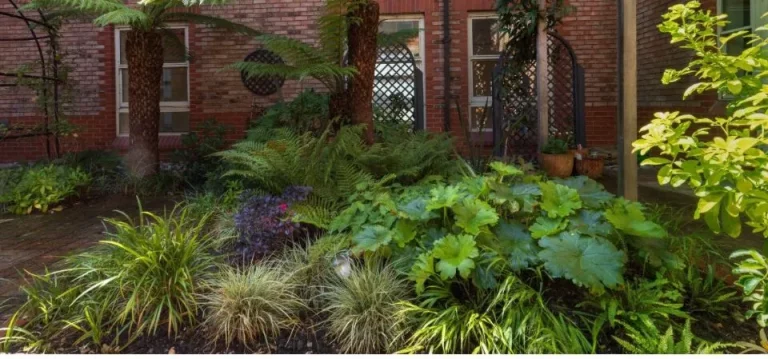
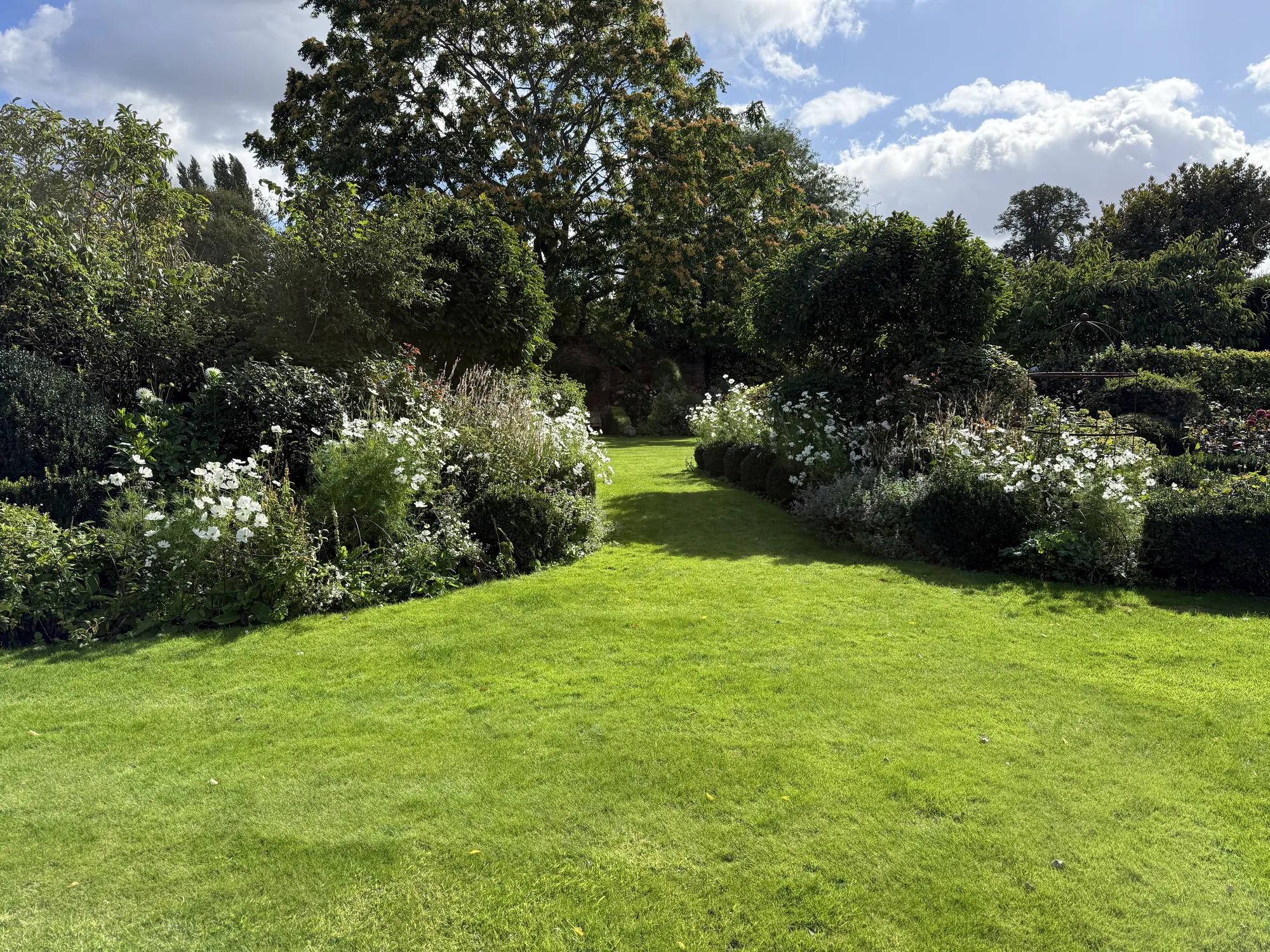
A short run of whips along a sound fence is a good weekend job. It becomes a job for us when the hedge is long, when the ground is waterlogged and needs drainage first, when an old hedge or fence has to come out, or when the hedge is part of a bigger change to the garden. We plan hedges into our garden designs in Surbiton and in Kingston, plant them through our planting design and installation service, and can put in fencing and screening for privacy while the hedge grows. For a garden where privacy came from trellis and climbers on all three sides, see our courtyard garden in Surbiton, and for more ideas read our post on garden privacy.
Frequently asked questions
When is the bare-root season?
While the plants are dormant, from leaf fall in late autumn to late winter. In Kingston and Surbiton that usually means November to March, on days when the soil is neither frozen nor waterlogged.
How many hedge plants do I need per metre?
For a single row at 30 to 60 cm apart, roughly two to three plants per metre. A double staggered row for a wider, denser hedge needs more.
Beech or hornbeam on clay?
Hornbeam. It copes with heavy, wet clay far better than beech, which needs free-draining soil and can rot in waterlogged ground. Both hold some dead leaves in winter when clipped.
Should I cut back a new hedge after planting?
For deciduous hedges such as hornbeam, beech and hawthorn, yes: cut leaders and side shoots back by about a third in the first two winters to make it bush out. For privet, leave the leader until the hedge reaches height and trim the sides.
How often should I water a new hedge?
Water it in at planting, then keep the soil moist but not waterlogged through the first two summers, especially in dry spells. Drip irrigation on a timer is the reliable way to do it.
Talk to us about your garden
Planning a hedge, a new boundary or a whole new garden in Kingston, Surbiton or Esher? Book a consultation or see our landscaping in Surbiton page.
This guide was created with AI assistance and reviewed for accuracy by Craig Davis, BSc (Hons) Horticulture.