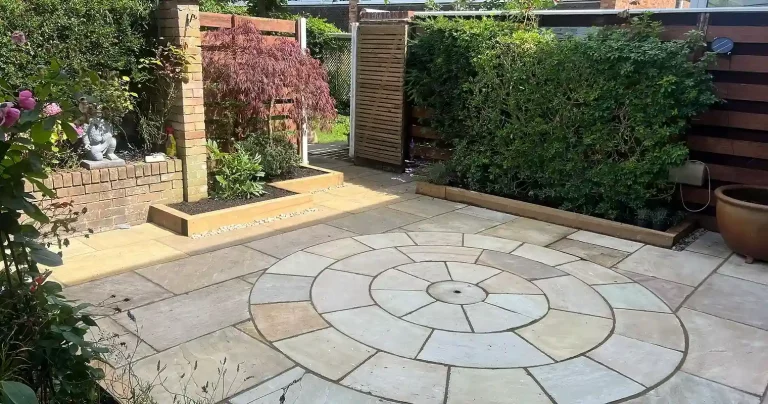
A Flourish Landscaping guide to designing, planting and caring for a garden that butterflies return to year after year.
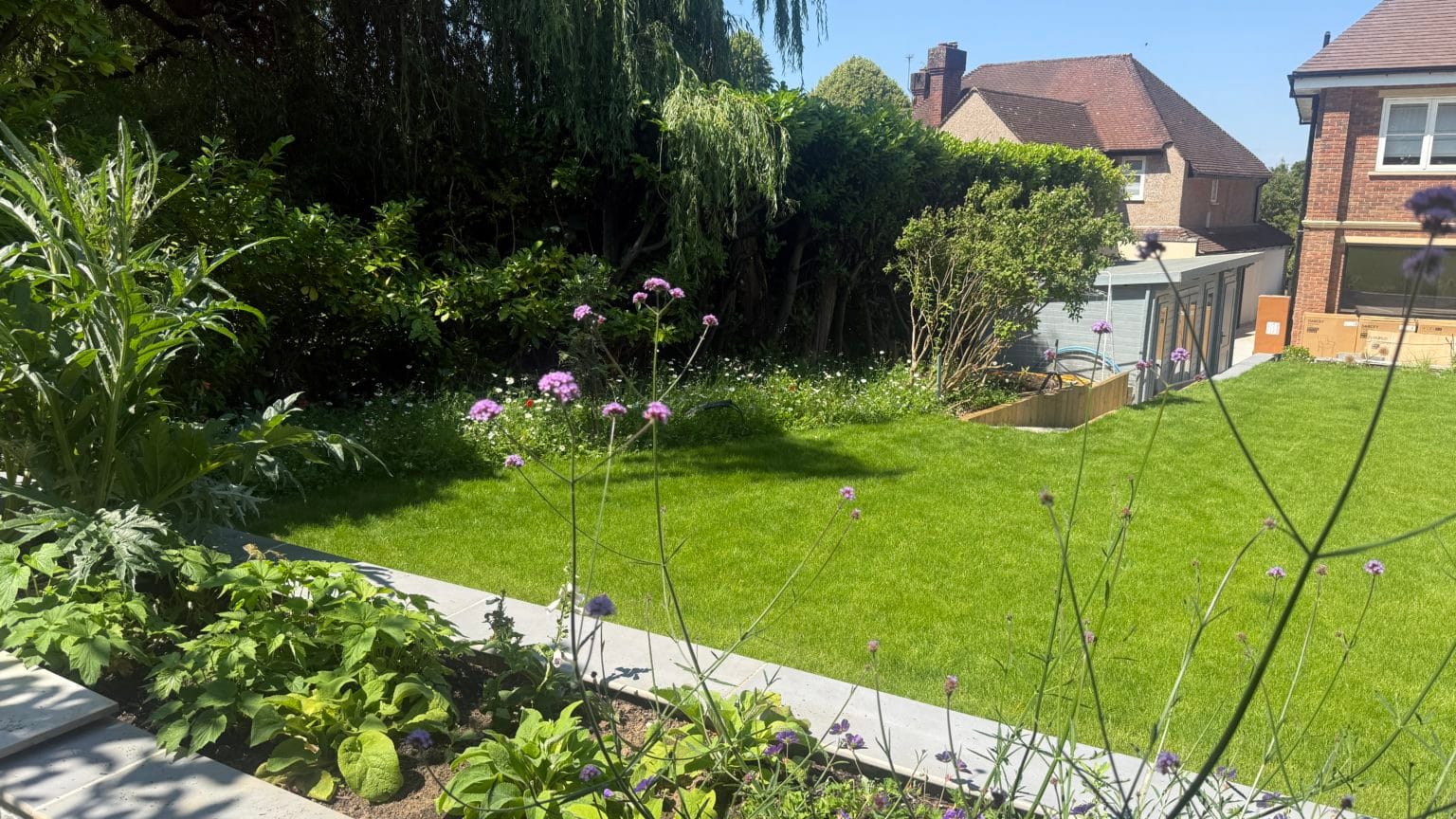
Why butterflies matter
A garden with butterflies in it is a garden in good health. Butterflies are among the most closely monitored insects in Britain, and their numbers are widely used as an indicator of the wider condition of a habitat. Where they are thriving, other invertebrates, birds and small mammals usually are too.
The UK has 60 butterfly species: 58 resident and two regular migrants, the Painted Lady and the Clouded Yellow. Many need specialist habitats such as chalk downland or coppiced woodland and will never visit a garden. A well-planned garden can still support a dozen or more species, and with the right food plants it lets them breed rather than simply pass through.
That matters. Gardens together cover a very large area and act as stepping stones between nature reserves. One garden is a small contribution; a street of them is a corridor.
Which butterflies you are likely to see
The species most often seen in gardens are the Red Admiral, Peacock, Brimstone, Painted Lady, Comma, Small Tortoiseshell, Green-veined White, Small White and Large White. Less frequent, but very possible in the right setting, are the Orange-tip, Speckled Wood, Meadow Brown, Small Copper, Holly Blue and Common Blue.
The Large and Small Whites are the two most gardeners meet in the vegetable patch, where their caterpillars feed on brassicas and on nasturtium (Tropaeolum majus). The Comma’s caterpillars, orange, white and black and convincingly disguised as bird droppings, can turn up on hop (Humulus lupulus) and currants (Ribes) without doing the plant any real harm.
Nectar through the whole season
Adult butterflies need nectar for energy: to fly, to find a mate and, in autumn, to build reserves for hibernation or the journey south. The most useful thing a planting scheme can do is provide nectar continuously, from the first warm days of March to the first frosts in late October or November.
Most gardens are generous in July and thin in April and October. Closing those two gaps is where the real gain is. Which border gets the sun matters too; our sun planner shows where it falls through the year.
Spring, March to May
For butterflies coming out of hibernation, or arriving after a long migration, early nectar is critical.
- Primula vulgaris, primrose
- Pulmonaria officinalis, lungwort
- Aubrieta deltoidea
- Erysimum ‘Bowles’s Mauve’, exceptionally long flowering
- Hyacinthoides non-scripta, native bluebell
- Prunus spinosa, blackthorn
- Syringa vulgaris, common lilac, at its best in May and June
- Taraxacum officinale, dandelion, where a lawn can be left a little longer
Summer, June to August
- Buddleja davidii, the most productive single nectar shrub for British butterflies. Deadhead it after flowering to stop it seeding into walls and paving.
- Lavandula angustifolia
- Origanum vulgare, wild marjoram, outstanding and often underused
- Verbena bonariensis
- Centranthus ruber, red valerian
- Centaurea nigra, common knapweed, at home in a border or a meadow
- Knautia arvensis and Scabiosa columbaria
- Achillea millefolium
- Nepeta racemosa
- Echinacea purpurea; see our Echinacea guide
- Agastache ‘Blackadder’
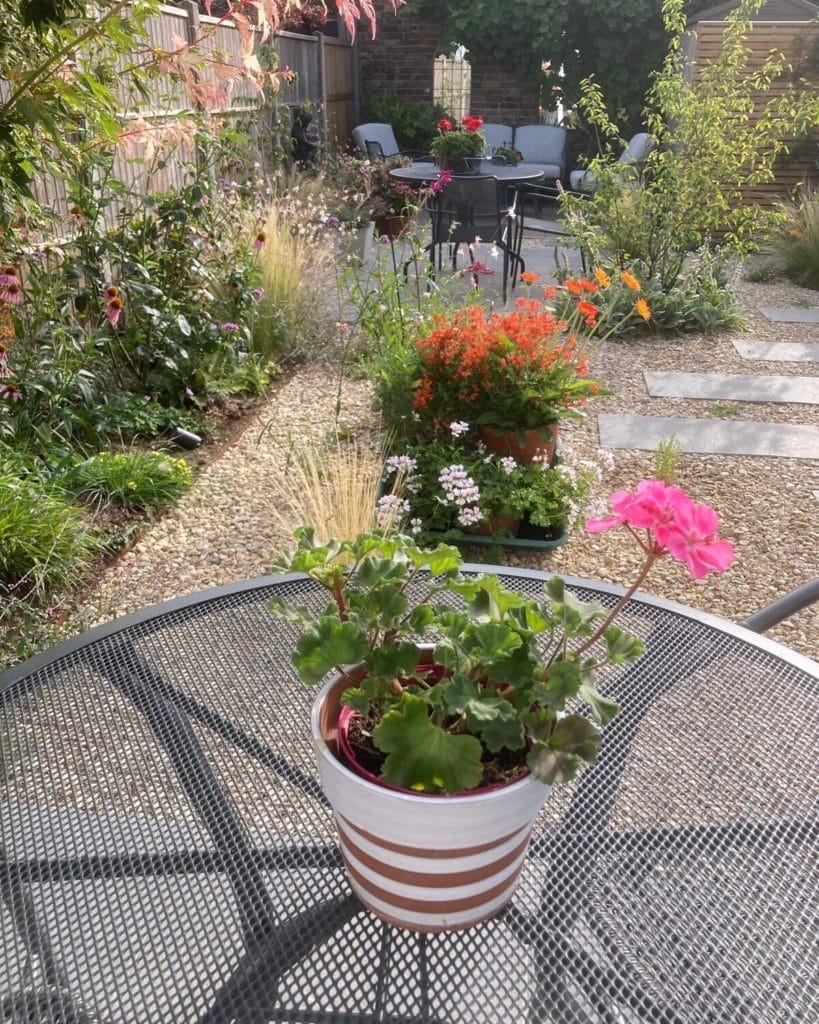
Autumn, September to November
- Hylotelephium spectabile (syn. Sedum spectabile), ice plant
- Symphyotrichum novi-belgii and related asters
- Eupatorium cannabinum, hemp agrimony
- Dahlia, single-flowered cultivars only; doubles hold little accessible nectar. See our dahlia guide
- Hedera helix, ivy, allowed to reach its mature flowering form, one of the most valuable late nectar sources of all
Planting for breeding, not just for visiting
A garden full of nectar will attract adult butterflies. It will not, on its own, sustain them. Caterpillars are far fussier than their parents, and most depend on a narrow range of food plants, often native species that a tidy garden removes. Providing these is what turns a garden from a filling station into a habitat.
| Caterpillar food plant | Butterflies supported |
|---|---|
| Urtica dioica, common nettle | Peacock, Red Admiral, Comma, Small Tortoiseshell |
| Frangula alnus and Rhamnus cathartica, buckthorns | Brimstone |
| Lotus corniculatus, bird’s-foot trefoil | Common Blue |
| Ilex aquifolium and Hedera helix | Holly Blue (holly flowers in spring, ivy flowers in autumn) |
| Alliaria petiolata, Cardamine pratensis | Orange-tip, Green-veined White |
| Rumex, docks and sorrels | Small Copper |
| Ribes, Ulmus, Humulus lupulus, Salix | Comma |
| Cirsium and Onopordum, thistles | Painted Lady |
| Mixed native grasses, left long | Speckled Wood, Gatekeeper, Meadow Brown, Ringlet, Marbled White, the skippers |
A practical note on nettles: they only work as a breeding site in a sunny position and in a reasonably large clump. Small, shaded patches are very unlikely to attract an egg-laying female. Where a large stand is not realistic, concentrate on nectar and the other food plants rather than planting a token patch. Cutting nettles back in mid-summer, after the first brood, stops them seeding and brings on fresh growth.
An area of grass left uncut through the growing season and cut in spring will, over a few seasons, do more for the browns and skippers than almost any border planting.
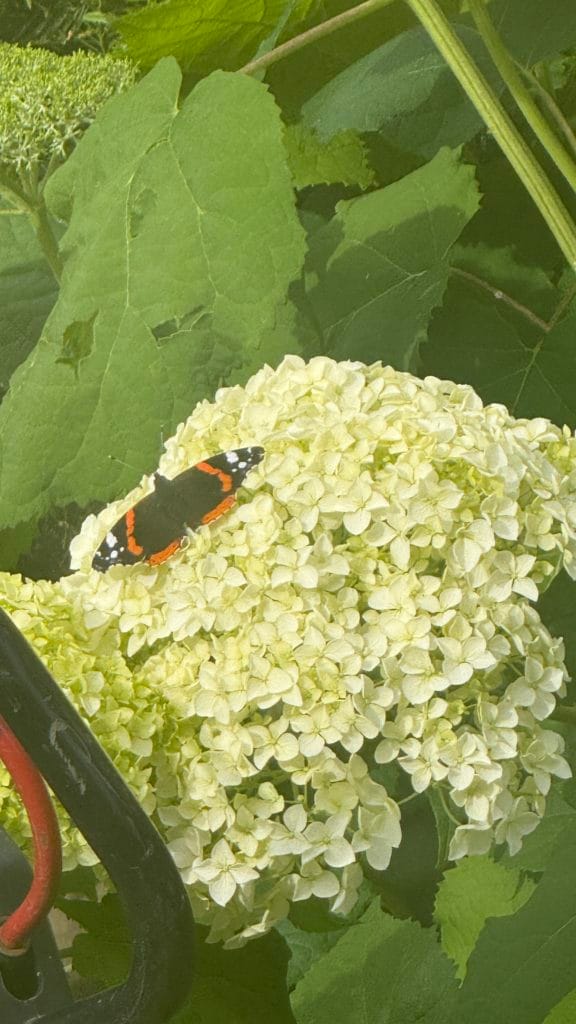
Six design principles that make the difference
- Site for sun and shelter. Butterflies are cold-blooded and need warmth to fly. A south- or west-facing border with a hedge or wall behind it will always outperform an equally well-planted shaded one. Our south-facing garden guide covers the plants that suit.
- Plant in blocks, not singly. Grouping the same plant lets butterflies feed efficiently and keeps them in the garden longer. Drifts of five, seven or nine rather than ones and twos, the same approach as our naturalistic planting.
- Prefer simple, open flowers. Flat, daisy-form blooms and small flowers in clusters give the easiest access. Highly bred double cultivars are often sterile or inaccessible. Our guide to alternatives to bedding plants lists more.
- Include somewhere to bask. A flat stone, an oak sleeper or a warm gravel edge gives butterflies a place to warm up in the morning.
- Leave the fallen fruit. In late summer, Red Admirals and Painted Ladies feed readily on over-ripe apples, pears and plums lying beneath the tree.
- Allow a degree of untidiness. Seedheads, long grass, leaf litter and a corner left alone are habitat. It works best inside a clear framework of paths and clipped edges, so the garden reads as considered rather than unkempt.
Care and maintenance
- Do not use insecticides. They kill butterflies, caterpillars and the ladybirds, ground beetles and spiders that keep a garden in balance. We do not use routine insecticides in our maintenance work.
- Deadhead regularly. This prolongs flowering and extends the nectar supply into autumn.
- Mulch and water. Healthy, unstressed plants produce more nectar. An annual organic mulch helps, and on heavy soil it does double duty; see improving clay soil.
- Use peat-free compost. Peat extraction destroys the lowland bogs that species such as the Large Heath depend on.
- Time your cutting back. Leave herbaceous stems standing over winter where you can, and cut back in early spring rather than autumn.
Overwintering visitors
Peacocks and Small Tortoiseshells spend the winter as adults, tucked into sheltered, dry places, very often a garage, shed or outbuilding. If one wakes in a heated room during a mild spell, catch it gently in a container and put it in an unheated outbuilding, leaving a gap open so it can leave in spring.
Recording what you see
Counting butterflies in your own garden produces genuinely useful data. Butterfly Conservation runs the Big Butterfly Count each summer and the year-round Garden Butterfly Survey, and the UK Butterfly Monitoring Scheme takes regular records from across the country. The RHS and The Wildlife Trusts run the joint Wild About Gardens campaign, which publishes free wildlife gardening guides.
Frequently asked questions
What is the best plant to attract butterflies?
Buddleja davidii is the most productive single nectar shrub, but a run of flowers from March to November matters more than any one plant. Verbena bonariensis, Origanum vulgare and Hylotelephium spectabile carry the summer and autumn.
Do I need nettles for butterflies?
Only if you can give them a sunny spot and a decent clump. Peacock, Red Admiral, Comma and Small Tortoiseshell caterpillars feed on them. A small shaded patch rarely gets used, so put the effort into nectar and other food plants instead.
What do Painted Lady caterpillars eat?
Mainly thistles, not nettles.
When should I cut back a butterfly border?
In early spring. Stems and seedheads left over winter shelter insects and feed birds.
How Flourish Landscaping can help
We design and build gardens that look good and work hard. A butterfly-friendly garden is not a compromise: the plants that support butterflies are, almost without exception, the ones that give a border its longest season and best structure.
- Planting design that carries nectar from March to November, laid out in blocks and drifts. See planting design and installation.
- Habitat features: native hedging, meadow areas, log and stone habitat and wildlife ponds, built into the design rather than added later.
- Maintenance to a seasonal schedule, peat-free, with cutting back timed around the wildlife rather than the calendar.
More in our guides to sustainable and wildlife-friendly gardens, plants for pollinators and garden wildlife facts.
Get a quote for a butterfly-friendly garden or email us photos of your garden.
References and further reading
- Royal Horticultural Society, Butterflies in your garden, and Plants for Pollinators
- Butterfly Conservation, Gardening for butterflies
- The Wildlife Trusts and RHS, Wild About Gardens
- Gardens Illustrated, The best plants for butterflies
- BBC Gardeners’ World Magazine, 10 plants for butterflies
- Natural History Museum, A gardener’s guide to butterfly-friendly plants
Written by Craig Davis, BSc (Hons) Horticulture, with over 40 years in horticulture. This page was created with AI assistance and reviewed for accuracy by Craig Davis. All photographs are Flourish Landscaping’s own.