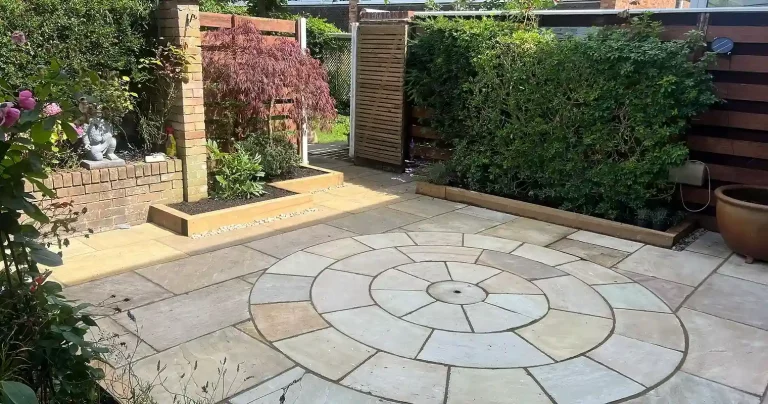
Autumn planting and garden jobs
What to plant, what to leave standing and how to get a clay garden ready for winter.
Updated October 2026
Autumn is the best planting season of the year on our local London Clay. The soil is still warm from summer, the rain is back, and anything planted between October and December has all winter and spring to root before it has to cope with a dry summer. Spring-planted shrubs and hedges spend their first year catching up. Autumn-planted ones don’t.
This guide covers what to plant now, how to plant it properly on clay, what to leave standing for winter and the jobs that save you trouble in February. If you would rather we did it, autumn planting is part of our hard and soft landscaping work and our regular garden maintenance across Kingston, Surbiton and Surrey.
When to plant: the autumn windows
- September: spring bulbs (except tulips), dividing perennials, sowing hardy annuals and lawn renovation.
- October to November: container-grown trees, shrubs, climbers, perennials and grasses. This is the main planting window.
- November to March: the bare-root season for hedging, trees, roses and fruit, whenever the ground is not frozen or waterlogged.
- November to early December: tulips, which go in late to cut the risk of tulip fire.
The one rule on clay: never plant or dig when the soil is sticky. If it smears on your spade, wait a few days. Working wet clay squeezes the air out and leaves a hard, airless layer that roots struggle through for years.
What to plant in autumn
Hedges and bare-root plants
Bare-root plants are lifted from the field while dormant and sold without soil. They cost a fraction of pot-grown plants and root faster. Plant from November to March: Carpinus betulus (hornbeam, the best hedge for heavy clay), Fagus sylvatica (beech, better on lighter soils), Taxus baccata (yew), Crataegus monogyna (hawthorn) and Prunus lusitanica (Portugal laurel). Bare-root roses go in at the same time; our guide to roses for clay soil covers which ones do well here.
Trees
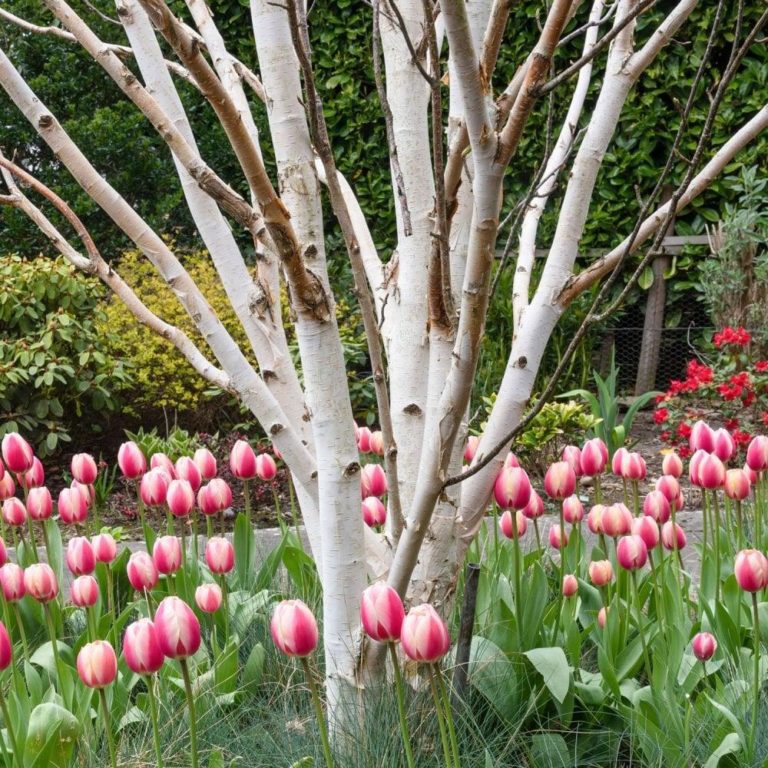
Trees planted in autumn establish far better than spring-planted ones. Good choices for smaller gardens with autumn colour include Amelanchier lamarckii, Acer palmatum, Parrotia persica, Cornus kousa and, for more space, Liquidambar styraciflua ‘Worplesdon’. Multi-stem trees suit modern gardens and small spaces; see our guide to multi-stem trees, and to pleached trees for screening.
Shrubs, perennials and grasses
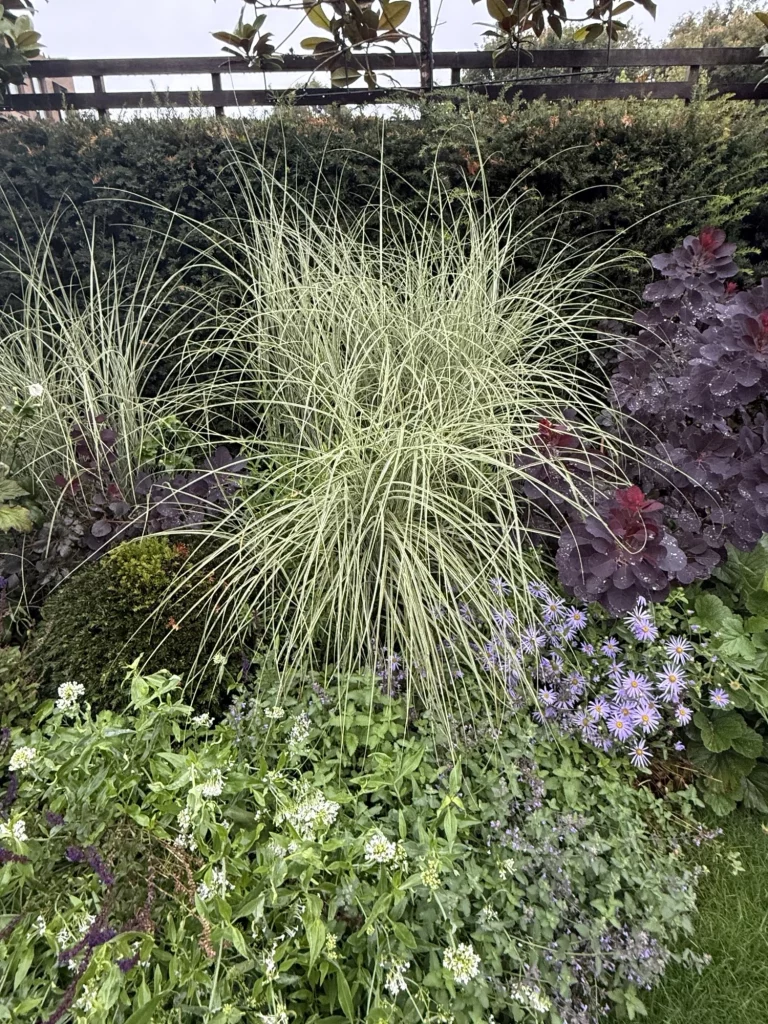
Most hardy shrubs, perennials and grasses go in well now. For winter interest near the house, Sarcococca confusa gives scented flowers in January and Helleborus x hybridus flowers from late winter. Grasses such as Calamagrostis x acutiflora ‘Karl Foerster’ and Miscanthus sinensis can be planted now and give structure all winter.
Leave tender and Mediterranean plants until spring on clay. Lavender, rosemary, cistus, half-hardy salvias and most palms rot in cold, wet soil before they have rooted. Plant them in April.
Spring bulbs
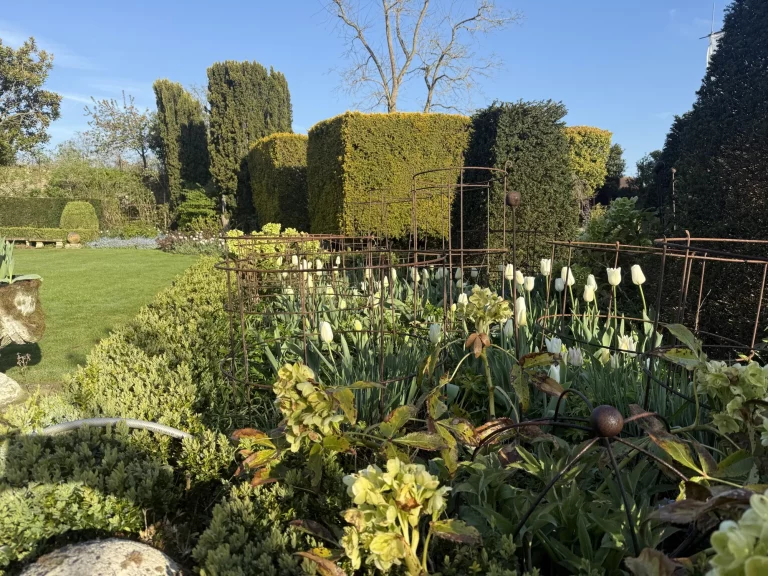
Most spring bulbs go in from September to November, at about three times their own depth: Narcissus ‘Thalia’, Allium ‘Purple Sensation’, Crocus tommasinianus for lawns, and tulips such as Tulipa ‘Spring Green’ in November. Our full guide to spring bulbs covers varieties, depths, naturalising in grass and keeping squirrels off, and autumn and winter pots covers layered bulb pots. To buy the bulbs we use, supply only, see the Flourish bulb list.
How to plant properly on clay
Most plant losses we see on new jobs come down to how the plant went in, not the plant itself. On heavy clay:
- Dig a wide hole, not a deep one. Make it two to three times the width of the rootball and no deeper. The top of the rootball should sit level with the soil, or very slightly proud on wet sites.
- Don’t fill the hole with compost. A hole full of soft compost in clay acts as a sump and fills with water in winter. Backfill with the soil you dug out, broken up, with a little organic matter mixed through at most.
- Rough up the sides. Smooth, spade-polished sides in clay act like a pot wall. Break them up with a fork so roots can get out.
- Tease out pot-bound roots and spread the roots of bare-root plants. Never let bare roots dry out while you work.
- Firm and water in. Firm with your heel, then water well, even if the ground is damp, to settle the soil around the roots.
- Stake trees low. A short stake at about a third of the trunk height, on the side of the prevailing wind, lets the trunk flex and strengthen. Check ties every few months.
- Improve the bed, not the hole. Where a whole border is being planted, work organic matter into the whole bed. Our guide to improving clay soil sets out what actually works.
Mulching before winter
A mulch put down in autumn does more for a clay border than almost anything else. It protects the soil surface from heavy winter rain, feeds the worms that open up clay, and holds moisture into spring.
- Spread 50 to 75 mm of composted bark, well-rotted manure or garden compost over moist soil, ideally after a good rain.
- Keep it a hand’s width away from tree trunks and shrub stems.
- Mulch new plantings straight after planting and watering.
- Leaf mould is the best free mulch you can make (see below).
Leaves: clear where they cause harm, leave where they help
- Clear them from lawns every week or so in October and November. Wet leaves smother grass and bring in disease.
- Clear them from paths and patios. Wet leaves are slippery and stain porcelain, sandstone and decking.
- Net ponds under overhanging trees. Rotting leaves strip the oxygen from the water.
- Leave a light layer in borders as a natural mulch, and leave a pile in a quiet corner for hedgehogs, beetles and queen bumblebees to overwinter.
Making leaf mould
Pack damp leaves into a simple wire-mesh cage about 1 m square, or into black sacks with a few holes punched in them, and leave them. Sacks give usable leaf mould in about a year; a cage takes 18 months to two years. Oak, beech and hornbeam leaves rot best. Keep evergreen leaves and pine needles out.
What to leave standing until spring
We no longer cut borders to the ground in autumn. Leaving most perennials and grasses standing until late February or March gives the garden shape through winter, feeds birds and shelters insects.
- Seedheads feed birds: Echinacea purpurea, Rudbeckia fulgida, Verbena bonariensis and Hylotelephium ‘Herbstfreude’.
- Hollow stems shelter insects: ladybirds, lacewings and solitary bees overwinter in them.
- Grasses look their best in frost: Calamagrostis x acutiflora ‘Karl Foerster’, Panicum virgatum and Stipa gigantea.
- Old growth protects tender crowns: leave the top growth on penstemons and Salvia greggii until April.
What you can cut now: anything diseased, anything flopping onto a path, and hostas and daylilies once they collapse. The main cut-back is covered in our spring planting and tidy guide.
Protecting tender plants
- Dahlias: in most Surbiton and Kingston gardens, tubers survive in the ground under 150 mm of bark mulch once frost has blackened the leaves. On wet clay or in cold spots, lift them, dry them off and store in dry compost somewhere frost-free. See our dahlia guide.
- Tree ferns and bananas: stuff the crown of Dicksonia antarctica with straw and wrap the trunk in fleece; cut Musa basjoo down to about 1 m and wrap it.
- Pots: move them against the house, raise them on pot feet so they drain, and wrap terracotta in hessian in hard frosts.
- Outdoor taps and irrigation: drain irrigation lines, lag exposed pipes and fit a tap cover. A split pipe in February is an avoidable bill.
Other jobs worth doing now
- Lift and divide overcrowded perennials such as hardy geraniums and daylilies while the soil is still warm, and replant straight away.
- Sow hardy annuals such as Centaurea cyanus (cornflower), Nigella damascena and Papaver rhoeas in September for earlier, sturdier plants next year.
- Renovate the lawn by early October if you haven’t already: scarify, aerate, overseed and give it an autumn feed. Our lawn renovation and seeding guide covers it step by step.
- Check hedges for nests before cutting. It is an offence to damage an active bird’s nest at any time of year. Most nesting is over by September, but look first. The main hedge shaping can wait until late winter.
- Clean and sharpen tools before they go away, and get the mower serviced before spring.
Autumn colour worth planting for
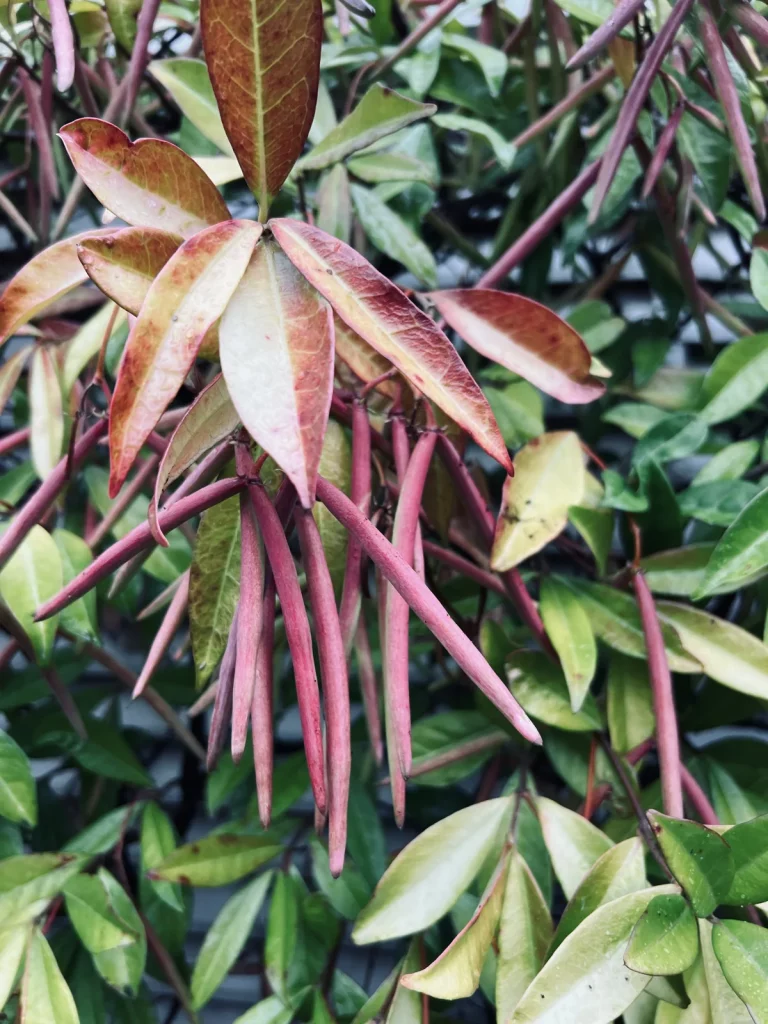
If your garden goes flat in October, these are the plants we use to fix it: Acer palmatum, Parrotia persica, Amelanchier lamarckii and Liquidambar styraciflua ‘Worplesdon’ among trees; Vitis coignetiae on a wall or pergola; and Panicum virgatum and Miscanthus sinensis among grasses. Evergreen climbers can colour too: Trachelospermum jasminoides turns red and gold in cold weather.
Frequently asked questions
Is autumn a good time to plant?
Yes, for hardy trees, shrubs, hedges, perennials and bulbs it is the best time. The soil is still warm, the rain is back, and plants have all winter and spring to root before summer. The exceptions are tender and Mediterranean plants such as lavender, rosemary and cistus, which do better planted in April on clay.
When is the best time to plant a hedge?
November to March using bare-root plants, whenever the ground is not frozen or waterlogged. Bare-root hornbeam, beech, yew and hawthorn are much cheaper than pot-grown plants and establish faster. Pot-grown hedging can go in from October.
Should I cut back my perennials in autumn?
For most of them, no. Leave seedheads and stems standing until late February or March. They feed birds, shelter insects and protect the crowns of less hardy plants. Cut back anything diseased, anything over a path, and hostas and daylilies once they collapse.
When should I plant tulips?
November to early December. Planting into cooler soil cuts the risk of tulip fire, a fungal disease. Daffodils, alliums and crocuses can go in from September.
How do I plant a tree or shrub in clay soil?
Dig a hole two to three times the width of the rootball but no deeper, rough up the sides, and backfill with the soil you dug out rather than filling the hole with compost. Firm, water in well and mulch. Never plant when the clay is wet and sticky.
Should I leave fallen leaves on my garden?
Clear them from lawns, paths, patios and ponds. Leave a light layer in borders as a mulch, and leave a pile in a quiet corner for wildlife. Bag or cage the rest to make leaf mould.
Related pages
- Hard and soft landscaping: planting, new borders and lawns as part of a wider build
- Planting design and installation: how we design and plant a full scheme
- Garden maintenance: seasonal care, including Kingston and Surbiton
- Spring bulbs: what to plant now for colour from January to May
- Lawn renovation and seeding: the autumn lawn jobs
- Winter garden preparation: the next jobs, for November and December
Let us do the autumn planting
We plant new borders, hedges and trees across Kingston, Surbiton, Richmond, Esher and the wider Surrey area, and we prepare the ground properly on clay first. If you want a new hedge, a border replanted or a garden ready for spring, send us a few photos or ask for a quote. Autumn planting is part of our hard and soft landscaping service, and seasonal care is part of our garden maintenance.
Written by Craig Davis BSc (Hons) Horticulture, member of the Chartered Institute of Horticulture. Craig has over 40 years in horticulture: in the family business since the age of 13 and a horticulture graduate since 1992, he designs, builds and plants gardens across Kingston, Surrey and South West London.
Good to know
Frequently asked questions
Most spring-flowering bulbs go in between late September and the end of November. Daffodils, alliums, crocuses, hyacinths and snowdrops can all go in from late September. The exception is tulips, which prefer November or even early December: late planting reduces the risk of tulip fire (Botrytis tulipae), the fungal disease that affects bulbs planted into still-warm soil. The rule of thumb is to plant bulbs at three times their height in depth, in well-drained soil.
Three times the height of the bulb, measured from the base of the bulb to the soil surface. So a 5 cm tulip bulb goes 15 cm deep; a 2 cm crocus goes 6 cm deep. Practical depths: large bulbs (tulips, daffodils, alliums, hyacinths) at 15-20 cm; medium bulbs (crocuses, muscari, smaller narcissi) at 7-10 cm; small bulbs (anemones, snowdrops, dwarf iris) at 5-7 cm. The most common mistake is planting too shallow. Point end up; if you can't tell, plant on the side.
The most reliable method is chicken wire pegged over freshly-planted areas with tent pegs at 30-40 cm spacing, removed once shoots are 50 mm above ground. Planting tulips at 18-20 cm depth puts them below the level squirrels typically dig. Mixing target bulbs (tulips, crocuses) with squirrel-resistant ones (daffodils, alliums, snowdrops) confuses scent-tracking. For pots, push a sheet of chicken wire 25 mm below the soil surface. Avoid using bonemeal as a planting amendment: it attracts squirrels.
To reduce the risk of tulip fire (Botrytis tulipae), a fungal disease that disfigures and weakens the plants. The fungal spores are most active in warm, moist soil; by November the soil has cooled enough to suppress them. Tulips planted in September or October are noticeably more prone to the disease than those planted in November or early December, especially on heavier soils that retain warmth and moisture.
Layered bulb planting in a single pot, giving 12 weeks of continuous flowering from February to early May. Three layers: tulips at the bottom (20 cm deep, latest to flower); daffodils, hyacinths or larger crocuses in the middle (12 cm deep); small early bulbs like Iris reticulata, Crocus chrysanthus and Muscari at the top (5-7 cm deep). The early layer flowers first; as they fade, the middle layer emerges and flowers; finally the tulips come through. Use a pot 30-40 cm diameter minimum and peat-free compost with 20% grit for drainage.
It depends on the variety and the soil. Many showy hybrid tulips (Triumph, Single Late, Lily-flowered, Parrot, Fringed) rarely flower well in their second year on UK heavy clay soils; they are best treated as annuals and replaced each autumn. The most reliably perennial tulip groups are species tulips (Tulipa clusiana, T. sprengeri, T. turkestanica), Darwin Hybrids, Fosteriana (Purissima), and most Kaufmanniana and Greigii cultivars. Improve drainage with grit, plant deep (18-20 cm), and avoid wet positions to maximise return rates.