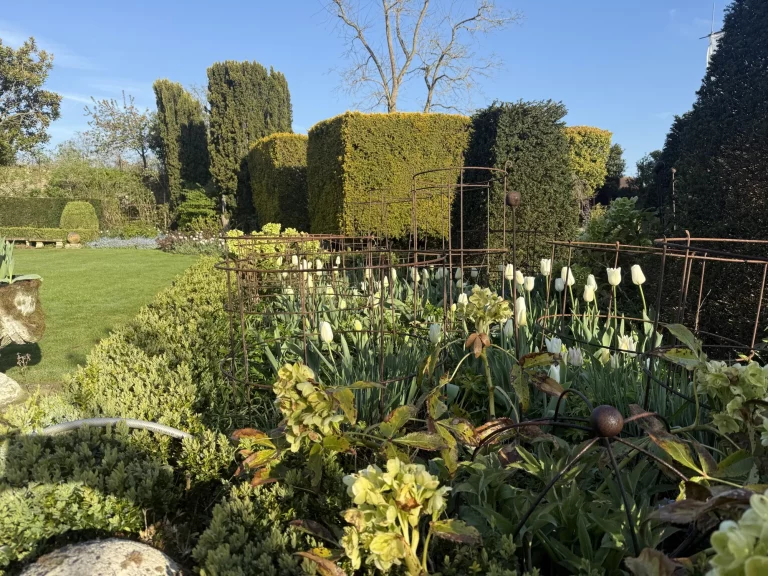
Planning your garden transformation
A practical guide to commissioning, designing and building a garden you’ll love.
A garden transformation is a significant project: significant in budget, in disruption, and in the years of enjoyment that follow. The difference between a transformation that delivers and one that disappoints almost always comes down to what happens before the first turf is lifted. This guide walks through how to plan a garden transformation properly, in the order that works: brief, site analysis, design, materials, build, planting and aftercare. It applies whether the project is a courtyard refresh or a full redesign on an acre.
We work on transformations of every scale across Kingston, Surbiton, Esher, Richmond and the wider Surrey area, and the patterns are remarkably consistent. The clients who end up with gardens they love are the ones who took the brief seriously, allowed proper time for design, chose a contractor on competence rather than price alone, and trusted the process. The detail below sets out each stage and the typical timeline.
Stage 1: the brief
A good brief is the foundation of a good project. Spend longer here than feels necessary; it pays back tenfold in design quality and reduced revisions. The questions worth answering before the first designer visit:
- How will the garden be used? Family with young children needs different things from a couple in their seventies entertaining adult friends. Identify the four or five activities that actually happen, not the ones that sound nice in theory.
- How much time can realistically be given to maintenance? Be honest. An ambitious mixed border on heavy clay needs 80 to 120 hours of work per year; the same border in low-maintenance form needs 20 to 30. Both can look beautiful; only one matches a busy family schedule.
- What problems need solving? Overlooking, drainage, slope, an awkward shape, a dead corner under a tree. Listing the negatives is as useful as listing the positives.
- What budget range is realistic? The detailed bands are further down this page. The headline: a serious transformation of a typical Surrey garden starts at £30,000 and runs to over £100,000.
- What is the timeframe? A six-month project from first meeting to handover is realistic for most schemes. Compressed timelines compromise quality; very long ones lose momentum.
- What gardens do you respond to? Photos from visits, books, magazines and reference gardens (Sissinghurst, Beth Chatto, Great Dixter, RHS Wisley) tell a designer more in five minutes than an hour of conversation.
Stage 2: site analysis
Before any design work begins, the site has to be properly understood. A good landscape designer will spend hours measuring, photographing and noting conditions before sketching anything. The variables that matter:
- Aspect. Which way the garden faces determines almost every planting decision. Sun-mapping (tracking where direct light falls hour by hour through the day) is the single most important site exercise.
- Soil. Most of our area sits on London Clay or its Bagshot Sand overlays. Texture, pH, depth and drainage all affect what will grow. The sausage test (roll moist soil between palms; clay holds a sausage shape, sandy soil falls apart) gives a quick read.
- Existing trees. Mature trees set the structure of the garden. Check for Tree Preservation Orders (the council holds the register) before any work that affects them. TPOs can block significant project elements if not identified early.
- Levels. Slopes, terraces and split levels change everything about layout. Take measurements; assume nothing is square or level until proven.
- Drainage and services. Heavy rainfall reveals where water gathers. Buried services (gas, electric, water, drains) need to be mapped before excavation; CAT scan surveys are cheap insurance.
- Microclimate. Frost pockets, wind funnels, hot south-facing walls. Each creates planting opportunities or constraints.
Stage 3: design
The design phase translates brief and site analysis into a buildable scheme. A proper design process moves through layout to materials to planting in that order, never the reverse. Skipping straight to plants or paving choices before the layout is settled is the most common cause of disappointing finished gardens. We cover the full process in detail in our designing your garden guide, but the short version:
- Concept design. One or two layout options showing how the spaces flow. This is the moment to challenge assumptions and reshape the brief if needed.
- Detailed design. The agreed concept developed to construction drawings: dimensions, levels, materials, paving patterns, drainage falls, planting schedule.
- Materials. Hard landscaping materials chosen against the design. Natural stone, porcelain, brick, timber, gravel, Corten steel, render: each has structural and aesthetic implications.
- Planting design. The planting plan ties everything together and is usually drawn last, once layout and materials are settled. A four-layer planting framework (trees, shrubs, perennials, groundcover) gives structure across seasons.
- Lighting and finishing details. Often the last 10% of the design work and the part that elevates the garden from good to beautiful at night.
Design typically takes four to eight weeks for a typical Surrey garden. Larger or more complex projects, particularly those involving structural alterations or planning permission, take longer.
Stage 4: budget reality
The hardest conversation in any garden project is the budget one. UK garden costs have risen significantly since 2020, driven by labour, materials and energy. Realistic 2026 budget bands for a typical Surrey garden of 100 to 250 sq m:
- £15,000 to £30,000: refresh. Refurbishing existing structures, reworking the planting, new lawn, lighting. The hard landscape stays largely as it is.
- £30,000 to £60,000: remodel. New patio or paths, repositioned beds, new boundary treatment, comprehensive planting, lighting. Most of the visible garden changes; the boundaries and major trees stay.
- £60,000 to £120,000: full redesign. Everything changes. New levels, new structures (pergolas, walls, water features), bespoke joinery, mature planting, full irrigation and lighting.
- £120,000 and above: high-end commission. Bespoke commissions, garden buildings, swimming pools, significant tree work, large mature specimens. Often closer to a small construction project than a typical garden.
Add roughly 8 to 12% for contingency on any scheme. Drainage surprises, hidden services and unstable subsoil account for most overruns; honest builders flag these risks upfront.
Good to know
Frequently asked questions
As early as practical. A typical Surrey transformation runs four to nine months from first conversation to handover, so a six-month lead time is realistic for most schemes. Autumn and winter (October to February) are the best months to start the planning conversation: designers have more capacity, the garden is visible at its starkest for design analysis, and there is no compressed deadline pressure. Hard landscaping can then proceed through winter, with planting going in for spring establishment.
Realistic 2026 budget bands for a typical Surrey garden: £15,000 to £30,000 for a refresh (planting, lawn, lighting); £30,000 to £60,000 for a remodel (new patio, beds, comprehensive planting); £60,000 to £120,000 for a full redesign (new structures, water features, mature planting, full lighting); and £120,000 and above for high-end commissions. Add 8 to 12% contingency on any scheme.
For any project above about £20,000, commissioning a proper design is essentially always worth it. A £1,500 to £3,000 design fee on a £50,000 build is the best money in the project: it produces drawings the contractor can quote against accurately, prevents mid-project scope changes, ensures planting is properly resolved, and provides a record of what was actually built. Skipping the design phase to save money almost always produces a worse and more expensive outcome.
For most projects, doing the work in one campaign is significantly more cost-effective. Mobilisation, site setup, skip hire and contractor disruption all cost the same whether the project lasts six weeks or six months. Phasing makes sense where the total scope exceeds available budget, where parts of the garden cannot be touched for a season, or where structural works need to settle before final planting.
Most domestic garden works fall within Permitted Development and need no permission. The exceptions: fences or walls above 2 m (1 m where adjacent to a highway), garden buildings above certain heights or footprints, hard surfacing over 5 sq m at the front of the property (which must be permeable or drain to a soakaway), and any work to trees with Tree Preservation Orders. Conservation Areas and listed properties have stricter rules. A planning application typically takes eight weeks to determine.
Trade body membership (APL or BALI), TrustMark accreditation, public liability insurance of at least £5 million, a substantial portfolio of completed projects of similar scale, formal horticultural qualifications on the team, properly structured itemised quotations, and an aftercare offer covering the first establishment season. Choose on competence rather than price alone: the cheapest quote almost always reflects inexperience or hidden costs to follow.
Related articles
Butterflies in your garden
How to plan, plant and look after a garden that butterflies breed in, not just pass through: nectar from March to November, caterpillar food plants, design and care, for Kingston and Surrey gardens.
Shade plants
Most disappointing shade plantings are not failures of plant choice but failures of shade assessment. The difference between partial shade beneath deciduous trees and deep shade against a north-facing wall is larger than the difference between partial shade and full sun.
Multi-stem trees
Multi-stem trees Structure, beauty and year-round interest in the garden Multi-stem trees are one of the most elegant planting choices you can introduce into a garden. They combine sculptural beauty, seasonal interest, wildlife value and practical design benefits, all without dominating the space. At Flourish Landscaping we use multi-stem trees regularly in planting schemes across…
Refreshing a garden with new planting
Refreshing a garden with new planting How to transform a long suburban garden without rebuilding everything. Many gardens already have a layout that works reasonably well. The patio sits outside the house, there is a stretch of lawn through the middle, and somewhere towards the end of the garden there is often a shed, trampoline…
Lawn renovation and seeding
Lawn renovation and seeding How to bring a tired lawn back, or sow a new one that lasts Updated October 2026 Most lawns we look at across Kingston, Surbiton and the wider Surrey area have the same complaints: moss, thin patches, compaction, weeds and grass that gives up in shade. They nearly always come back…
Evergreen structures
Evergreen structure How to give your garden shape and structure all year round. Evergreen structure is the quiet architecture of a garden. It is the backbone that stays standing through winter storms, summer heat and all the in-between months. When perennials retreat and grasses collapse, it is the evergreens that hold everything together and stop…