
Garden colour schemes: choosing a palette for your planting
Most borders don’t fail for lack of plants. They fail because nobody chose the colours, so everything arrived at once and argued. Here is how our designers pick a palette, with twelve named palettes to borrow from, eight of them straight off this year’s drawing board.
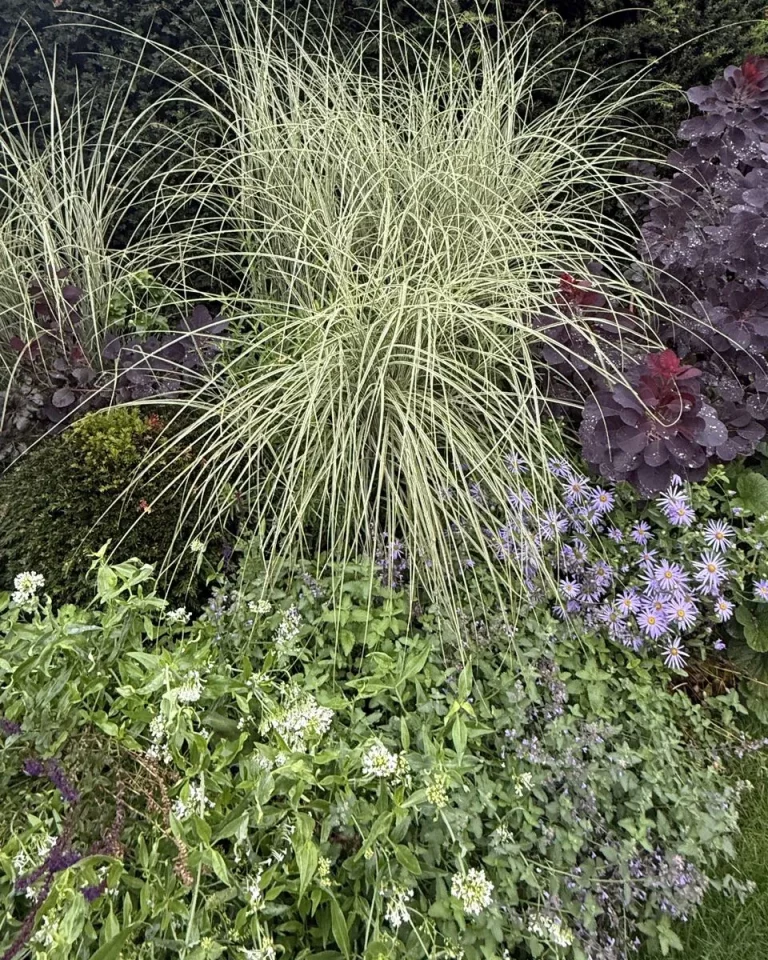
Start with your light, soil and paving, then pick one lead colour, one support and one small accent, and repeat them down the border. Pale colours for shade, hot colours for sun. Use green and white to keep the peace, and plan for all twelve months.
Start with what you can’t change
Before anyone opens a colour chart, look at the light. Pale flowers glow in shade and hot colours need sun to look their best, a point the Gardeners’ World team makes in plain terms. A scarlet Crocosmia under a sycamore just looks bruised. Our garden orientation guide and the free Flourish Garden Sun Planner will tell you which beds get which light, month by month.
Then look at the hard stuff. Red London stock brick, buff York stone, grey porcelain, a black fence: these colours are there all year, so the planting has to get on with them. Garden writers have long advised not fighting a colour you’re stuck with, and we agree. Warm brick takes apricots, coppers and plum happily. Cool grey paving flatters blues, whites and silver.
Finally, the soil. Plants rarely die of a clashing colour scheme. The wrong soil, on the other hand, has quite a body count. On our local clay, grit and organic matter come before any talk of colour (see improving clay soil).
What colours go together in a garden?
There are four ways to use it. None is right or wrong; each sets a different mood.
One colour (monochromatic)
Shades of a single colour, usually white, against green. Calm and elegant, but it needs creams, pale yellows or a touch of blue so it reads monochrome, not monotonous.
Neighbours (analogous)
Colours next to each other on the colour wheel, such as pink, lilac and violet. Gardeners’ World suggests they work best in threes. The easiest scheme to get right, and home to the one we’re asked for most: purple, white and lilac, which we call lavender and lace.
Opposites (complementary)
Complementary colours sit across the colour wheel, like orange and violet or yellow and blue. The RHS points to this pairing in several 2026 show gardens because each colour makes the other look brighter.
Near opposites (split-complementary)
One colour with the two either side of its opposite, such as violet with gold and lime. Most of the punch of opposites with less of the clash, which makes it easier to live with.
Three-way (triadic)
Three colours spaced evenly round the wheel, like red, yellow and blue. Full strength it is a children’s playground; softened to rose, butter yellow and powder blue it works well in a border.
Everything at once
The cottage-garden riot. It can be glorious, but it is the hardest to pull off. White flowers and plenty of green are what stop it turning into a sweet shop.
Using colour to change the size of a garden
Hot colours jump forward and cool colours fall back. Several UK garden writers use this as a trick for small plots: put the warm, bright plants near the house and the soft blues and mauves at the far end, and the garden reads longer than it is. It works especially well in long, narrow gardens.
In shade, keep to white, cream, lime and silver. Dark purples and deep reds vanish in low light. In a dry shady strip along a fence, a cream-edged grass or a white anemone does more work than any amount of claret.
Green, white and the peacekeepers
Green is the colour you’ll see most, so choose it on purpose. Bronze, blue-grey, lime and near-black foliage all count as colour and last far longer than any flower. Former Sissinghurst head gardener Sibylle Kreutzberger, interviewed for the Hardy Plant Society, singled out the acid-lime flowers of euphorbias as a foliage colour that sits well with almost anything.
White is the other peacekeeper. Drop it between two colours that are squabbling and they calm down. One warning: warm creamy white and cold pure white don’t sit well side by side, so pick one per bed.
How many colours should a border have?
Three, as a rule. Pick one lead colour that does most of the work, one that supports it, and a small accent used sparingly. Then repeat all three down the border. Repetition is what makes a garden look designed rather than collected. Green and white don’t count towards the three; they are the setting, not the stones.
Colour schemes by aspect
Which way your garden faces decides which colours will work before taste gets a vote. Find yours, then open the palettes already set for it.
North-facing gardens
Low, cool light all year. White, cream, lime, silver and soft blue carry best; deep purples and reds sink into the shadow. Woodland white and delft and lime are built for it.
East-facing gardens
Bright, cool morning sun, then shade. Soft pinks, blues and whites look fresh in the morning; pastel and romantic palettes suit it well.
West-facing gardens
Shade in the morning, warm evening sun. Rich, deep colours glow in low evening light, and white shows up best at dusk, so it is the aspect for jewel box or port and old gold.
South-facing gardens
Sun most of the day. Hot oranges, reds and golds come into their own, and so do silver Mediterranean palettes. Pale colours can look washed out at midday.
Palettes for south-facing · Best plants for south-facing gardens
Not sure which way you face? The Flourish Garden Sun Planner shows where the sun falls on your garden, month by month.
Plan for twelve months, not one week in June
A palette is not a snapshot. Bulbs open the year, perennials take the summer, and grasses, seedheads, stems and berries carry autumn and winter. Our designer often staggers two borders so one peaks in spring and the other in high summer, and the same few colours run through both. Plan the bulbs now while they are in the ground for the taking (see our autumn bulb list).
Garden colour questions we are asked
What are the main garden colour schemes?
The five from colour theory: monochromatic (one colour in lighter and darker tones), analogous (neighbours on the colour wheel), complementary (opposites), split-complementary (one colour with the two either side of its opposite) and triadic (three colours spaced evenly round the wheel). In a border the first three do most of the work. Green and white sit outside the wheel and keep the peace in all of them, and warm colours bring energy while cool ones calm a space.
What colours go with pink flowers?
Purple, lilac, white and silver for a soft look; lime green and burgundy for more punch. Pink with orange can work, but only as a deliberate clash, as in our carnival palette. Our hedgerow pinks and claret and lime palettes are both built around pink.
What colour flowers go with a red brick house?
Warm brick takes apricot, copper, plum, burgundy and lime happily, with plenty of green between them. Cool blues and pure whites can look thin against it, so pick creamy whites instead. Our port and old gold and bonfire night palettes are built for warm brick.
What are the best colours for a north-facing garden?
White, cream, lime, silver and soft blue, because pale colours show up in low light and deep purples and reds disappear. Lean on foliage too: variegated sedges, ferns and white-flowered geraniums. Woodland white and delft and lime are our north-facing palettes.
How many colours should a planting scheme have?
Three: one lead colour doing most of the work, one partner and a small accent, repeated down the border. Green and white do not count towards the three.
Which colours make a small garden look bigger?
Put warm, bright colours near the house and cool blues, mauves and silvers at the far end. Cool colours seem to sit further away, so the garden reads longer than it is.
How do I get colour in the garden all year?
Plan in layers. Bulbs open the year, perennials carry the summer, and grasses, seedheads, coloured stems and evergreens hold the autumn and winter. Use the month slider in the planner on this page to check for gaps, and plant spring bulbs between September and November.
Do you design and plant colour schemes for gardens near me?
Yes. We design, plant and look after gardens across Surbiton, Kingston, Richmond, Thames Ditton and the rest of south west London and Surrey. Send us your plan from this page, or book a site visit, and Craig or Eli will be in touch within two working days.
Planting bulbs this autumn? Our autumn bulb list has the alliums, snowdrops, daffodils and camassias used in these palettes.
All twelve palettes at a glance
Looking for colourful plants for the garden? Each palette below names the plants that carry it, so you can buy for a scheme rather than one plant at a time.
Lavender and lace
Purple, white and lilac. Flourish favourite, our most requested. Suits south-facing or full sun, east or west-facing, north-facing or shady.
Key plants: Wisteria sinensis, Allium ‘Purple Sensation’, Lavandula angustifolia ‘Hidcote’, Nepeta ‘Six Hills Giant’, Salvia nemorosa ‘Caradonna’.
Jewel box
Ruby, amethyst, magenta and emerald. Flourish favourite, deep and rich. Suits south-facing or full sun, east or west-facing.
Key plants: Rosa Munstead Wood (‘Ausbernard’), Dahlia ‘Bishop of Llandaff’, Salvia ‘Amistad’, Geranium psilostemon, Knautia macedonica.
Sugared almond
Shell pink, powder blue and lemon. Flourish favourite, soft and light. Suits south-facing or full sun, east or west-facing, north-facing or shady.
Key plants: Rosa Olivia Rose Austin (‘Ausmixture’), Geranium pratense ‘Mrs Kendall Clark’, Scabiosa ‘Butterfly Blue’, Achillea ‘Moonshine’, Astrantia major ‘Roma’.
Carnival
Sunshine yellow, orange, fuchsia and scarlet. Flourish favourite, hot and vibrant. Suits south-facing or full sun.
Key plants: Tulipa ‘Ballerina’, Geum ‘Totally Tangerine’, Geranium psilostemon, Crocosmia ‘Lucifer’, Helenium ‘Sahin’s Early Flowerer’.
Olive grove
Violet, white and silver. Kingston upon Thames, olive garden. Suits south-facing or full sun.
Key plants: Olea europaea, Salvia nemorosa ‘Caradonna’, Agapanthus ‘Black Jack’, Verbena bonariensis, Oenothera lindheimeri ‘Whirling Butterflies’.
Claret and lime
Lime, pink and claret. Worcester Park, built 2026. Suits south-facing or full sun, east or west-facing, north-facing or shady.
Key plants: Parrotia persica (multi-stem), Amelanchier lamarckii, Hydrangea paniculata Little Lime (‘Jane’), Helleborus argutifolius, Salvia nemorosa Caradonna Pink Inspiration (‘Tucarink’).
Delft and lime
Blue, white and lime. Berrylands, conifer-hedged garden. Suits south-facing or full sun, north-facing or shady, east or west-facing.
Key plants: Nepeta ‘Walker’s Low’, Salvia nemorosa ‘Caradonna’, Eryngium × oliverianum, Phlomis russeliana, Euphorbia characias subsp. wulfenii.
Woodland white
Green and white. Surbiton, shared courtyard. Suits north-facing or shady, east or west-facing.
Key plants: Betula utilis var. jacquemontii, Amelanchier lamarckii, Pittosporum tenuifolium ‘Variegatum’, Ilex aquifolium, Corylus avellana.
Port and old gold
Burgundy, gold and green. Richmond, town garden. Suits east or west-facing, north-facing or shady.
Key plants: Acer palmatum ‘Bloodgood’, Ajuga reptans ‘Burgundy Glow’, Osmanthus heterophyllus ‘Purpureus’, Carex elata ‘Aurea’, Hakonechloa macra.
Hedgerow pinks
Pink, lilac and violet. Surrey Hills, country border. Suits south-facing or full sun.
Key plants: Echinacea purpurea, Achillea millefolium ‘Lilac Beauty’, Thalictrum ‘Splendide’, Salvia nemorosa Caradonna Pink Inspiration (‘Tucarink’), Hylotelephium ‘Matrona’.
Rose and catmint
White roses and blue. Thames Ditton, long, narrow garden. Suits south-facing or full sun, east or west-facing, north-facing or shady.
Key plants: Rosa Desdemona (‘Auskindling’), Nepeta ‘Walker’s Low’, Geranium Rozanne (‘Gerwat’), Alchemilla mollis, Sanguisorba ‘Tanna’.
Bonfire night
Orange, crimson and violet. Thames Ditton, gravel and wild orchard. Suits south-facing or full sun, east or west-facing.
Key plants: Geum ‘Totally Tangerine’, Euphorbia griffithii ‘Fireglow’, Helenium ‘Moerheim Beauty’, Knautia macedonica, Persicaria amplexicaulis.
Find your palette
Choose your aspect and the mood you’re after. Four palettes are Flourish favourites: lavender and lace, jewel box, sugared almond and carnival. The other eight are real schemes drawn by Eli Jacobacci for gardens in Kingston, Surbiton, Richmond and nearby this year. Each shows only the plants that suit your aspect, and the plant names link to the RHS plant finder.
Plan my border ↓Plan your border
Give us the size of the bed and pick a palette. You get a planting list with quantities, and a month slider to see what will be in colour through the year.
Quantities are a planting guide for budgeting, based on typical spacings for each plant. Our designer adjusts them to your soil, the light on the day and the pot sizes we buy.
Send this plan to Flourish
Free, no obligation. Your palette, bed size and plant list come with it, and Craig or Eli replies within two working days.
Let us choose it with you
Colour is the part of a garden people notice first and the part they most often get wrong on their own. Our garden design service starts with your light, soil and house, and ends with a planting plan our own crews plant and look after. We work across Surbiton, Kingston, Richmond, Thames Ditton and the rest of south west London and Surrey.
Garden design and plansBook a site visitFurther reading
- Flourish autumn bulb list: bulbs for these palettes
- RHS: plant combinations from RHS Sandringham 2026
- RHS: planting combinations at RHS Malvern 2026
- BBC Gardeners’ World: how to use colour in the garden
- BBC Gardeners’ World: six garden colour schemes to try
- Hardy Plant Society: better borders, with Sibylle Kreutzberger
- The Enduring Gardener: using colour in the garden
- Saga Magazine: choosing a colour scheme for your garden
This page was created with AI assistance and reviewed for accuracy by Craig Davis, BSc (Hons) Horticulture.