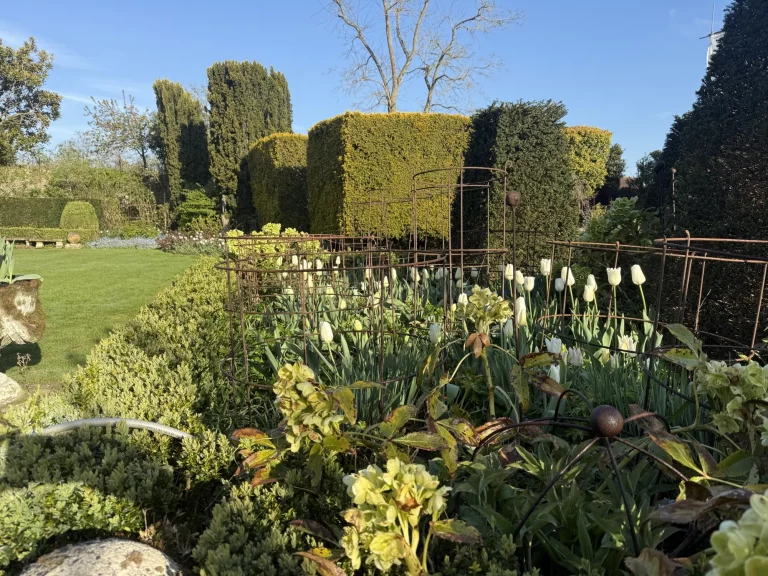
Ornamental grasses
Why grasses are one of the most useful plants in modern gardens.
Ornamental grasses have become must haves in British gardens. They soften borders, add movement, bring height, and offer colour right through autumn and winter. They also mix perfectly with the perennials most UK gardeners already love, including Echinacea, Rudbeckia, Verbena bonariensis, and Salvia.
If you are planning a new border or a full garden redesign, grasses are one of the most cost effective ways to create a professional finish. They also happen to be low maintenance, which is ideal for busy homeowners.
Why ornamental grasses work so well in UK gardens
Grasses solve design problems that shrubs and perennials often cannot. They fill awkward gaps, add year round structure, and make borders feel more natural and balanced. Many are drought tolerant once established, and some cope with shade where other plants struggle.
Key benefits:
- Long season of interest from spring to winter
- Movement and texture that bring a border alive
- Seeds and stems that support wildlife
- Works in clay, loam, sandy soils, and raised beds
- Ideal for prairie style, cottage style, and modern schemes
- Great in pots for patios and courtyards
Your only real job each year is cutting them back in late February before new shoots appear.
The most popular ornamental grasses for UK gardens
Miscanthus sinensis (Maiden grass)
Description: Tall, elegant grass providing structure from midsummer through winter
Notable varieties: ‘Gracillimus’, ‘Morning Light’, ‘Ferner Osten’
Great for: Privacy screening, autumn colour, adding height in relatively small spaces
Notes: Best in wide beds or mixed borders where its form can be appreciated
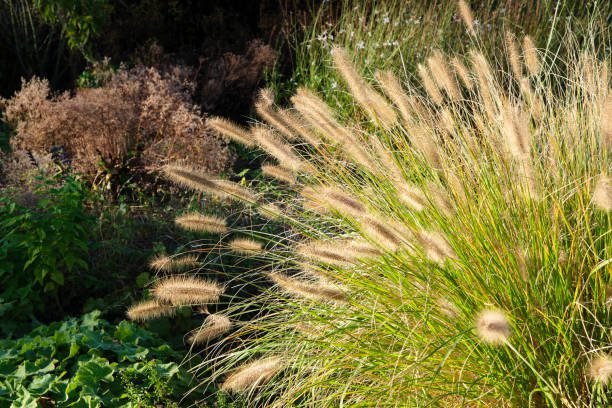
Pennisetum alopecuroides (Fountain grass)
Description: Compact grass with soft, bottlebrush seed heads
Notable varieties: ‘Hameln’, ‘Little Bunny’, ‘Moudry’
Great for: Sunny borders, gravel gardens, low-maintenance schemes
Notes: Reliable and easy to integrate into mixed planting
Stipa tenuissima (Mexican feather grass)
Description: Fine, hair-like foliage with constant movement
Great for: Naturalistic planting, dry gardens, edging, containers
Notes: Best used in drifts for visual impact
Calamagrostis × acutiflora ‘Karl Foerster’
Description: Upright, architectural, and tidy in habit
Great for: Narrow borders, modern designs, exposed or windy sites
Notes: Excellent for repetition and rhythm in formal or contemporary layouts
Hakonechloa macra (Japanese forest grass)
Description: Shade-tolerant grass with gently cascading foliage
Notable varieties: ‘Aureola’, ‘All Gold’, ‘Nicolas’
Great for: Woodland gardens, shady courtyards, containers
Notes: Particularly effective for softening hard edges and paths
Molinia caerulea subsp. arundinacea ‘Transparent’
Description: Airy, dramatic grass with flower stems rising above foliage
Great for: Larger borders, wildlife-friendly planting, autumn highlights
Notes: Commonly used in high-end naturalistic schemes
Sporobolus heterolepis (Prairie dropseed)
Description: Compact grass with delicately scented seed heads
Great for: Dry soils, prairie-style planting, gravel gardens
Notes: Late-summer scent adds an unusual sensory element
Panicum virgatum (Switchgrass)
Description: Strong autumn colour in red, wine, or bronze tones
Notable varieties: ‘Shenandoah’, ‘Squaw’, ‘Dallas Blues’
Great for: Colour-themed planting and late-season interest
Notes: Holds structure well into winter
Anemanthele lessoniana (Pheasant’s tail grass)
Description: Evergreen grass with copper and orange tones
Great for: Coastal gardens, slopes, mixed borders with winter interest
Notes: Performs best in mild, sheltered conditions
Deschampsia cespitosa (Tufted hair grass)
Description: Light, cloud-like flower plumes
Great for: Damp soils, woodland edges, naturalistic designs
Notes: Effective in shade or partial shade where other grasses struggle
How to pick the right grasses for your garden
Consider height
Tall grasses such as Miscanthus and Calamagrostis add structure. Smaller grasses like Stipa and Pennisetum create softness.
Check your sunlight
Sun lovers: Pennisetum, Stipa, Panicum, Calamagrostis.
Shade tolerant: Hakonechloa, Deschampsia.
Think about soil
Good drainage suits the majority of grasses. Clay soil works well for Calamagrostis, Molinia, and Miscanthus.
Mix textures and habits
A combination of upright, arching, and fine textured grasses gives a designer look with very little effort.
Keep them standing in winter
Grasses look best from autumn into January. Only cut them back in late winter.
Perfect perennial partners for ornamental grasses
For that magazine worthy, naturalistic look, pair your grasses with:
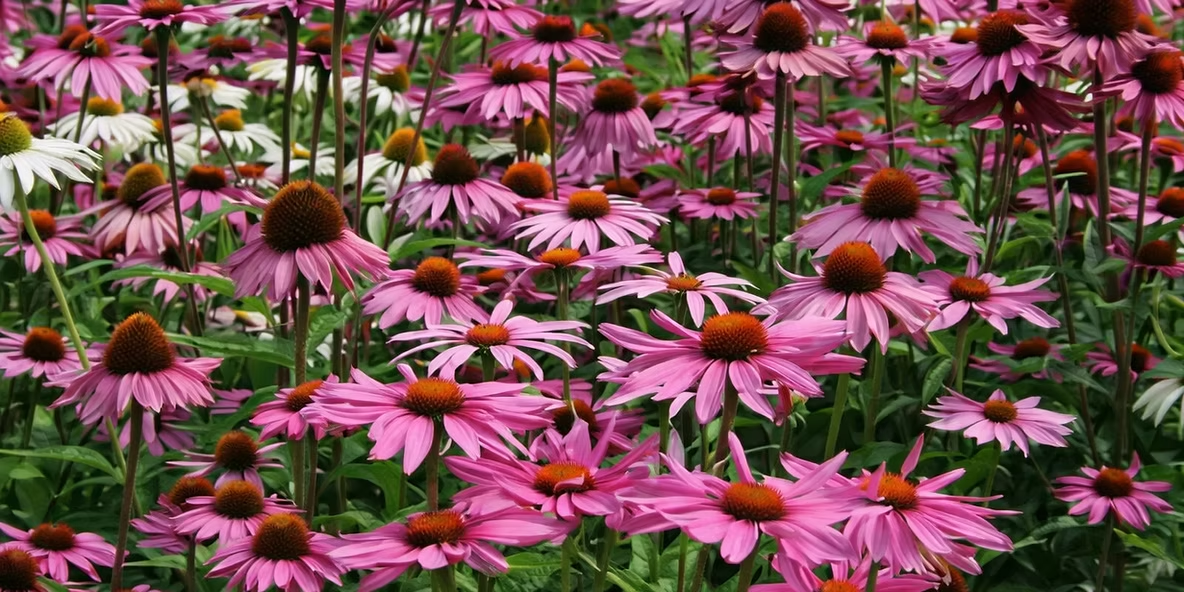
- Echinacea purpurea
- Rudbeckia fulgida ‘Goldsturm’
- Verbena bonariensis
- Hylotelephium ‘Autumn Joy’
- Persicaria amplexicaulis
- Salvia nemorosa
These combinations give colour from June to October, with strong structure throughout winter.
Final thoughts
Ornamental grasses are one of the simplest ways to elevate a garden. They add movement, texture, structure, and colour for months on end. Whether you love popular favourites such as Pennisetum and Stipa or want something unusual like Molinia ‘Transparent’ or Sporobolus, there is a grass for every garden style.
Let’s create your perfect garden
If you want expert help choosing the right plants, Flourish Landscaping creates planting plans, full garden designs, and seasonal plant lists tailored to your soil and style.
Contact us today to arrange a consultation and start transforming your garden into the perfect outdoor space for you and your family.