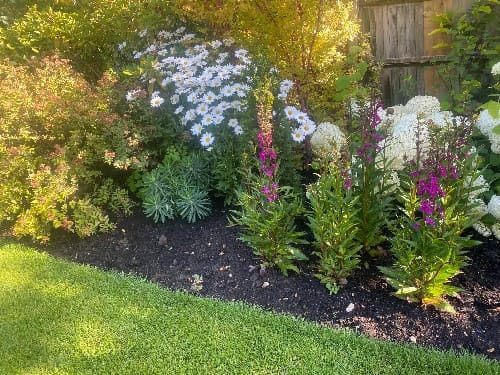
Refreshing a garden with new planting
How to transform a long suburban garden without rebuilding everything.
Many gardens already have a layout that works reasonably well. The patio sits outside the house, there is a stretch of lawn through the middle, and somewhere towards the end of the garden there is often a shed, trampoline or storage area.
Functionally this arrangement makes sense. It provides usable outdoor space and is relatively simple to maintain. Visually it often leaves the garden feeling flat and underwhelming.
In many suburban gardens across Kingston, Surbiton, Esher and Coombe, the structure is similar: a patio near the house, narrow planting beds along the fences, a long lawn through the centre, and something practical sitting at the far end. Over time the planting becomes tired or unbalanced. Some plants outgrow the space while others disappear entirely, and borders that may once have looked carefully planted gradually turn into a collection of survivors rather than a deliberate design.
In these situations a full landscaping project is rarely necessary. Often what is needed is a thoughtful planting refresh, sometimes combined with a few modest structural adjustments that can dramatically improve how the garden feels.
A familiar suburban garden pattern
When we visit gardens to discuss planting improvements, there is usually a recognisable pattern to what has developed over time. The borders rarely reflect a carefully designed scheme; instead they contain the plants that have managed to survive the conditions of the garden.
In areas with heavy clay soils, such as much of the Thames corridor, certain shrubs and trees tend to dominate. Large evergreen shrubs such as cherry laurel (Prunus laurocerasus), bay (Laurus nobilis) or the occasional yew (Taxus baccata) may have gradually grown into substantial plants. These species tolerate difficult conditions well and can become the backbone of the border, sometimes unintentionally.
It is also common to find an old privet hedge (Ligustrum) along one boundary. Privet grows vigorously and, if left unchecked, quickly becomes overgrown. In many gardens it needs trimming several times a year simply to keep it under control.
Among the shrubs there are often self-seeded trees that have appeared without anyone deliberately planting them. Ash seedlings (Fraxinus excelsior) and elder (Sambucus nigra) are frequent examples. These trees establish easily and can grow surprisingly quickly if left undisturbed.
In shaded corners and beneath shrubs, robust evergreen groundcover may gradually take hold. Along the Thames corridor one plant that often appears is greater wood-rush (Luzula sylvatica), a tough woodland plant that copes well with clay soils and shade. Older gardens may also contain grafted roses where the rootstock has begun to dominate, sending up vigorous shoots that grow more strongly than the original cultivated rose.
None of these plants are necessarily a problem in themselves. Many are useful garden plants in the right context. The difficulty is that over time they can create borders that feel unbalanced, with a few dominant plants crowding out everything else. A planting refresh provides an opportunity to step back and reassess the garden, keeping plants that still contribute positively while removing those that have outgrown the space.
Why straight fence-line borders rarely work well
Another common issue in suburban gardens is the use of very narrow planting beds along the fences. These borders often develop because they were easy to install when the garden was first built, but they tend to restrict what planting can achieve.
Narrow borders limit plant choice because shrubs and trees need depth to develop properly. As a result the borders are usually filled with smaller plants that never provide much structure. They also make it difficult to create layered planting; successful planting schemes typically combine several levels of plants, including trees, shrubs, perennials and groundcover, and shallow borders rarely allow enough space for these layers to develop.
Visually this arrangement makes the garden feel flat. With planting pushed to the edges, the central lawn becomes a large empty space, and the eye travels directly from the patio to the back fence with nothing to slow it down.
When a planting refresh is the right approach
If the patio, paths and levels of the garden already work reasonably well, a planting refresh can often transform the space. This approach is particularly effective when the existing hard landscaping is still functional, borders exist but feel underwhelming, planting lacks structure or seasonal interest, and the garden feels visually flat.
Rather than rebuilding the entire garden, improving planting and introducing a few structural elements can change the atmosphere dramatically and at a fraction of the cost. For gardens with more challenging conditions, our awkward garden types guide covers the specific layout problems that planting alone can resolve.
The layered structure of a good planting scheme
Planting design is about more than simply selecting attractive plants. A successful scheme typically includes several layers working together.
Tree canopy
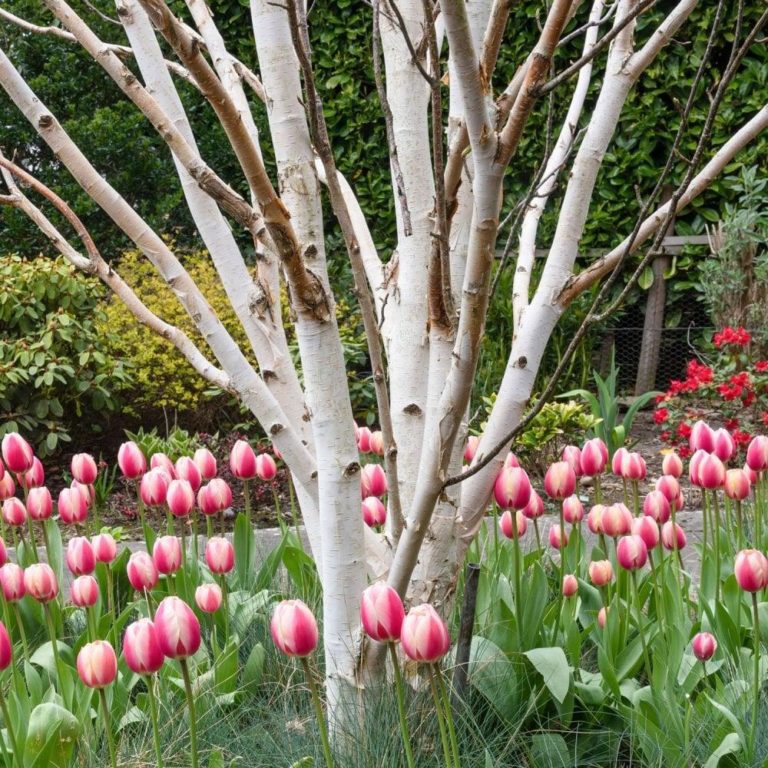
Trees provide height and long-term structure within the garden. Multi-stem trees are particularly useful in planting refresh projects because they create vertical interest while still allowing light through their canopy. Reliable choices include Amelanchier lamarckii, Betula utilis var. jacquemontii, Parrotia persica and Cornus controversa. These trees anchor the planting scheme and give the garden a sense of maturity from the first season.
Structural shrubs
Shrubs form the backbone of the planting design and provide year-round presence. Well-chosen evergreen and deciduous shrubs hold the scheme together visually through every season, including the dormant months when perennials have died back.
Perennials and ornamental grasses
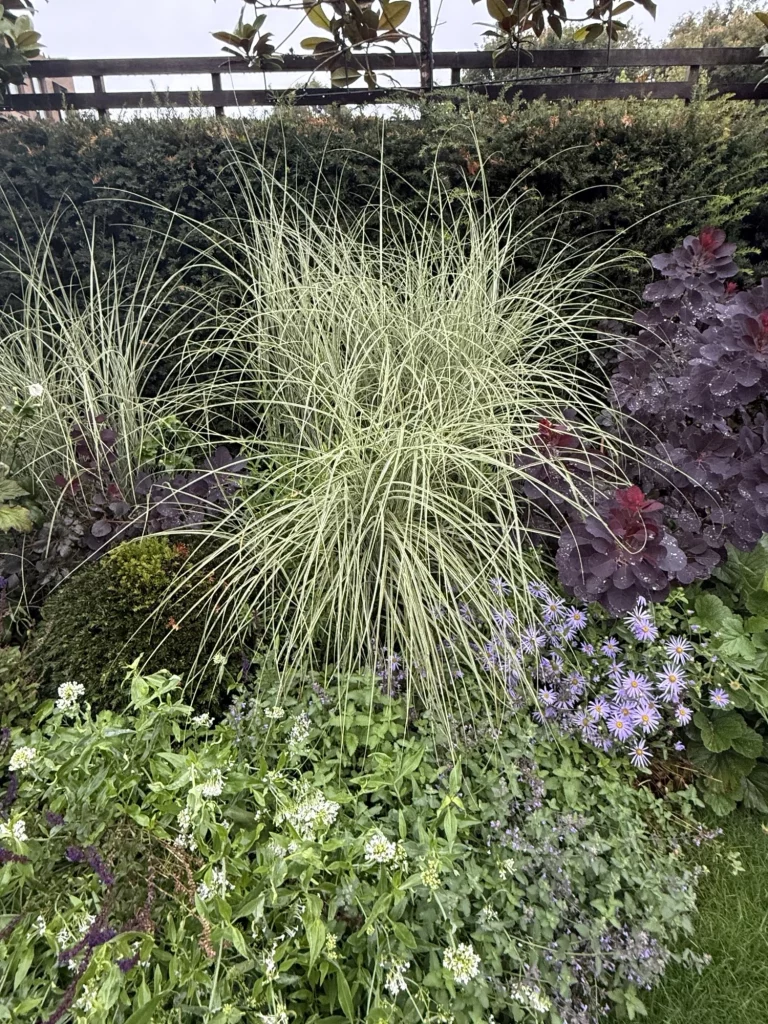
These plants introduce colour, movement and seasonal interest throughout the growing season. A mix of late-spring, summer and late-summer performers keeps the borders looking deliberate rather than tired by August.
Groundcover
Lower plants knit the planting scheme together and significantly reduce weed growth by closing the bare soil that weeds rely on. Good groundcover also locks in moisture and stabilises soil temperature around the root zone of the shrubs and trees above.
When these layers are combined thoughtfully, the planting reads as cohesive rather than random. Most domestic borders fail because one or more of the layers is missing entirely.
Small structural changes that can transform a garden
Planting refresh projects often work best when combined with a few modest layout improvements. These adjustments are usually relatively simple but can dramatically improve how the garden works.
Widening planting beds
Increasing the depth of borders makes a significant difference. Many fence-line beds are simply too narrow to support meaningful planting, and extending the border by even half a metre often allows space for proper shrubs and layered planting beneath them.
Introducing a feature tree
A carefully positioned tree can anchor the entire garden. Multi-stem trees are particularly effective because they create height without blocking too much light, and species such as Amelanchier, birch and Parrotia can transform how a garden feels when positioned thoughtfully.
Creating planting islands
Rather than keeping planting only along the boundaries, introducing a planting island within the lawn breaks up the long view from the patio to the back fence. A typical planting island combines a multi-stem tree, structural shrubs and ornamental grasses or perennials beneath, layered to give interest from ground level to canopy. The result creates depth and encourages the eye to move through the garden rather than past it.
Using trellis and offset screening
Offset screening panels can subtly divide a long garden into zones without making it feel sectioned-off. Rather than placing a screen directly across the garden, trellis panels positioned slightly offset along the space create gentle pause-points and invite the visitor to keep moving. Climbing plants such as roses, Clematis or Trachelospermum jasminoides (star jasmine) soften these structures and add seasonal interest.
Adding vertical structure
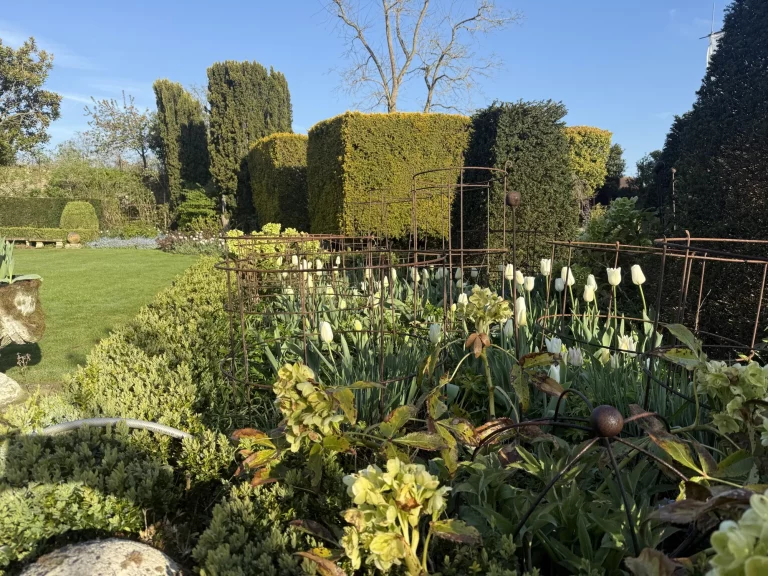
Vertical elements dramatically improve a garden that otherwise feels flat. Pergolas, arbours and trellis structures for climbers introduce real height and create focal points within the garden, particularly when planted with climbers chosen for scented or seasonal flowering.
Softening the shed area
In many gardens the shed becomes the visual endpoint simply because it sits at the end of the lawn with nothing around it. Rather than leaving it exposed, planting around the shed softens the area and integrates the structure into the garden. Shrubs, grasses and small trees help reduce its visual impact and turn what was a functional eyesore into part of the design.
What a planting renovation typically involves
A proper planting refresh usually involves more than simply replacing a few plants. The process typically includes removing unsuccessful or overgrown plants, cultivating and improving the soil, adding organic matter or soil conditioner, reshaping planting beds where necessary, supplying new plants, and planting and mulching to give the new scheme the best possible start.
Good soil preparation and careful planting are what allow the scheme to establish successfully. Most planting failures in domestic gardens come from rushed preparation rather than wrong plant choices.
Typical cost of a planting refresh
Planting renovation projects vary depending on the size of the garden and the type of plants used. As a general guide, planting bed renovation and replanting starts from around £200 per square metre of planting area. This usually covers plant removal, soil preparation, supply of new plants, planting and mulching. Projects involving specimen trees or larger shrubs cost more depending on plant selection, with quality multi-stem specimens often adding £600 to £2,000 each depending on size and species.
How we approach a planting refresh consultation
When clients contact us about refreshing planting, the first step is understanding how the garden currently works. We assess how the garden is used and which areas feel successful or underwhelming, and we walk the site to see what is there and what is missing.
We then consider growing conditions: soil type, light levels and drainage. Many gardens in Surrey and South West London sit on heavy clay soils, which influences plant selection significantly, and aspect determines what will thrive in each part of the plot. The Flourish Sun Planner is a useful starting point for understanding aspect across your own plot before any planting decisions are made.
Once these factors are understood, we review the layout of the garden and identify opportunities for improvement. Often widening borders, introducing a tree or creating a planting island can dramatically change the space. The planting scheme is then developed to suit the conditions of the actual plot and to provide interest through every season, not just the easy mid-summer one.
Common mistakes when choosing plants
Several straightforward mistakes account for most struggling borders. Plants are often chosen without considering their eventual size, leading to overcrowded beds within three or four years. Soil conditions are sometimes ignored, resulting in plants that never thrive regardless of how well they were planted. Light levels are frequently overlooked, with sun-loving plants placed in shade or shade plants placed in bright conditions where they will burn. Professional planting design avoids these mistakes and creates schemes that remain balanced as they mature.
Frequently asked questions
Can planting alone transform a garden?
Yes, very often. If the layout of the garden already works reasonably well, improving the planting can dramatically change the character of the space without any need for major structural work.
Do I need to redesign my whole garden?
Usually not. Small adjustments to planting beds and structure often produce excellent results without the cost of a full landscaping project.
How much does a planting refresh cost?
Costs vary depending on the size of the borders and the plants selected. As a rough guide, planting renovation projects start from around £200 per square metre of planting area. Specimen trees or larger shrubs add to this depending on what is chosen.
Can I design a planting scheme myself?
You can, and many keen gardeners do. Designing a scheme that works through every season requires knowledge of plant growth rates, spacing and how plants interact as they mature, which is where a professional brings most value. The most common DIY pitfall is buying for instant impact and then watching the borders become overcrowded within a few years.
In summary
A long, narrow garden does not need to remain a simple lawn with borders along the edges. With thoughtful planting design and a few modest structural improvements, it is usually possible to transform the space without rebuilding the entire garden. Introducing trees, widening borders, creating planting islands and adding vertical structure can dramatically improve how the garden looks and feels, and even relatively small changes can turn a tired suburban plot into a much richer and more engaging space.
If you are considering a planting refresh, our planting design and installation service covers everything from initial consultation through to plant supply, installation and mulching. For wider context, see our pillar guide on garden orientation and our companion post on multi-stem trees, which work particularly well as the anchor point of a planting refresh.
Contact us today to arrange a consultation and start transforming your garden into the perfect outdoor space for you and your family.
Good to know
Frequently asked questions
Yes, very often. If the layout of the garden already works reasonably well, improving the planting can dramatically change the character of the space without any need for major structural work.
Usually not. Small adjustments to planting beds and structure often produce excellent results without the cost of a full landscaping project.
Planting renovation projects start from around £200 per square metre of planting area, covering plant removal, soil preparation, supply of new plants, planting and mulching. Specimen trees or larger shrubs add to this depending on what is chosen.
You can. Designing a scheme that works through every season requires knowledge of plant growth rates, spacing and how plants interact as they mature, which is where a professional brings most value. The most common DIY pitfall is buying for instant impact and then watching the borders become overcrowded within a few years.