
Large garden drainage – Cobham

Initial conditions
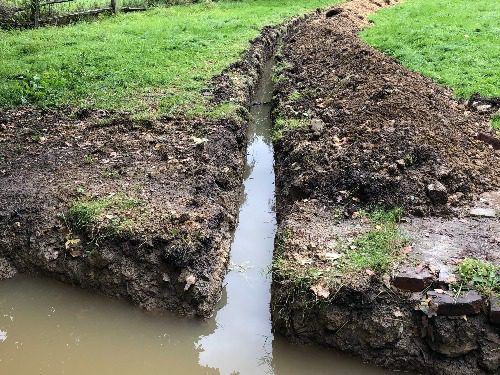
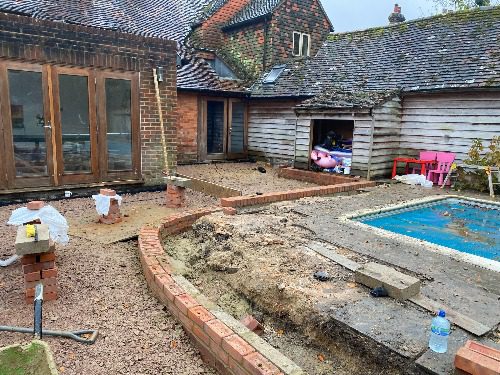
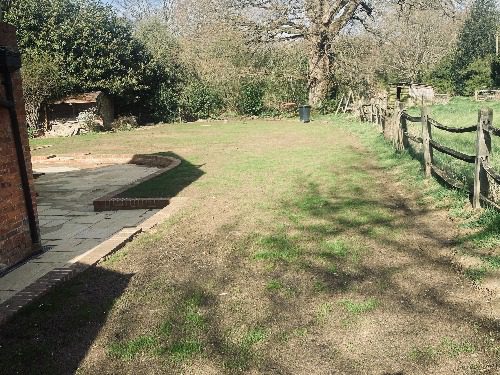
Water was the real problem in this Cobham garden. Large sections of lawn remained saturated for days after rainfall, turning what should have been usable family space into mud through much of autumn and winter. The property sits on dense London Clay, which naturally resists drainage, and over time this had led to patchy grass, moss dominance and struggling border plants. Earlier attempts to improve conditions through aeration and surface treatments helped briefly, but the same issues returned each wet season. The garden itself was generous and well proportioned, yet poor water movement underneath the surface was quietly undermining everything above it.
Client brief
The homeowners wanted a long-term solution rather than seasonal fixes. Their children used the garden daily and they needed a lawn that remained accessible throughout the year, not just in summer. They understood that meaningful improvement would require excavation and disruption, but preferred to invest once in a properly engineered solution rather than ongoing maintenance cycles.
Project scope
- Diagnosis and resolution of recurrent garden flooding
- Design and installation of a comprehensive underground drainage network
- Integration of a new sandstone patio around an existing pool
- Soil removal, re-grading and landscape restoration
- Import of quality topsoil and lawn seeding
Description of work
Design approach
The turning point was recognising that the issue was not the lawn, but the soil profile beneath it. A discreet land drainage network was designed to intercept both surface water and deeper ground moisture, feeding into a central soakaway sized for heavy South East rainfall. Care was taken to avoid established tree roots and to work with the garden’s natural fall rather than against it. The intention was to correct the underlying imbalance rather than apply cosmetic surface remedies.
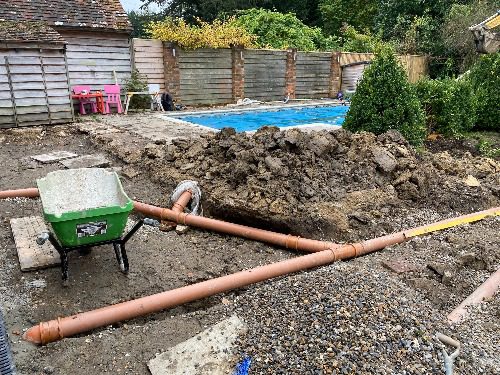
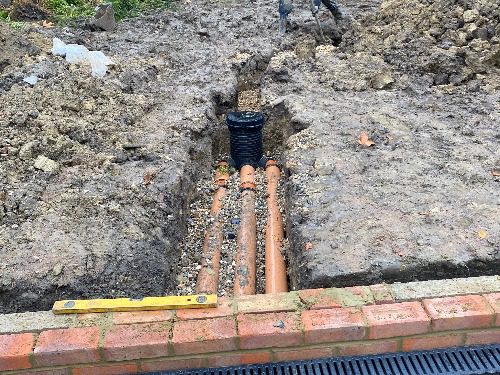
- Installation of over 400 metres of perforated land drainage pipework
- Additional 100 mm solid drainage pipes to direct water flow
- 55 metres of ACO channel drainage to capture surface runoff
- Excavation and removal of approximately 220 tonnes of clay soil and arisings to improve permeability and levels
These works dramatically increased the soil’s ability to drain naturally while ensuring excess water could be efficiently channelled away from the garden and foundations.
Pump system and soakaway installation
To provide further flood protection, a submersible dirty water pump with tube float was installed at a strategic low point. This system automatically diverts surplus water from the front of the property through 300 mm diameter drainage pipes into purpose-built soakaways located at the rear of the garden. This passive and mechanical combination ensures year-round reliability during heavy rainfall.
Construction details
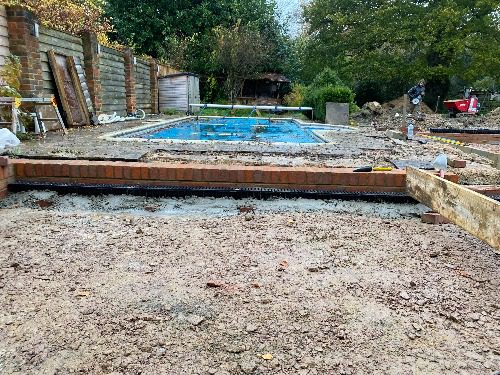
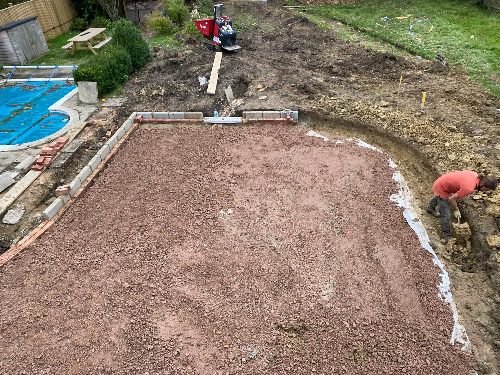
Perforated land drains were installed within clean gravel channels wrapped in geotextile membrane to prevent silt build-up while allowing free water movement. A deep soakaway constructed with cellular drainage crates provided substantial storage capacity during prolonged rainfall. Disturbed areas were reinstated with improved topsoil and turf matched to the existing lawn so the intervention remained visually invisible once complete.
Patio installation around the pool
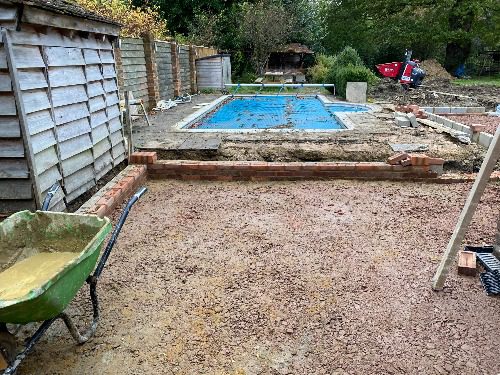
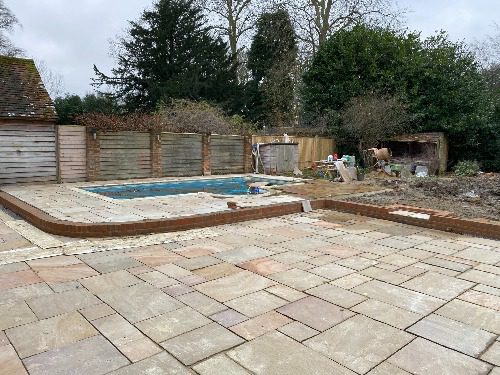
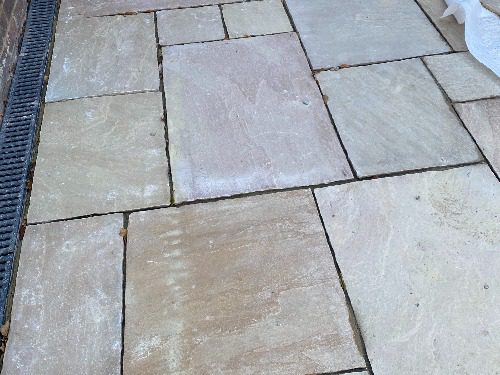
Once the drainage infrastructure was complete and ground levels stabilised, attention turned to the new outdoor living area. We installed 110 square metres of Indian sandstone paving, carefully set around the existing pool to achieve a seamless finish. The natural stone was selected for durability, slip resistance and tonal variation that complements water features and planting.
Soil improvement and landscape restoration
To restore healthy growing conditions and support new lawn establishment, we imported approximately 80 cubic metres of premium blended topsoil. The area was then levelled, conditioned and seeded, creating a fresh, well-draining lawn surface ready for seasonal growth.
Results
The garden now clears water within hours instead of days. Grass density has improved noticeably over two growing seasons, moss has reduced, and border planting has regained vigour. Most importantly, the family now uses the garden year-round where it was previously avoided in winter months. The drainage system works quietly below ground, requiring virtually no maintenance while allowing the garden to perform as it always should have.